The Buddhist Crisis Escalation in South Vietnam: August 21, 1963
On August 21, 1963, the Buddhist crisis in South Vietnam reached a critical point when government forces launched coordinated attacks on Buddhist pagodas across the country. This event marked a significant escalation in the ongoing conflict between the Buddhist community and the regime of President Ngo Dinh Diem, drawing widespread international condemnation and contributing to the eventual downfall of Diem’s government.
Background
The Buddhist crisis began in May 1963, rooted in longstanding religious tensions in South Vietnam. President Ngo Dinh Diem, a Roman Catholic, was perceived as favoring Catholics in a predominantly Buddhist nation. The crisis was sparked by a government ban on the Buddhist flag during Vesak, the celebration of Buddha’s birthday, which led to protests in the city of Hue. The situation deteriorated when government forces opened fire on demonstrators, resulting in several deaths.
The Pagoda Raids
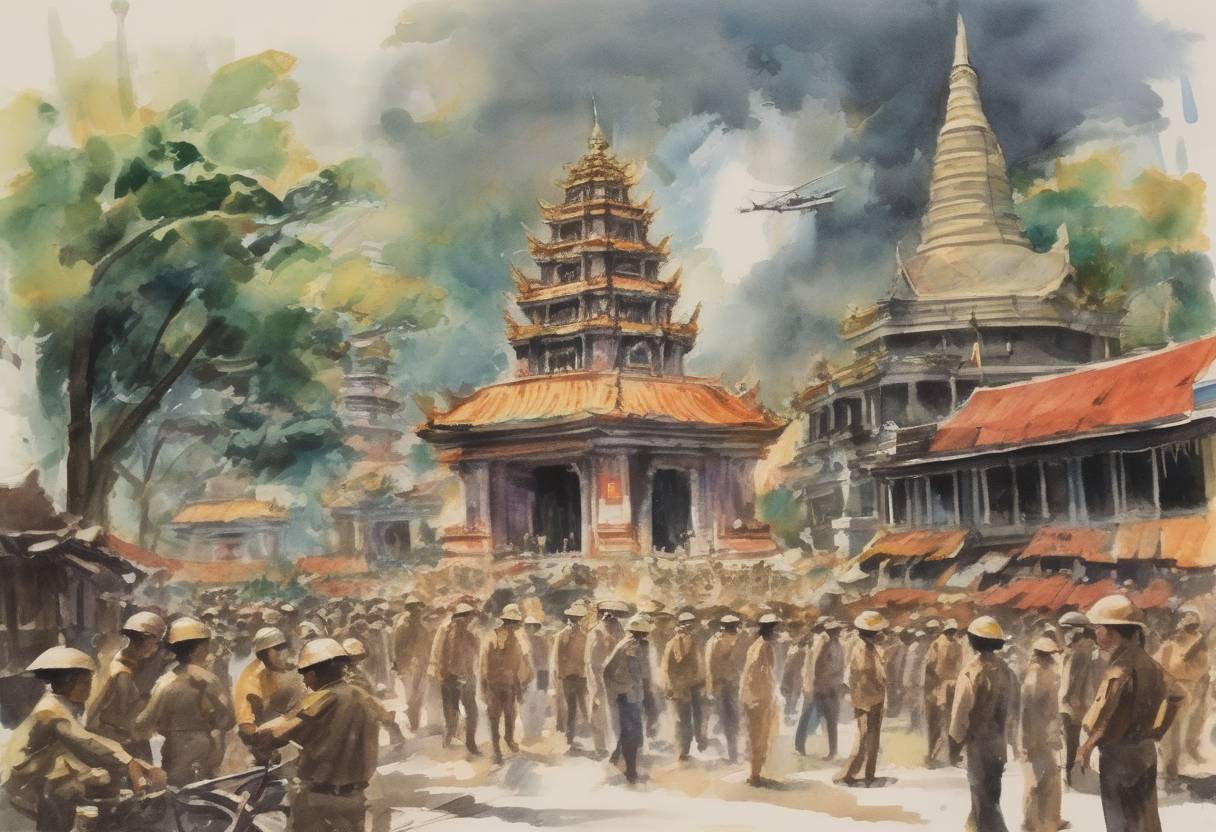
On the night of August 21, 1963, under the orders of Ngo Dinh Nhu, Diem’s brother and chief political advisor, South Vietnamese Special Forces and police units attacked Buddhist pagodas in cities including Saigon, Hue, and Da Nang. The raids were brutal and resulted in the deaths of an estimated hundreds of monks and nuns, with many more arrested. The Xa Loi Pagoda in Saigon, the largest in the city, was a primary target, and its destruction became a symbol of the regime’s oppressive measures.
International Reaction
The violent crackdown on Buddhists drew immediate international condemnation. The United States, which had been a supporter of Diem’s regime due to its anti-communist stance, was particularly alarmed. The Kennedy administration faced increasing pressure to reassess its support for Diem, as the attacks highlighted the regime’s instability and disregard for human rights.
Consequences and Aftermath
The escalation of the Buddhist crisis significantly weakened Diem’s government. It alienated many South Vietnamese citizens and eroded the support of key military leaders. The international backlash, coupled with growing domestic unrest, set the stage for a coup. On November 1, 1963, a group of South Vietnamese generals, with tacit approval from the United States, overthrew Diem. He and his brother Nhu were assassinated the following day.
The fall of Diem’s regime marked a turning point in the Vietnam War, leading to increased U.S. involvement and further destabilization of South Vietnam. The Buddhist crisis underscored the deep-seated religious and political tensions within the country, highlighting the challenges of governance in a divided society.
Historical Significance
The events of August 21, 1963, and the subsequent downfall of Ngo Dinh Diem had profound implications for Vietnam and U.S. foreign policy. They illustrated the complexities of supporting authoritarian regimes in the context of the Cold War and underscored the importance of addressing internal dissent and human rights issues in maintaining political stability.