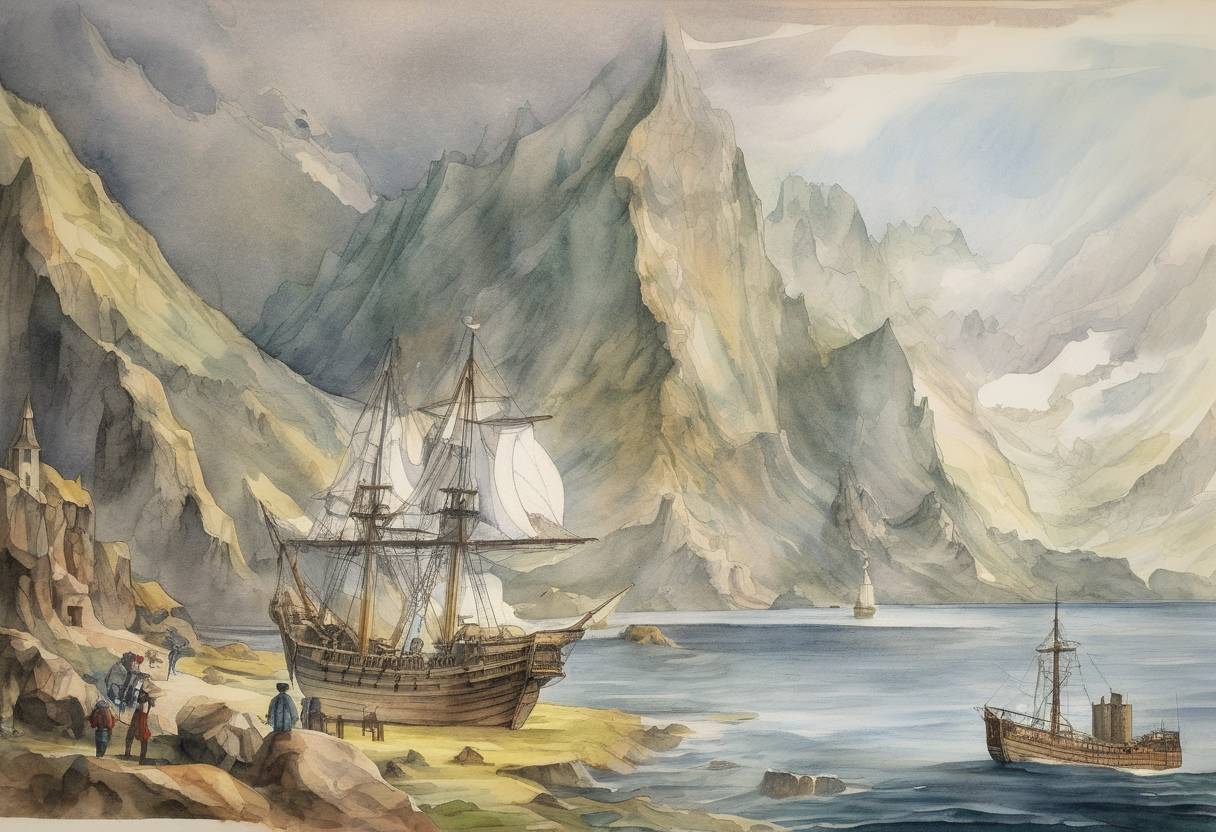
Discovery of the Strait of Magellan - October 21, 1520
On October 21, 1520, the Portuguese explorer Ferdinand Magellan, leading a Spanish expedition, discovered a navigable sea route now known as the Strait of Magellan. This significant maritime passage is located at the southern tip of South America, connecting the Atlantic and Pacific Oceans.
Context and Background
Ferdinand Magellan: Born in Portugal around 1480, Magellan became a skilled sailor and navigator. Despite his Portuguese origins, he sailed under the Spanish flag due to disagreements with the Portuguese monarchy.
The Expedition: Commissioned by King Charles I of Spain (later Holy Roman Emperor Charles V), Magellan’s expedition aimed to find a westward route to the Spice Islands (modern-day Maluku Islands in Indonesia), which were highly valued for their spices.
The Fleet: The expedition set sail from Seville in 1519 with five ships: Trinidad, San Antonio, Concepción, Victoria, and Santiago.
Discovery of the Strait
Journey to the Strait: After a challenging voyage across the Atlantic and along the eastern coast of South America, Magellan’s fleet reached the southern tip of the continent.
Entering the Strait: On October 21, 1520, Magellan’s fleet entered the strait, which he initially named the “Strait of All Saints” due to its discovery near All Saints’ Day. The passage was later renamed in his honor.
Challenges: The strait presented numerous challenges, including unpredictable weather, strong currents, and narrow passages. Despite these difficulties, Magellan successfully navigated through the strait, proving it was a viable route.
Significance and Aftermath
Strategic Importance: The discovery of the Strait of Magellan provided a crucial maritime link between the Atlantic and Pacific Oceans, facilitating future exploration and trade.
Magellan’s Legacy: Although Magellan himself did not survive the entire journey—he was killed in the Philippines in 1521—his expedition became the first to circumnavigate the globe, completed by the remaining crew under the command of Juan Sebastián Elcano.
Impact on Exploration: The successful navigation of the strait marked a significant milestone in the Age of Exploration, encouraging further expeditions and enhancing European understanding of global geography.
The discovery of the Strait of Magellan remains a testament to human curiosity and the relentless pursuit of exploration, marking a pivotal moment in maritime history.