Lewis and Clark Expedition Begins - August 31, 1803
1803 · Pittsburgh, United States
Lewis and Clark start their expedition to explore the American West from Pittsburgh, Pennsylvania.
November 7, 1805
The Lewis and Clark Expedition first sighted the Pacific Ocean at the mouth of the Columbia River.
Astoria, United States | Lewis and Clark Expedition
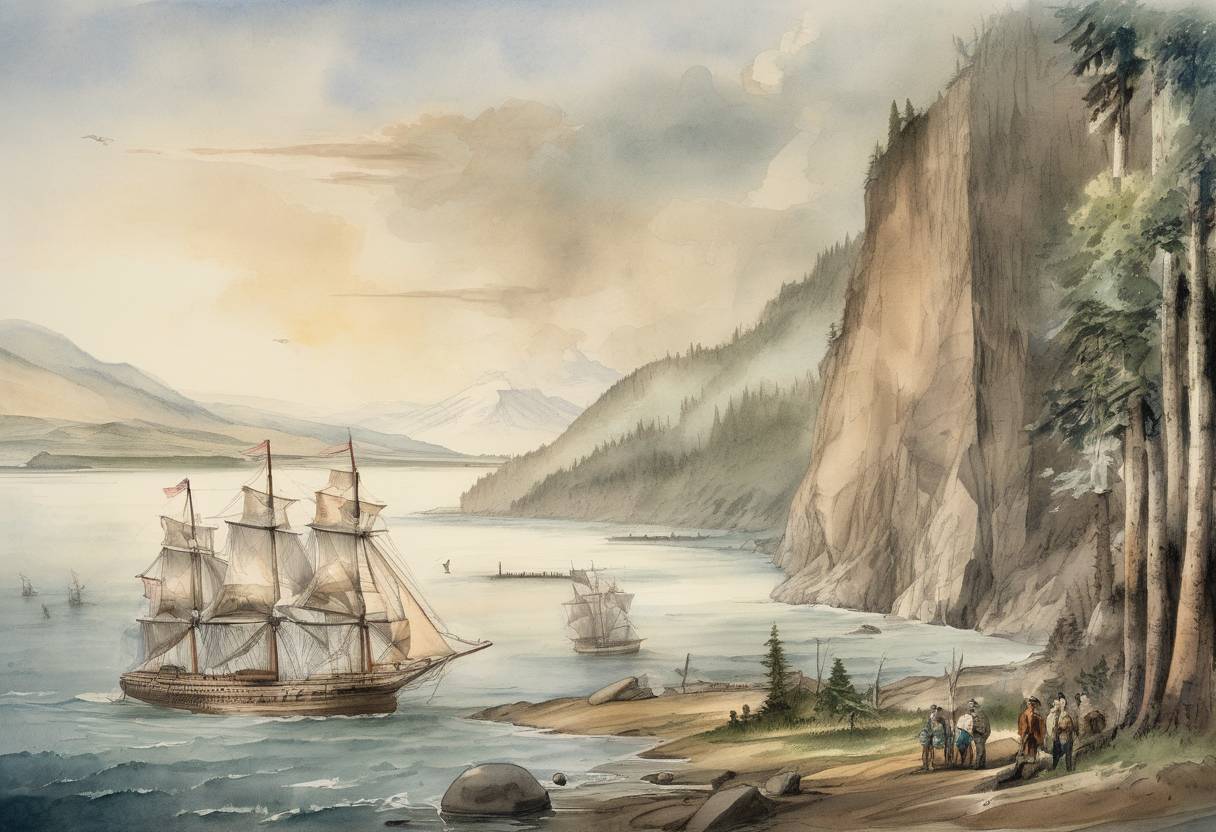
On November 7, 1805, the Lewis and Clark Expedition, officially known as the Corps of Discovery, reached a significant milestone when they first sighted the Pacific Ocean at the mouth of the Columbia River. This moment marked the culmination of a long and arduous journey across the North American continent, which had begun in May 1804.
The expedition was commissioned by President Thomas Jefferson following the Louisiana Purchase in 1803. Jefferson tasked Meriwether Lewis and William Clark with exploring the newly acquired territory and finding a practical route across the western half of the continent to the Pacific Ocean. The mission also aimed to establish American presence before European powers could claim the land and to gather scientific and geographical knowledge about the vast, uncharted territory.
Departure and Early Journey: The Corps of Discovery set out from Camp Dubois, near present-day St. Louis, Missouri, in May 1804. They traveled up the Missouri River, facing challenges such as harsh weather, difficult terrain, and the need to establish diplomatic relations with Native American tribes.
Winter at Fort Mandan: The expedition spent the winter of 1804-1805 at Fort Mandan, in present-day North Dakota, where they gathered crucial information from Native American tribes and prepared for the next phase of their journey.
Crossing the Rocky Mountains: In the summer of 1805, the expedition crossed the Rocky Mountains, a formidable barrier that tested their endurance and resourcefulness. With the help of the Shoshone tribe, they acquired horses necessary for the crossing.
Descent to the Columbia River: After navigating the Bitterroot Mountains, the expedition reached the Clearwater River, a tributary of the Columbia River, and began their descent towards the Pacific.
On this day, the expedition finally reached the mouth of the Columbia River, where they could see the vast expanse of the Pacific Ocean. This sighting was a moment of triumph and relief for the Corps, symbolizing the achievement of one of their primary objectives. Clark noted in his journal the “great joy” of the party upon seeing the ocean.
Winter at Fort Clatsop: The expedition spent the winter of 1805-1806 at Fort Clatsop, near present-day Astoria, Oregon, where they prepared for their return journey.
Return Journey: The Corps of Discovery began their return trip in March 1806, retracing their steps and arriving back in St. Louis in September 1806.
Impact and Legacy: The Lewis and Clark Expedition provided valuable maps, scientific data, and knowledge about the western territories. It paved the way for westward expansion and reinforced the United States’ claim to the Pacific Northwest.
The sighting of the Pacific Ocean was a pivotal moment in American history, symbolizing exploration, discovery, and the spirit of adventure that characterized the early 19th century.
Source: www.nps.gov