The Gallipoli Campaign: April 25, 1915
1915 · Gallipoli, Turkey
The Gallipoli Campaign began during World War I, as Allied forces landed on the Gallipoli Peninsula in an attempt to secure a sea route to Russia.
January 9, 1916
The Battle of Gallipoli ended with an Ottoman victory as Allied forces completed their evacuation from the peninsula.
Gallipoli, Turkey | Allied Forces
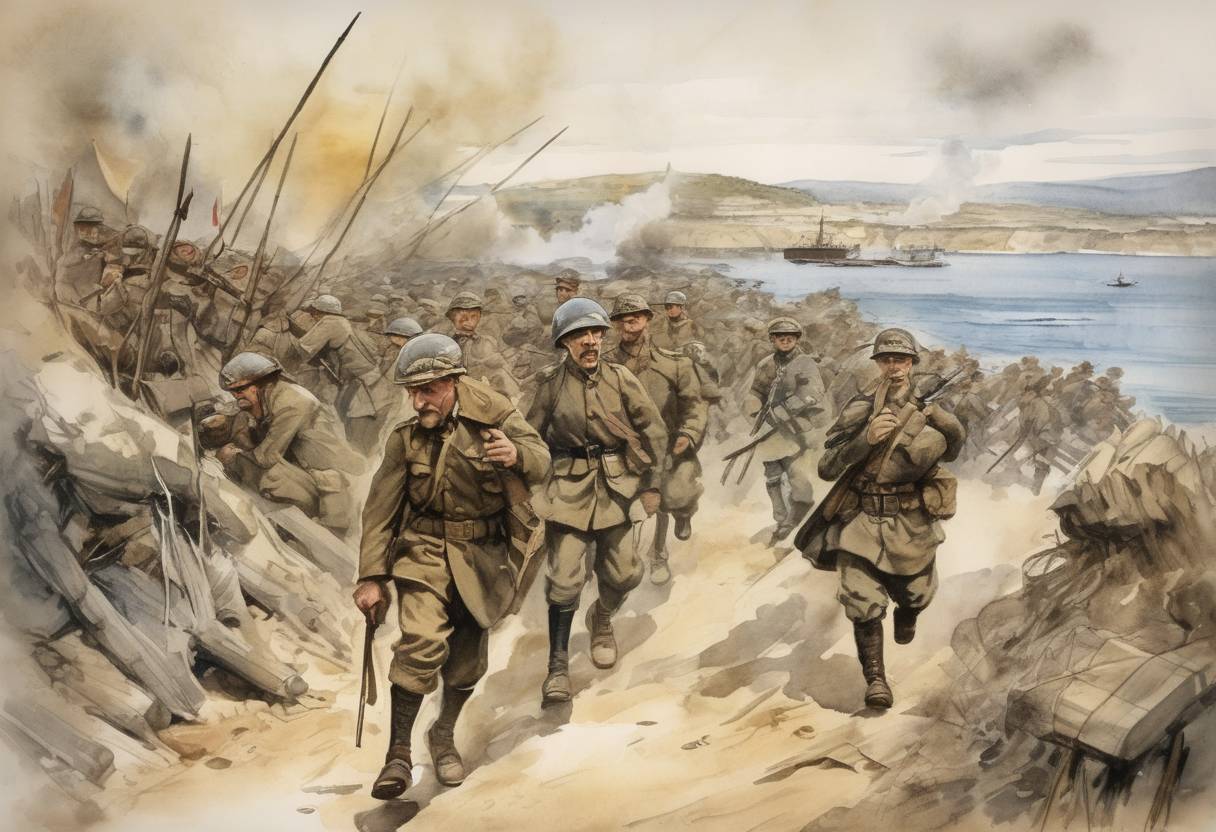
The Battle of Gallipoli, also known as the Dardanelles Campaign, concluded on January 9, 1916, with an Ottoman victory as the Allied forces completed their evacuation from the Gallipoli Peninsula. This campaign was one of the significant battles of World War I, marked by its strategic importance and the harsh conditions faced by both sides.
The Gallipoli Campaign was initiated by the Allied Powers, primarily Britain and France, with the aim of securing a sea route to Russia through the Dardanelles Strait. The campaign was also intended to knock the Ottoman Empire, an ally of the Central Powers, out of the war. The operation began with a naval attack in February 1915, followed by a land invasion on April 25, 1915.
Initial Landings: The Allied forces landed on the Gallipoli Peninsula with the hope of quickly capturing the Ottoman forts and advancing to Constantinople (modern-day Istanbul). However, they faced fierce resistance from the Ottoman troops, commanded by Mustafa Kemal (later known as Atatürk), who played a crucial role in the defense.
Stalemate and Attrition: The campaign soon devolved into a stalemate, with both sides suffering heavy casualties. The harsh terrain, combined with the lack of adequate supplies and extreme weather conditions, made the situation dire for the Allied troops.
Strategic Failures: The Allies underestimated the Ottoman forces and overestimated their own capabilities, leading to strategic missteps. The failure to achieve a decisive breakthrough resulted in prolonged trench warfare, similar to the Western Front.
Decision to Evacuate: By late 1915, it became clear that the campaign was unsustainable. The decision to evacuate was made in December 1915, and the withdrawal was executed in two phases: the evacuation of Suvla Bay and Anzac Cove in December, followed by the evacuation of Cape Helles, completed on January 9, 1916.
Casualties: The Gallipoli Campaign resulted in heavy casualties on both sides. The Allies suffered around 250,000 casualties, including dead, wounded, and missing, while the Ottoman forces incurred similar losses.
Impact on the Ottoman Empire: The victory at Gallipoli boosted the morale of the Ottoman Empire and solidified Mustafa Kemal’s reputation as a capable military leader, eventually paving the way for his future role in the establishment of the Republic of Turkey.
Allied Reassessment: The failure of the campaign led to significant political repercussions in Britain, including the resignation of First Lord of the Admiralty Winston Churchill, who had been a key proponent of the operation.
Strategic Lessons: The Gallipoli Campaign highlighted the challenges of amphibious operations and the importance of intelligence and logistical planning, influencing future military strategies.
The end of the Gallipoli Campaign marked a significant moment in World War I, demonstrating the resilience of the Ottoman forces and the complexities of warfare in challenging environments. It remains a poignant chapter in the histories of the nations involved, particularly for Australia and New Zealand, where the ANZAC troops’ participation is commemorated annually on ANZAC Day.
Source: www.britannica.com