The Attack on Pearl Harbor: December 7, 1941
1941 · Pearl Harbor, United States
The Imperial Japanese Navy attacks the United States naval base at Pearl Harbor, Hawaii, leading to the United States' entry into World War II.
December 8, 1941
The United States and the United Kingdom declared war on Japan, following the attack on Pearl Harbor.
Washington, D.C., United States | United States Congress
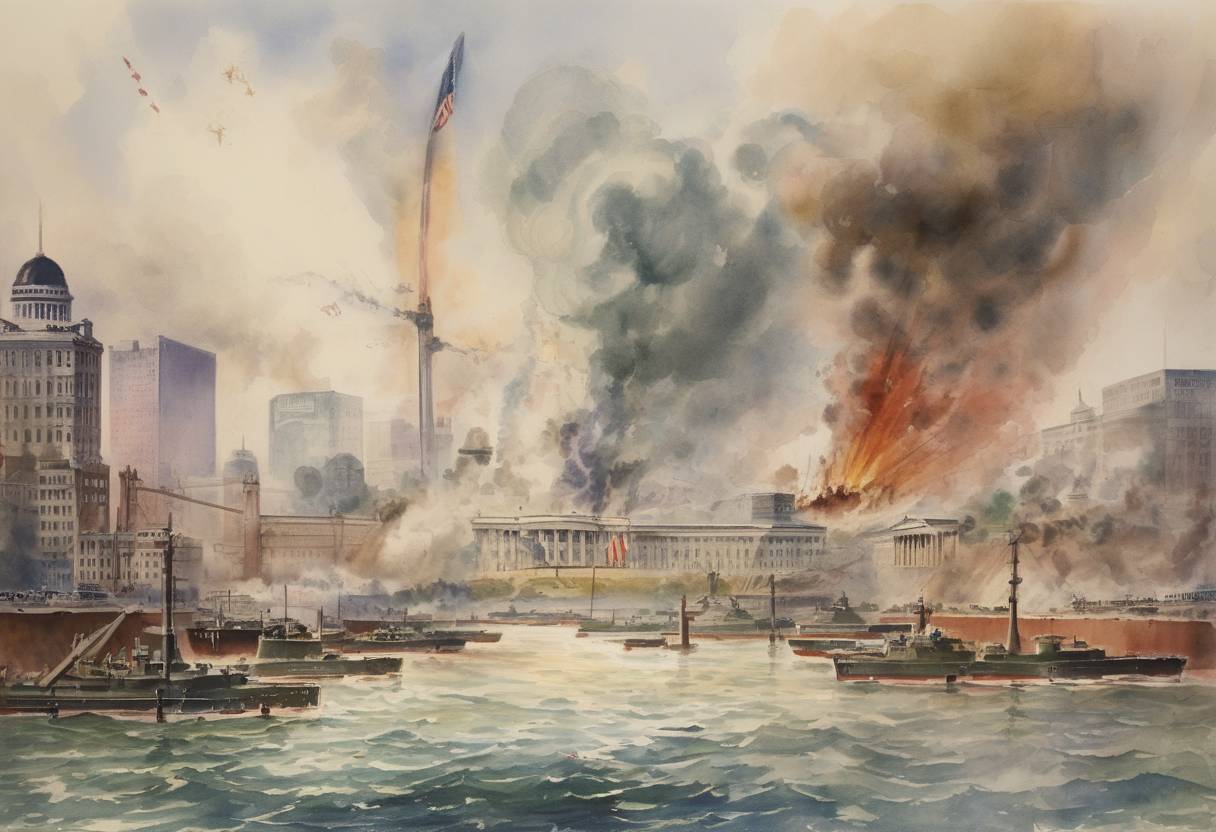
On December 7, 1941, the Empire of Japan launched a surprise military strike on the United States naval base at Pearl Harbor, Hawaii. This attack resulted in significant loss of life and damage to the U.S. Pacific Fleet, marking a pivotal moment in World War II. The assault galvanized American public opinion and led to a swift response from the U.S. government.
Presidential Address: On December 8, 1941, President Franklin D. Roosevelt addressed a joint session of the United States Congress. In his speech, famously known as the “Day of Infamy” speech, Roosevelt declared December 7th as “a date which will live in infamy” due to the unprovoked attack by Japan.
Congressional Action: Following Roosevelt’s address, Congress moved quickly to declare war on Japan. The resolution passed with overwhelming support, with only one dissenting vote from Representative Jeannette Rankin of Montana, a noted pacifist.
Official Declaration: The United States formally declared war on Japan on December 8, 1941, marking its entry into World War II.
British Response: On the same day, the United Kingdom, led by Prime Minister Winston Churchill, also declared war on Japan. The British government had been closely monitoring the situation and, in solidarity with its ally, the United States, took immediate action.
Global Implications: The declaration of war by both the United States and the United Kingdom signified a major escalation in the global conflict, as both nations were significant military powers. This move further solidified the Allied Powers against the Axis Powers, which included Japan, Germany, and Italy.
Allied Coordination: The entry of the United States into the war marked a turning point in World War II. It led to increased coordination and cooperation among the Allied nations, significantly bolstering their military and economic capabilities.
Pacific Theater: The war in the Pacific became a major focus for the United States, leading to significant battles such as the Battle of Midway and the island-hopping campaign, which ultimately contributed to Japan’s defeat in 1945.
Global Impact: The declarations of war on December 8, 1941, reshaped the geopolitical landscape, leading to a more unified Allied front and setting the stage for subsequent military and diplomatic efforts that would define the remainder of the war.
The events of December 8, 1941, thus marked a critical juncture in World War II, with the United States and the United Kingdom committing to a full-scale war effort against Japan, significantly altering the course of the conflict.
Source: www.history.com