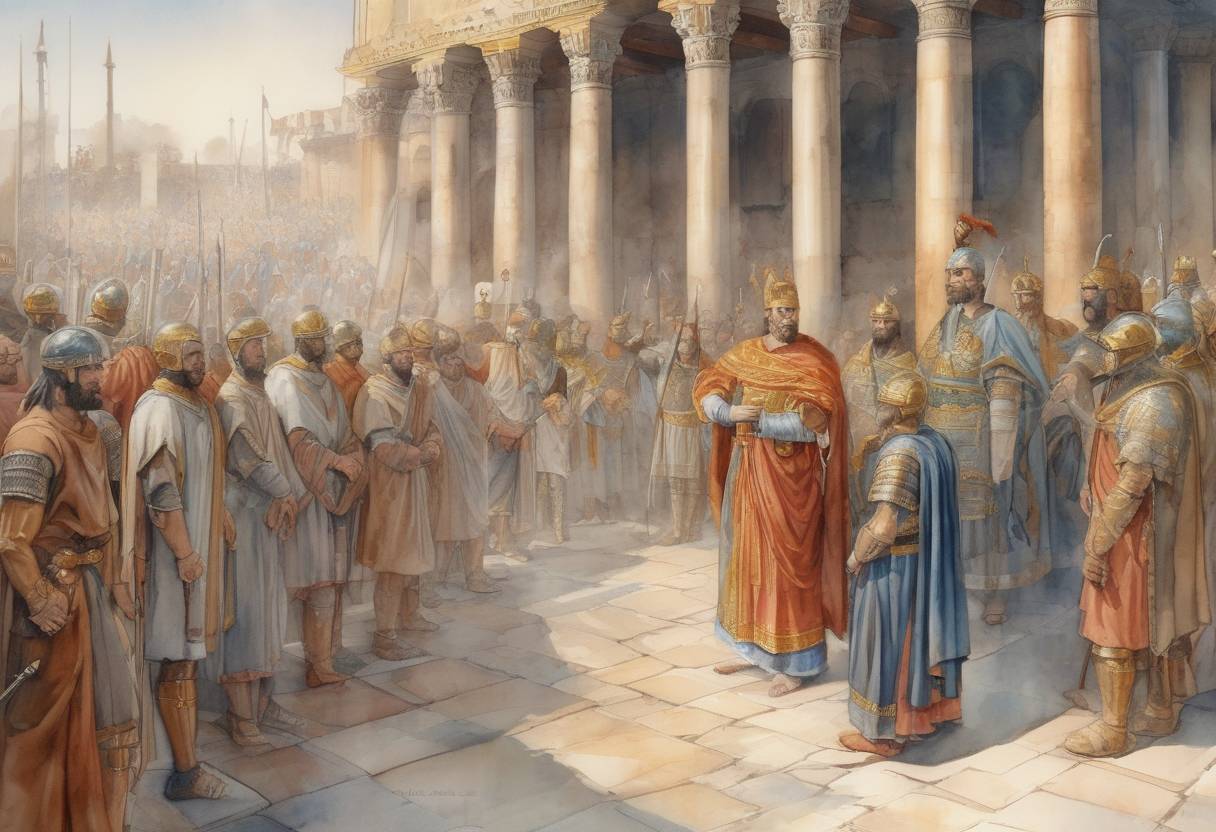
Julian the Apostate Enters Constantinople as Sole Emperor
On December 11, 361, Julian, later known as Julian the Apostate, entered Constantinople as the sole Emperor of the Roman Empire following the death of Constantius II. This event marked a significant turning point in the history of the Roman Empire, particularly in its religious and political landscape.
Background
Julian was born in 331 or 332 into the Constantinian dynasty, a family deeply entwined with the Christianization of the Roman Empire. Despite this, Julian was raised in a milieu that exposed him to both Christian and pagan philosophies. His early life was marked by the massacre of his family members in 337, an event that left him and his half-brother Gallus as the only surviving male relatives of Emperor Constantius II.
Julian’s rise to power began when Constantius II appointed him as Caesar of the Western Roman Empire in 355, entrusting him with the defense of Gaul. Julian proved to be an effective military leader, securing victories against Germanic tribes and stabilizing the region.
The Path to Sole Rule
Tensions between Julian and Constantius II escalated as Julian’s popularity and influence grew. In 360, Julian’s troops proclaimed him Augustus, a title that Constantius refused to recognize, leading to a potential civil war. However, the conflict was averted when Constantius II died of illness on November 3, 361, while on his way to confront Julian.
Julian’s Entry into Constantinople
With Constantius II’s death, Julian became the uncontested ruler of the Roman Empire. On December 11, 361, he entered Constantinople, the empire’s capital, as the sole emperor. His ascension was met with a mix of anticipation and apprehension, given his known sympathies for paganism.
Julian’s Reign and Religious Policies
Julian’s reign was marked by his efforts to restore paganism and reduce the influence of Christianity, which had been the dominant religion under his predecessors. He sought to revive traditional Roman religious practices and promote religious tolerance, albeit with a clear preference for paganism. This earned him the epithet “the Apostate” from Christian historians.
Julian’s policies included:
- Reopening Pagan Temples: He restored and reopened pagan temples that had been closed or repurposed under previous Christian emperors.
- Educational Reforms: Julian attempted to limit Christian influence in education by barring Christians from teaching classical texts.
- Religious Tolerance: While promoting paganism, Julian advocated for religious tolerance, allowing various religious practices to coexist.
Aftermath and Historical Significance
Julian’s reign was brief, lasting only until his death in 363 during a campaign against the Persian Empire. His attempts to reverse the Christianization of the empire were largely undone by his successors, who reinstated Christianity as the state religion.
Despite his short reign, Julian’s efforts to restore paganism and his philosophical writings left a lasting impact on Roman intellectual and religious life. His reign is often seen as the last significant attempt to revive paganism in the Roman Empire, highlighting the complex interplay between religion and politics during this period.
Julian’s legacy is a subject of considerable debate among historians, with some viewing him as a champion of religious freedom and others as a reactionary figure resisting the inevitable rise of Christianity.