The Great Heathen Army Lands in England - September 8, 866
866 · East Anglia, England
The Great Heathen Army, a coalition of Norse warriors, landed in East Anglia, beginning a series of invasions and battles in England.
February 3, 0865
The Viking Great Heathen Army, led by Ivar the Boneless, captures the city of York.
York, England | Viking Great Heathen Army
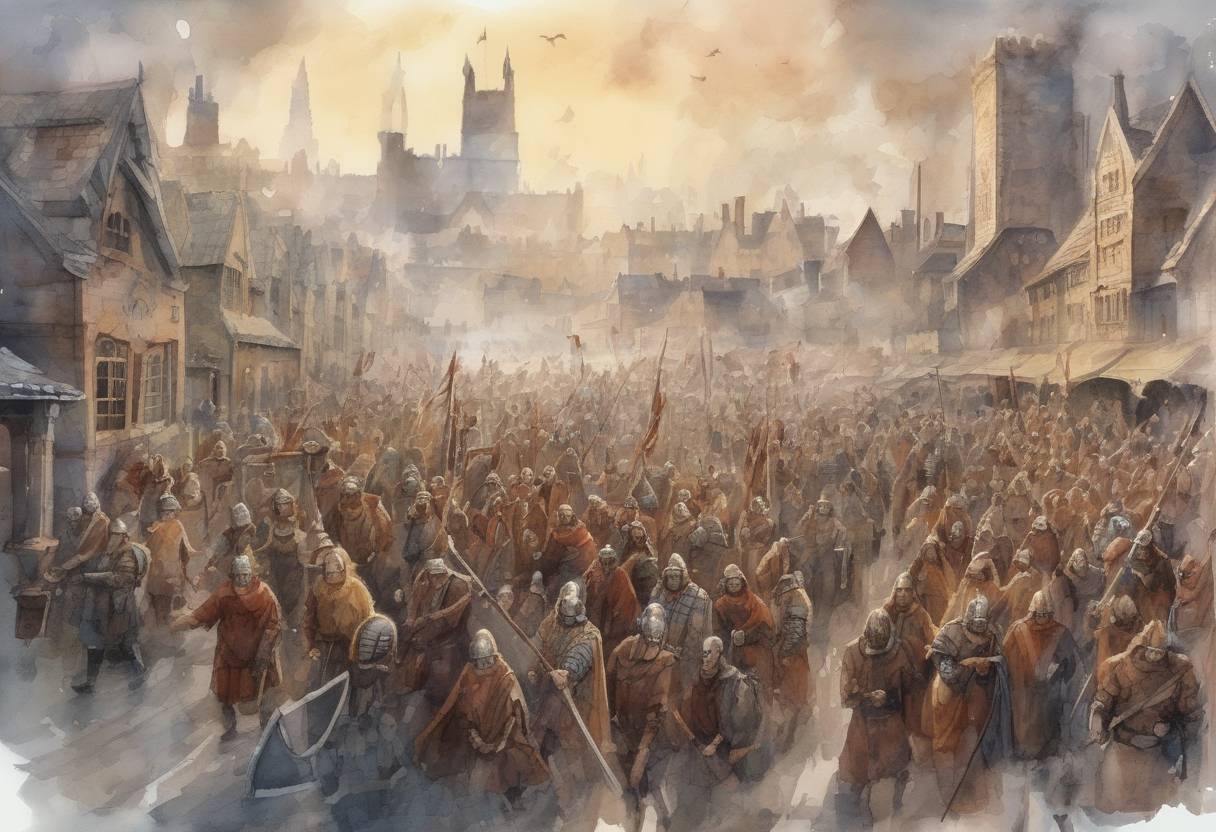
On February 3, 865, a significant event unfolded in the history of England during the Viking Age: the capture of the city of York by the Viking Great Heathen Army, led by the legendary figure Ivar the Boneless. This event marked a pivotal moment in the Viking invasions of England and had lasting impacts on the region’s history.
The Viking Age, spanning from the late 8th century to the early 11th century, was characterized by Norse seafarers from Scandinavia exploring, trading, and raiding across Europe. By the mid-9th century, these Norsemen had begun to focus their attention on the British Isles, with England becoming a prime target due to its wealth and relatively fragmented political landscape.
The Great Heathen Army was a coalition of Norse warriors, believed to be composed of various Viking groups from Denmark, Norway, and possibly Sweden. Unlike previous Viking raids, which were typically hit-and-run attacks, the Great Heathen Army aimed to conquer and settle in England. This shift in strategy marked a new phase in the Viking incursions.
Ivar the Boneless, one of the leaders of the Great Heathen Army, is a figure shrouded in legend and mystery. He is often depicted as a cunning and ruthless leader, and his epithet “the Boneless” has been subject to various interpretations, ranging from a physical disability to a metaphorical reference to his strategic flexibility.
York, known as Eoforwic during this period, was a significant city in the Anglo-Saxon kingdom of Northumbria. It was a major ecclesiastical center and an important hub for trade and governance. The capture of York by the Great Heathen Army was a strategic victory that provided the Vikings with a strong foothold in northern England.
The Great Heathen Army landed in East Anglia in 865 and quickly moved north, targeting Northumbria. At the time, Northumbria was embroiled in internal conflict, which the Vikings exploited. The divided leadership and weakened defenses of Northumbria made it vulnerable to the Viking assault.
The Vikings laid siege to York, and after a period of intense fighting, they successfully captured the city. The fall of York was a devastating blow to Northumbria and demonstrated the effectiveness of the Viking military strategy.
The capture of York had significant consequences for the region:
Viking Rule: Following the capture, the Vikings established control over York, which became a key center of Norse power in England. The city was renamed Jórvík and served as the capital of the Viking Kingdom of York.
Cultural Exchange: The Norse presence in York led to a blending of cultures, with influences seen in art, language, and trade.
Continued Campaigns: The success at York emboldened the Great Heathen Army to continue their campaigns across England, leading to further conquests and settlements.
Legacy: The events surrounding the capture of York contributed to the eventual formation of the Danelaw, a region of England under Viking control, which played a crucial role in shaping the medieval history of England.
The capture of York by the Great Heathen Army remains a testament to the impact of the Viking Age on the British Isles, illustrating the complex interplay of warfare, politics, and cultural transformation during this period.
Source: en.wikipedia.org