The First Publication of The Times
1788 · London, England
The Times, a leading newspaper in the United Kingdom, was first published.
November 28, 1814
The Times in London is printed by automatic, steam-powered presses for the first time, marking a revolution in printing technology.
London, England | The Times
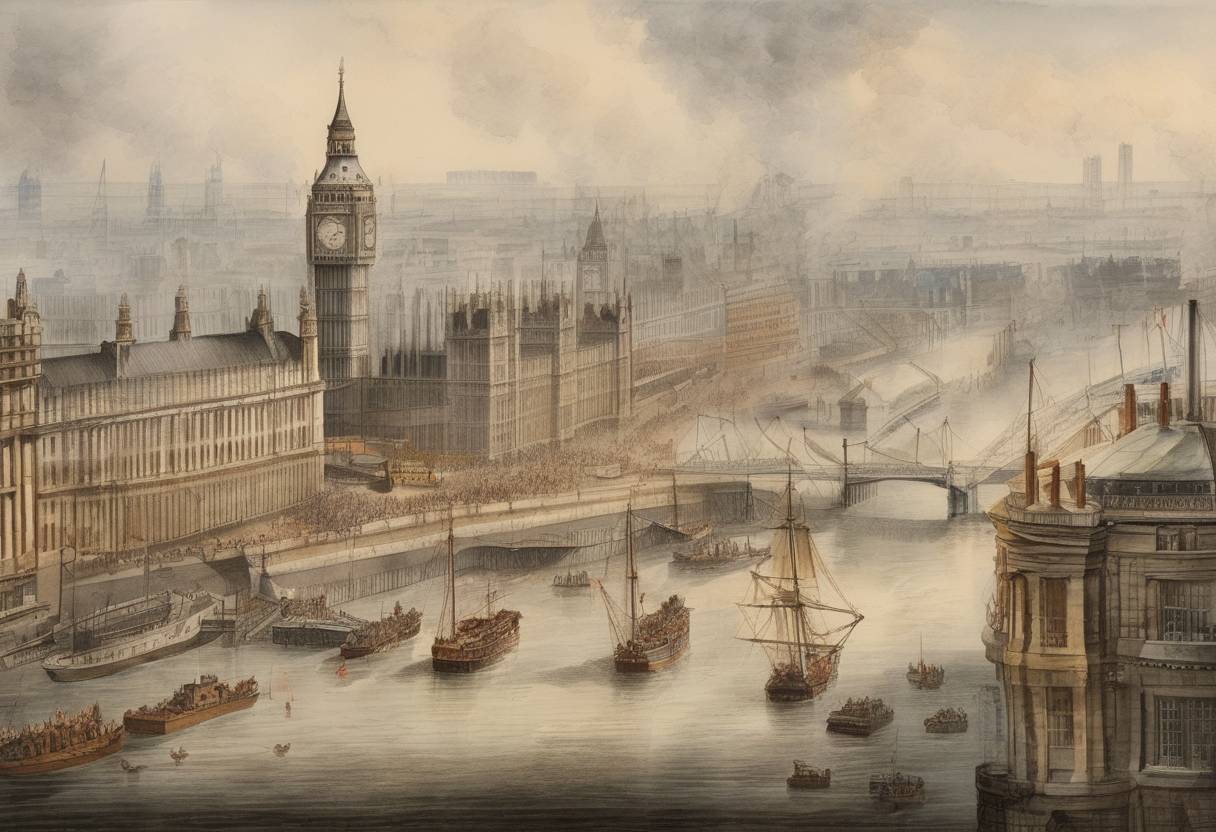
On November 28, 1814, a significant milestone in the history of printing technology was achieved when The Times of London was printed using automatic, steam-powered presses for the first time. This event marked a pivotal moment in the Industrial Revolution, showcasing the transformative power of mechanization in the publishing industry.
Before this innovation, newspapers were printed using manual hand-operated presses, a labor-intensive and time-consuming process. The demand for newspapers was increasing, driven by a growing literate population eager for news and information. The limitations of manual printing were becoming apparent, necessitating a more efficient method to meet the rising demand.
The breakthrough was made possible by the ingenuity of German inventors Friedrich Koenig and Andreas Friedrich Bauer. Koenig, a skilled printer and engineer, had been working on improving the printing process since the early 1800s. In 1810, he patented a steam-powered printing press design, which he further refined with the help of Bauer.
The steam-powered press introduced by Koenig and Bauer was revolutionary. It utilized a cylinder mechanism that allowed for continuous paper feeding and printing, significantly increasing the speed and efficiency of the process. This innovation enabled The Times to print approximately 1,100 sheets per hour, a substantial improvement over the manual presses, which could produce only about 250 sheets per hour.
The introduction of the steam-powered press had far-reaching implications:
The success of the steam-powered press set a precedent for the mechanization of other industries, highlighting the potential of steam power beyond traditional applications. It also underscored the importance of technological innovation in shaping societal progress.
In summary, the printing of The Times using steam-powered presses on November 28, 1814, was a landmark event that revolutionized the publishing industry and played a crucial role in the broader context of the Industrial Revolution. This advancement not only transformed the way information was disseminated but also laid the groundwork for future technological developments in printing and beyond.
Source: en.wikipedia.org