Discovery of the McDonald Islands
1854 · near McDonald Islands, Antarctica
The McDonald Islands are discovered by Captain William McDonald aboard the Samarang.
March 21, 1871
Journalist Henry Morton Stanley began his famous expedition to find the missing explorer and missionary David Livingstone in Africa.
Zanzibar, Tanzania | New York Herald
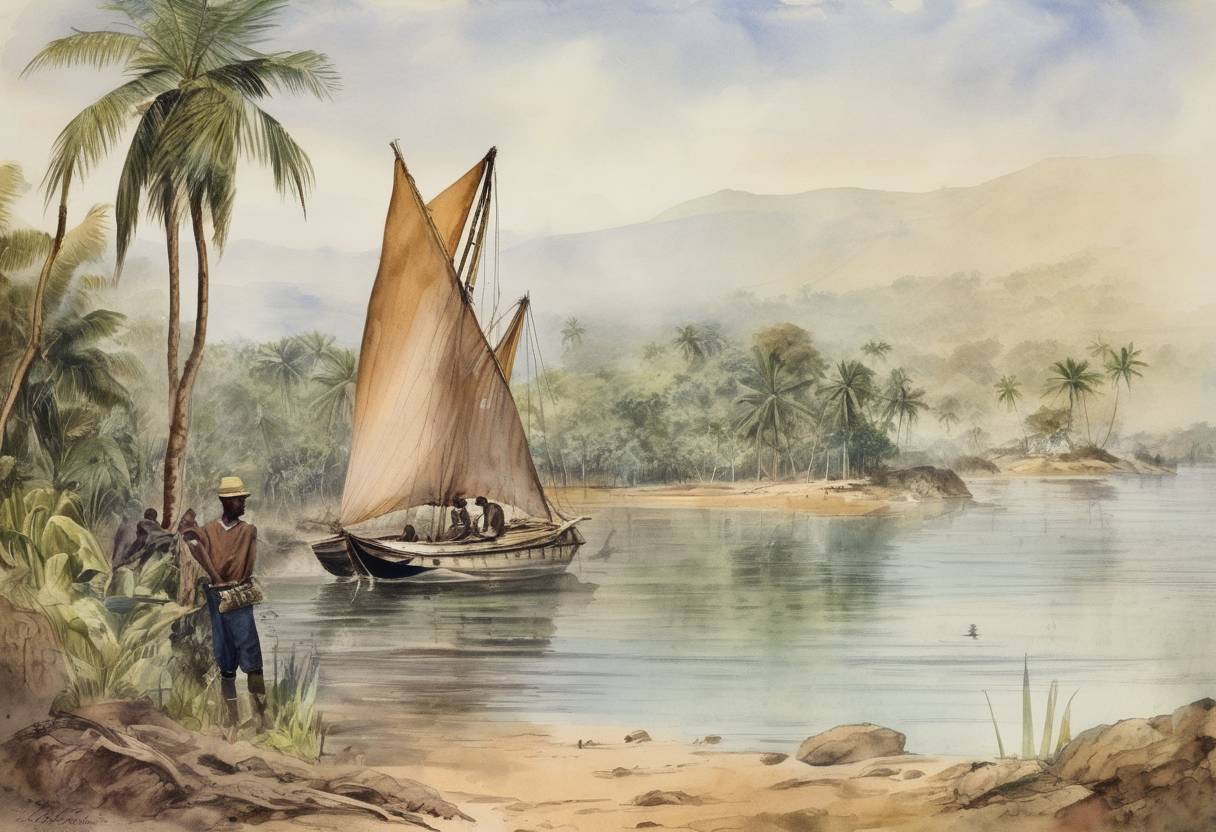
On March 21, 1871, journalist and explorer Henry Morton Stanley embarked on his renowned expedition to locate the missing Scottish explorer and missionary, Dr. David Livingstone, in Africa. This journey would become one of the most famous episodes in the history of exploration.
David Livingstone was a celebrated explorer and missionary known for his extensive travels in Africa. He aimed to find the source of the Nile River and promote the abolition of the slave trade. However, by the late 1860s, Livingstone had lost contact with the outside world, and his whereabouts became a matter of international concern.
Henry Morton Stanley, a Welsh-American journalist working for the New York Herald, was commissioned by the newspaper’s editor, James Gordon Bennett Jr., to find Livingstone. Stanley’s expedition was both a journalistic endeavor and a rescue mission, driven by the public’s fascination with Livingstone’s adventures and the mystery surrounding his disappearance.
On November 10, 1871, after months of arduous travel, Stanley finally encountered Livingstone in the town of Ujiji, near Lake Tanganyika. The meeting is famously remembered for Stanley’s greeting, “Dr. Livingstone, I presume?” This phrase has since become iconic, symbolizing the successful conclusion of a daring quest.
Stanley’s expedition to find Livingstone remains a significant chapter in the history of exploration, illustrating the era’s spirit of adventure and the complex interplay of journalism, exploration, and imperialism.
Source: en.wikipedia.org