Nelson Mandela's Inauguration: May 9, 1994
1994 · Pretoria, South Africa
Nelson Mandela was inaugurated as South Africa's first black president, marking the end of apartheid.
April 26, 1994
The first multi-racial elections began in South Africa, marking the end of apartheid and leading to Nelson Mandela's election as president.
, South Africa
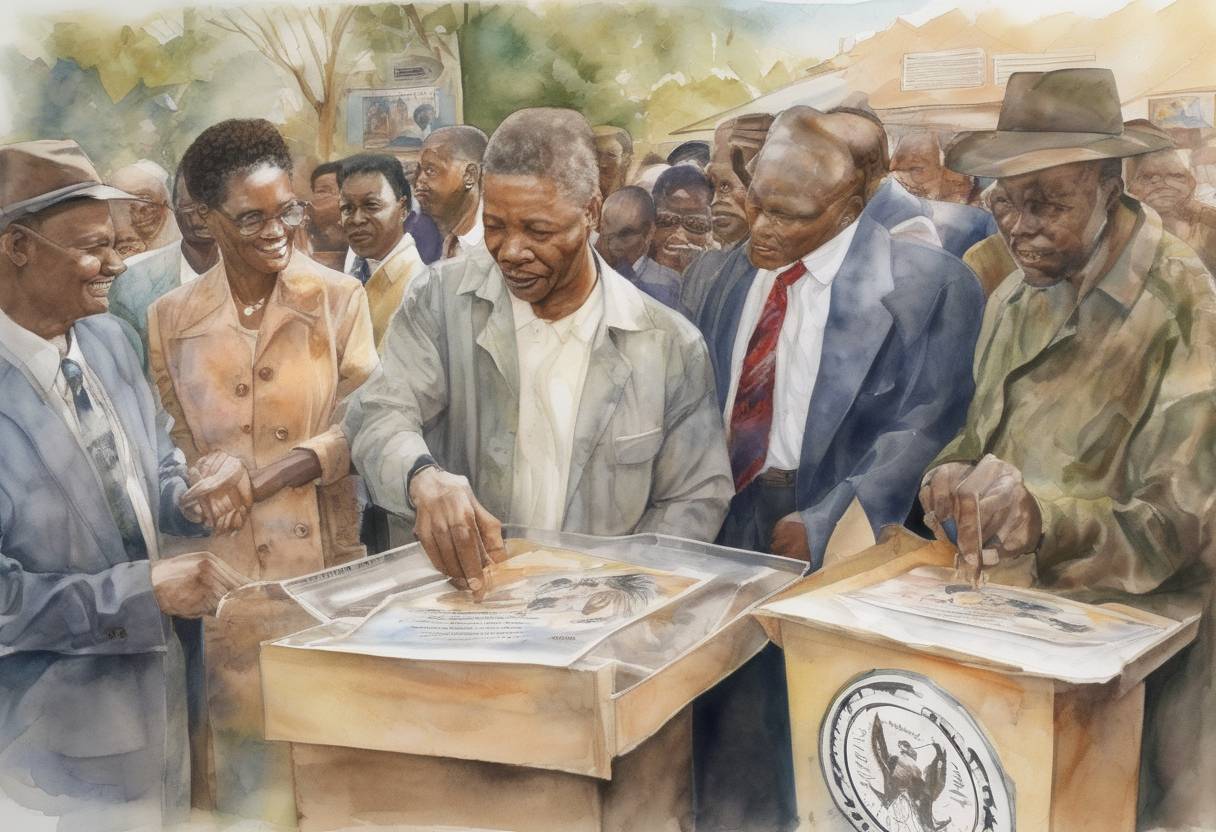
On April 26, 1994, South Africa embarked on a historic journey as it held its first multi-racial elections, marking the end of decades of institutionalized racial segregation under the apartheid regime. This pivotal event not only transformed the political landscape of South Africa but also resonated globally as a triumph of democracy and human rights.
Apartheid, a system of institutionalized racial segregation and discrimination, had been enforced in South Africa since 1948. Under apartheid, the rights of the majority black inhabitants were severely restricted, while the minority white population maintained political and economic control. The struggle against apartheid was long and arduous, involving both internal resistance and international pressure.
Key events leading up to the 1994 elections included:
The elections, held from April 26 to April 29, 1994, were the first in which citizens of all races were allowed to participate. The African National Congress (ANC), led by Nelson Mandela, was the primary political force advocating for change and equality.
The ANC emerged victorious, securing 62.65% of the vote, which paved the way for Nelson Mandela to become South Africa’s first black president. His inauguration on May 10, 1994, symbolized the birth of a new, democratic South Africa.
The 1994 elections remain a landmark event in South African history, representing the triumph of the human spirit over oppression and the power of democracy to effect profound change.
Source: en.wikipedia.org