The Hungarian Revolution of 1956
1956 · Budapest, Hungary
The Hungarian Revolution of 1956 began as a nationwide revolt against the Soviet-imposed policies of the People's Republic of Hungary.
March 15, 1848
Revolutionary events in Hungary led to the Hungarian Revolution of 1848, part of the broader Revolutions of 1848 in Europe.
Budapest, Hungary | Hungarian Revolutionaries
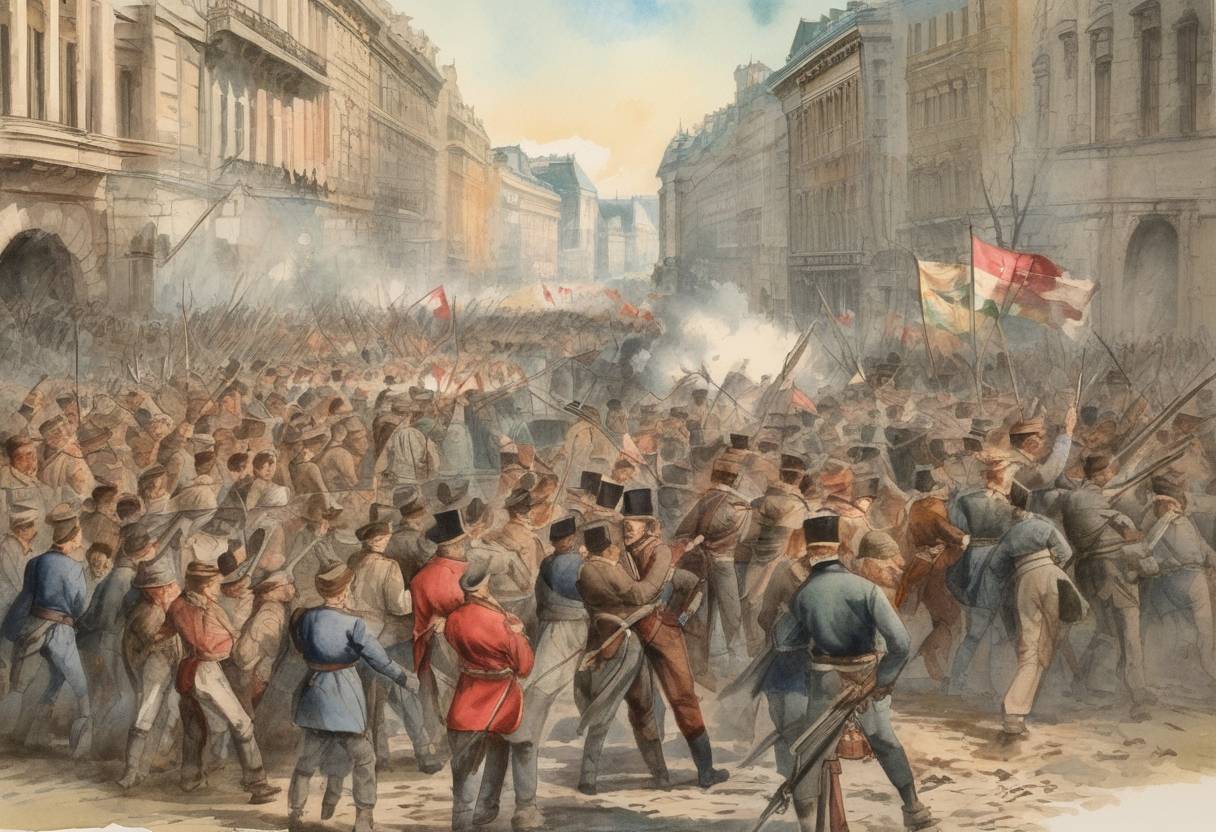
The Hungarian Revolution of 1848 was a pivotal event in the broader context of the Revolutions of 1848 that swept across Europe. This revolution was part of a series of interconnected uprisings that sought to challenge the conservative order established by the Congress of Vienna in 1815. The Hungarian Revolution, in particular, was driven by a desire for national independence, liberal reforms, and social change.
On March 15, 1848, a series of coordinated actions in Pest (now part of Budapest) marked the beginning of the Hungarian Revolution:
Petitions and Demands: Inspired by the revolutionary fervor in Paris and Vienna, Hungarian leaders drafted a list of demands known as the “Twelve Points.” These included freedom of the press, the establishment of a responsible government in Hungary, and the abolition of serfdom.
Public Demonstrations: Thousands of Hungarians gathered in Pest to support the demands. The crowd, led by figures like Petőfi and Kossuth, marched through the city, reciting the “National Song” and calling for reform.
Seizure of the Press: Revolutionaries took control of a printing press to disseminate their demands and revolutionary literature, ensuring that their message reached a wider audience.
Formation of a National Government: The pressure from the demonstrations led to the formation of a new Hungarian government, which sought to implement the Twelve Points and negotiate greater autonomy from Austria.
The events of March 15, 1848, are commemorated annually in Hungary as a national holiday, celebrating the spirit of freedom and the enduring quest for self-determination.
Source: en.wikipedia.org