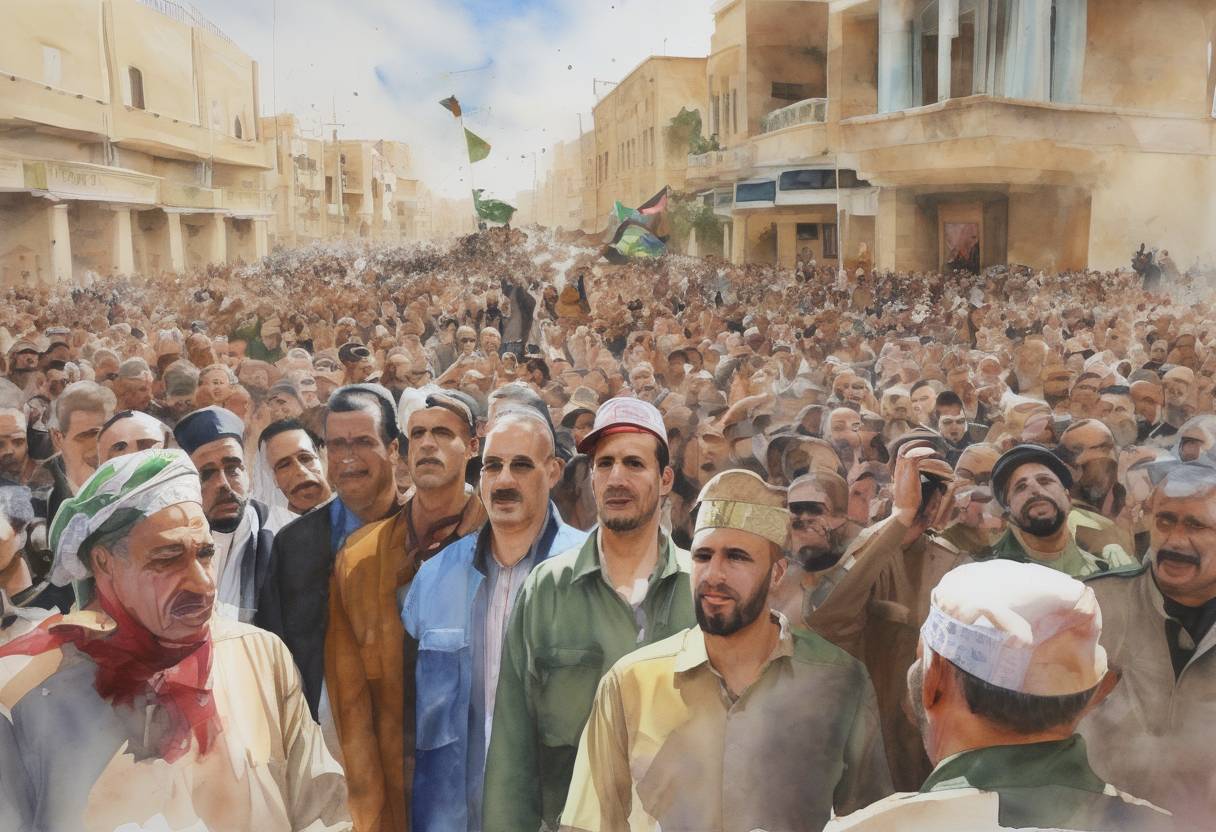
Declaration of Liberation in Libya - October 21, 2011
On October 21, 2011, the Libyan National Transitional Council (NTC) declared the liberation of Libya, marking a significant turning point in the country’s history and the conclusion of the Libyan Civil War. This declaration came shortly after the death of the long-time Libyan leader Muammar Gaddafi, who had ruled the country for over four decades.
Background
Muammar Gaddafi’s Rule: Gaddafi came to power in 1969 through a military coup that overthrew King Idris I. His rule was characterized by a mix of Arab nationalism, socialism, and later, a unique political system known as the Jamahiriya, or “state of the masses.”
Arab Spring Influence: The Libyan Civil War was part of the broader wave of the Arab Spring, a series of anti-government protests and uprisings across the Arab world that began in late 2010. Inspired by the events in Tunisia and Egypt, Libyans began protesting against Gaddafi’s regime in February 2011.
Civil War Outbreak: The protests quickly escalated into a full-scale civil war. The opposition formed the National Transitional Council (NTC) to coordinate efforts against Gaddafi’s forces. The conflict drew international attention, leading to a NATO-led intervention authorized by the United Nations to protect civilians.
Key Events Leading to Liberation
NATO Intervention: In March 2011, the United Nations Security Council passed Resolution 1973, authorizing a no-fly zone over Libya and “all necessary measures” to protect civilians. NATO forces began airstrikes against Gaddafi’s military assets, significantly aiding the rebel forces.
Fall of Tripoli: By August 2011, rebel forces had captured the capital, Tripoli, effectively ending Gaddafi’s control over the country. This was a pivotal moment in the conflict, signaling the collapse of the regime.
Death of Gaddafi: On October 20, 2011, Gaddafi was captured and killed by rebel forces in his hometown of Sirte. His death marked the definitive end of his regime and paved the way for the NTC to declare Libya liberated.
Declaration of Liberation
Official Announcement: On October 23, 2011, the NTC officially declared the liberation of Libya in a ceremony held in Benghazi, the cradle of the revolution. This announcement marked the end of the eight-month civil war.
Significance: The declaration was a moment of triumph for the Libyan people, symbolizing the end of Gaddafi’s authoritarian rule and the beginning of a new era. However, it also marked the start of significant challenges in rebuilding the nation and establishing a stable government.
Aftermath and Consequences
Political Instability: Post-liberation, Libya faced ongoing political instability, with various factions vying for power. The lack of a strong central government led to continued violence and division.
Humanitarian Impact: The civil war resulted in significant loss of life and displacement. The country’s infrastructure was severely damaged, and the humanitarian situation remained dire.
International Relations: Libya’s liberation was welcomed by many in the international community, but the subsequent instability raised concerns about regional security and the proliferation of weapons.
The declaration of liberation in Libya was a pivotal moment in the country’s history, representing both the end of an era and the beginning of a complex and challenging transition.