Capture of Ulundi: The End of the Anglo-Zulu War
1879 · Ulundi, South Africa
Anglo-Zulu War: The Zululand capital of Ulundi is captured by British forces, effectively ending the war.
January 22, 1879
The Battle of Isandlwana takes place during the Anglo-Zulu War, resulting in a decisive Zulu victory over British forces.
Isandlwana, South Africa | British Army
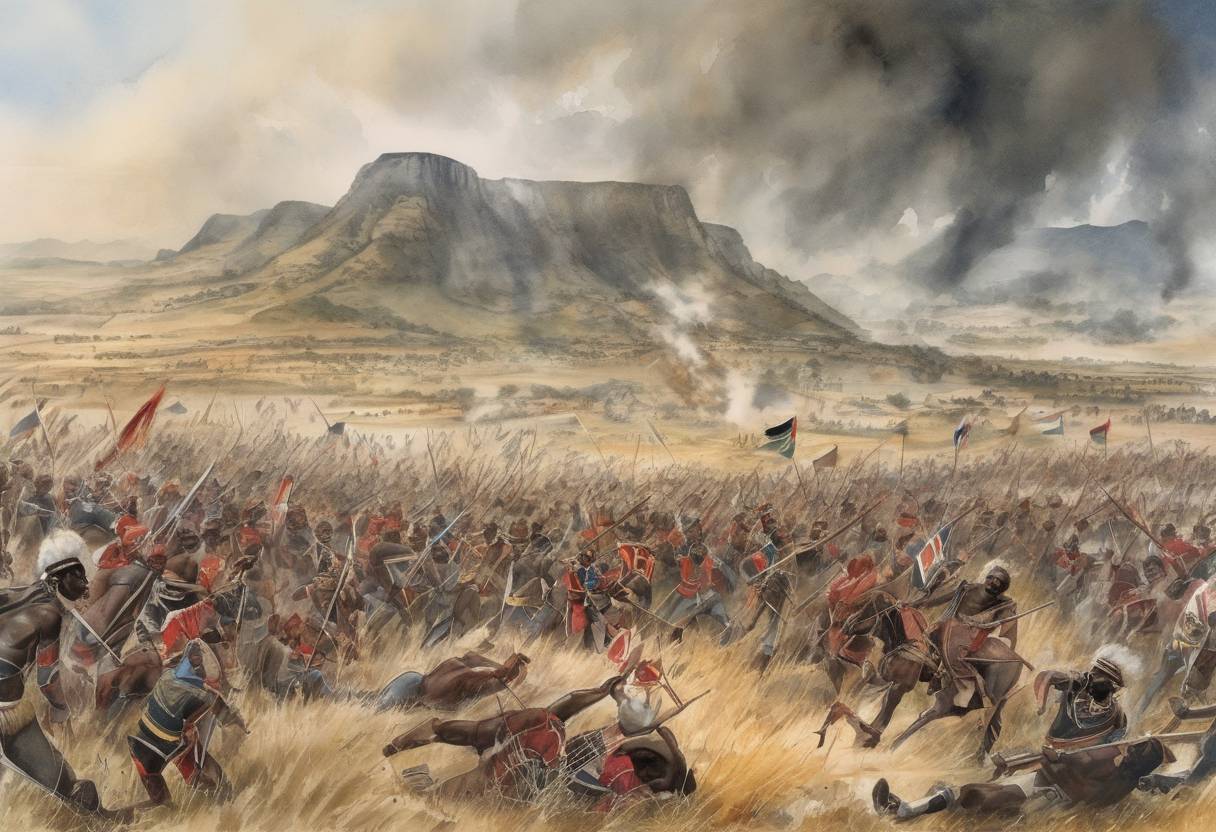
The Battle of Isandlwana, fought on January 22, 1879, was a pivotal engagement during the Anglo-Zulu War. This conflict arose from British imperial ambitions in Southern Africa, particularly the desire to consolidate control over the region by subjugating the independent Zulu Kingdom. The British, under the leadership of Lord Chelmsford, sought to annex Zululand, believing that the Zulu military power posed a threat to their colonial interests.
In December 1878, the British issued an ultimatum to the Zulu King Cetshwayo, demanding disbandment of the Zulu military system and acceptance of British authority. The ultimatum was designed to be unacceptable, providing a pretext for war. When the Zulu did not comply, British forces invaded Zululand in January 1879.
Lord Chelmsford divided his forces into three columns, with the central column advancing towards the Zulu capital, Ulundi. On January 20, 1879, this column, numbering around 1,800 British soldiers and colonial troops, established a camp at the base of Isandlwana Hill.
On the morning of January 22, Lord Chelmsford took a portion of his force to scout ahead, leaving the camp at Isandlwana under the command of Colonel Henry Pulleine. Unbeknownst to the British, a Zulu army of approximately 20,000 warriors, led by Ntshingwayo kaMahole Khoza and Mavumengwana kaNdlela Ntuli, was advancing towards the camp.
The Zulu forces executed a classic “horns of the buffalo” formation, a tactical maneuver designed to encircle and overwhelm the enemy. The British, caught off guard and spread thin, struggled to form a cohesive defense. Despite their superior firepower, the British were unable to maintain their lines against the sheer numbers and determination of the Zulu warriors.
By early afternoon, the Zulu had breached the British defenses, leading to a chaotic and desperate fight. The British forces were ultimately overrun, suffering heavy casualties. Approximately 1,300 British and colonial troops were killed, marking one of the worst defeats for the British Army against a technologically inferior indigenous force.
The Battle of Isandlwana was a significant victory for the Zulu, demonstrating their military prowess and resilience. However, the victory was short-lived. The British, shocked by the defeat, quickly regrouped and reinforced their forces, eventually achieving victory in the subsequent Battle of Rorke’s Drift later the same day, where a small British garrison successfully defended against a Zulu attack.
The defeat at Isandlwana galvanized British public opinion and led to a more determined military campaign. By July 1879, the British had defeated the Zulu at the Battle of Ulundi, effectively ending the war and leading to the annexation of Zululand.
The Battle of Isandlwana remains a powerful symbol of resistance against colonialism and is remembered for its demonstration of Zulu bravery and tactical skill. It also serves as a reminder of the complexities and consequences of imperial expansion.
Source: www.britannica.com