Conclusion of the Council of Trent - January 18, 1562
1562 · Trent, Italy
The Council of Trent concluded in Italy, after addressing church reform and condemning Protestantism, and shaping the Roman Catholic Church's counter-reformation.
December 4, 1563
The Council of Trent, a major Roman Catholic ecumenical council, holds its final session.
Trent, Italy | Roman Catholic Church
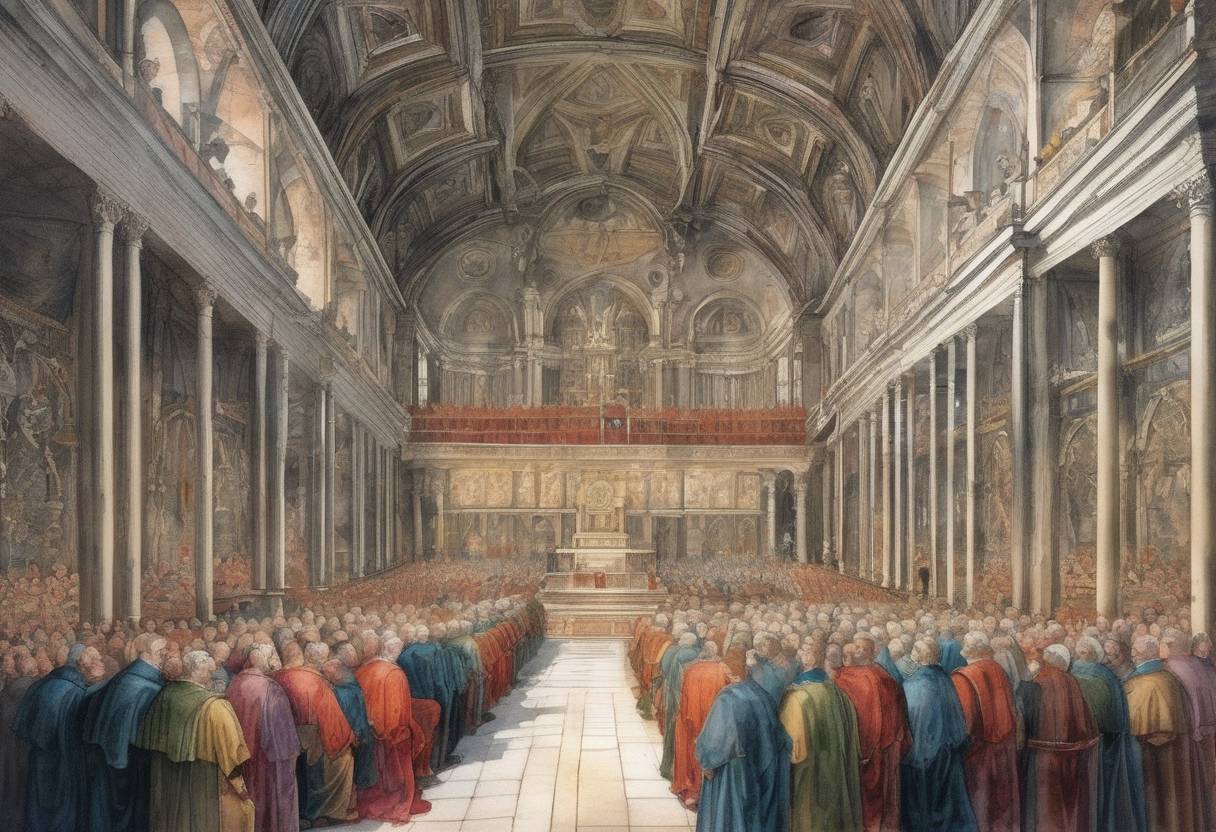
The Council of Trent, one of the most significant ecumenical councils in the history of the Roman Catholic Church, concluded its final session on December 4, 1563. This council was a cornerstone of the Counter-Reformation, aiming to address issues of church reform and to counter the Protestant Reformation.
The Protestant Reformation, initiated by figures like Martin Luther and John Calvin in the early 16th century, posed a significant challenge to the Catholic Church. In response, the Church sought to clarify its doctrines and reform its practices. Pope Paul III convened the Council of Trent in 1545, intending to address these challenges and restore the Church’s integrity and influence.
First Period (1545-1547): The council initially focused on doctrinal issues, such as the nature of original sin, justification, and the sacraments. It also addressed the authority of the Church and the role of tradition alongside Scripture.
Second Period (1551-1552): This phase dealt with the Eucharist, penance, and extreme unction. Political tensions, particularly the Schmalkaldic War, interrupted the council’s progress.
Third Period (1562-1563): Resumed under Pope Pius IV, this period focused on church discipline, the establishment of seminaries for priestly education, and the reaffirmation of traditional Catholic beliefs.
The final session on December 4, 1563, marked the culmination of the council’s efforts. Key decrees and canons were established, including:
Doctrine: The council reaffirmed traditional Catholic teachings on the sacraments, the veneration of saints, and the importance of both Scripture and Church tradition.
Reforms: It introduced significant reforms in church administration and discipline, such as the establishment of seminaries for the proper training of priests and measures to combat corruption and absenteeism among the clergy.
Liturgy: The council standardized the Mass, leading to the development of the Tridentine Mass, which remained the standard form of the Roman Rite until the Second Vatican Council in the 20th century.
The Council of Trent had a profound impact on the Catholic Church:
Counter-Reformation: It played a crucial role in revitalizing the Catholic Church and countering the spread of Protestantism in Europe.
Catholic Doctrine: The council’s decrees clarified and codified Catholic doctrine, providing a clear theological framework that guided the Church for centuries.
Church Reforms: The reforms initiated at Trent led to a more disciplined and educated clergy, enhancing the Church’s spiritual and moral authority.
In conclusion, the Council of Trent’s final session on December 4, 1563, marked a pivotal moment in Church history, shaping the trajectory of Catholicism and its response to the challenges of the Reformation era. Its legacy continues to influence the Roman Catholic Church to this day.
Source: en.wikipedia.org