The First Issue of Life Magazine: November 23, 1936
1936 · New York City, United States
The first issue of Life magazine is published as a photojournalism magazine, becoming one of the most popular and influential publications in the United States.
October 30, 1938
Orson Welles broadcasted his radio adaptation of H.G. Wells' 'The War of the Worlds', causing panic among listeners who believed the fictional story was real.
New York City, United States | CBS Radio
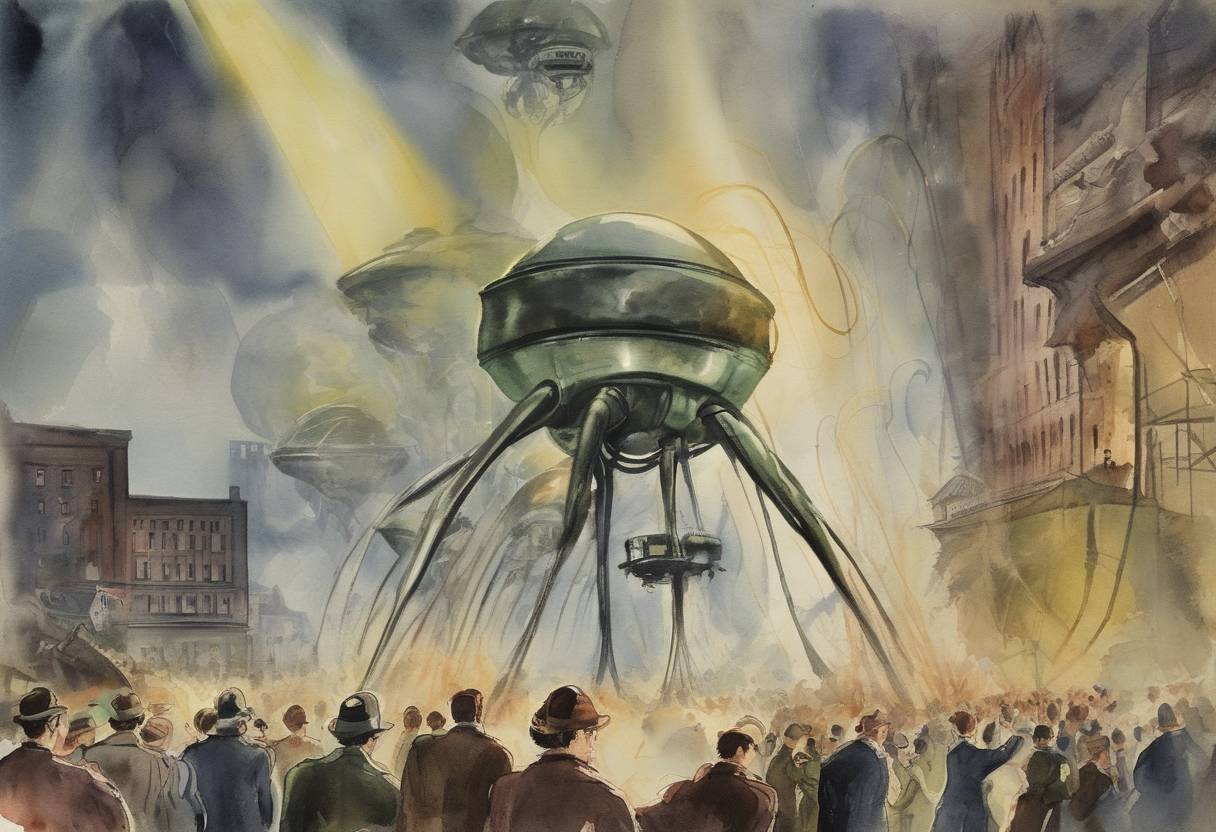
On October 30, 1938, Orson Welles and his Mercury Theatre on the Air broadcasted a radio adaptation of H.G. Wells’ science fiction novel The War of the Worlds. This broadcast became infamous for allegedly causing panic among listeners who believed the fictional story of a Martian invasion was real.
Orson Welles: At the time, Welles was a 23-year-old rising star in the world of theater and radio. His Mercury Theatre on the Air was known for innovative and dramatic adaptations of literary works.
H.G. Wells’ Novel: The War of the Worlds, published in 1898, is a science fiction novel that describes an invasion of Earth by Martians. It was already a well-known work by the time of the broadcast.
Format: The adaptation was presented as a series of simulated news bulletins, which interrupted a program of dance music. This format was intended to create a sense of immediacy and realism.
Content: The broadcast described the landing of Martians in Grover’s Mill, New Jersey, and their subsequent attack on Earth using advanced weaponry. The realistic portrayal included eyewitness accounts and expert interviews.
Panic: Although the extent of the panic has been debated, there were reports of listeners believing the broadcast was a real news event. Some people reportedly fled their homes or called emergency services.
Media Coverage: The next day, newspapers across the United States reported on the panic, often exaggerating the scale of the public’s reaction. This coverage contributed to the broadcast’s legendary status.
Regulatory Changes: The broadcast led to discussions about the responsibility of broadcasters and the need for clearer disclaimers in fictional programming.
Cultural Impact: The event highlighted the power of radio as a medium and is often cited as a case study in mass communication and media influence.
Orson Welles’ Career: The broadcast propelled Welles into the national spotlight, paving the way for his future success in Hollywood, including his landmark film Citizen Kane.
The 1938 broadcast of The War of the Worlds remains a significant moment in media history. It serves as a reminder of the influence of broadcast media and the importance of critical listening. Despite the controversy, it showcased Orson Welles’ creative genius and left a lasting impact on both radio and popular culture.
Source: en.wikipedia.org