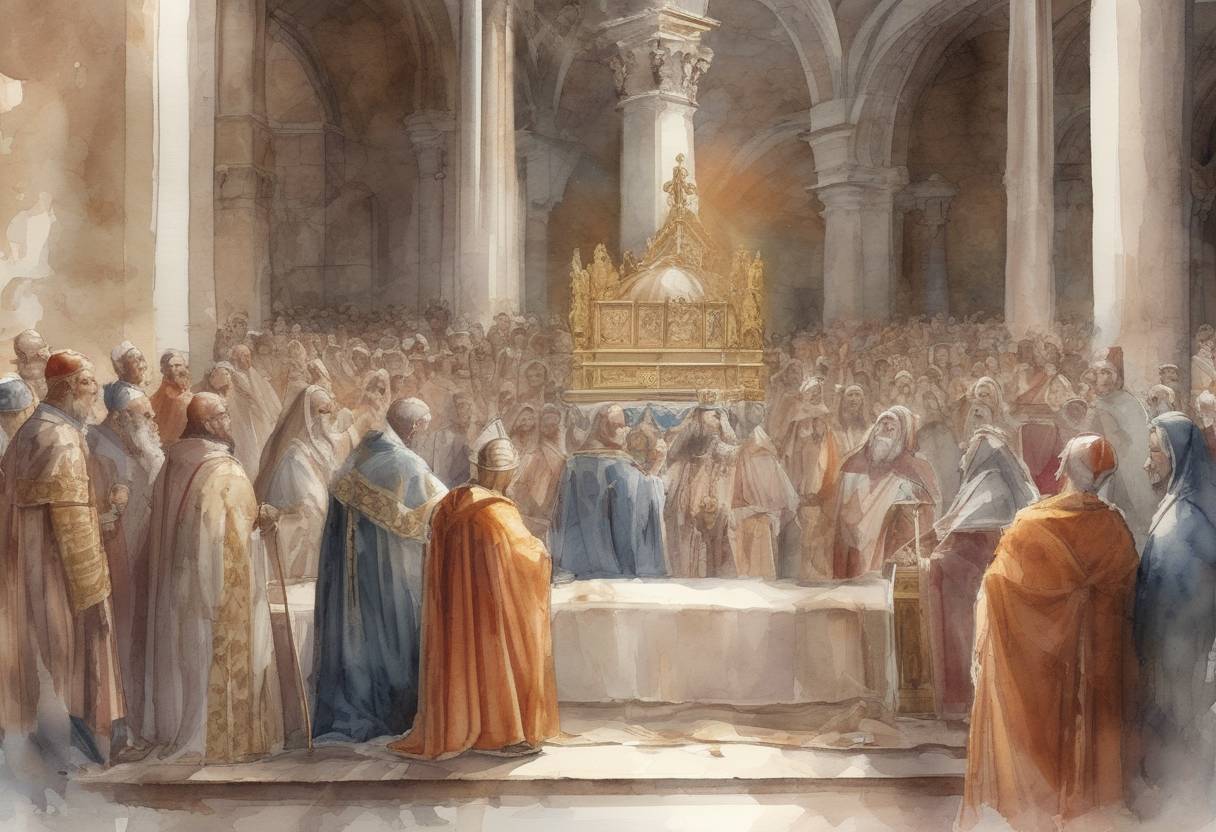
The Death of Pope Gregory I (Gregory the Great) - March 12, 604
Pope Gregory I, commonly known as Gregory the Great, passed away on March 12, 604. His papacy, which began in 590, marked a significant period in the history of the early medieval church. Gregory is remembered for his substantial contributions to the church’s spiritual and administrative structures, as well as his influence on Christian liturgy and doctrine.
Early Life and Papacy
- Birth and Early Career: Gregory was born around 540 into a wealthy Roman family. Before his papacy, he served as the Prefect of Rome and later became a monk, founding several monasteries.
- Papacy: Elected pope in 590, Gregory’s leadership was characterized by his efforts to reform the church and strengthen its influence across Europe. He was deeply involved in the administration of the church and the welfare of the poor, establishing a model of pastoral care that would influence future generations.
Contributions and Achievements
- Gregorian Chant: Although the association of Gregorian Chant with Gregory I is more symbolic than factual, he played a crucial role in the development of church music. His reforms in liturgical practices laid the groundwork for what would later be known as Gregorian Chant.
- Writings: Gregory was a prolific writer, and his works include “Pastoral Care,” a guide for bishops on the responsibilities of their office, and “Dialogues,” which includes the life of Saint Benedict. His writings were instrumental in shaping medieval spirituality and theology.
- Missionary Work: Gregory was a strong advocate for missionary work, most notably sending Augustine of Canterbury to convert the Anglo-Saxons in England. This mission was pivotal in the Christianization of Britain.
Legacy and Impact
- Church Administration: Gregory’s reforms in church administration and his emphasis on the papal office’s spiritual authority helped consolidate the power of the papacy.
- Sainthood: Gregory was canonized as a saint shortly after his death, and he is recognized as a Doctor of the Church. His feast day is celebrated on September 3.
- Cultural Influence: Gregory’s influence extended beyond the church, impacting the broader cultural and political landscape of medieval Europe. His leadership during a time of political instability helped maintain the church’s central role in European society.
Pope Gregory I’s death marked the end of a transformative era for the church. His legacy as a reformer, writer, and spiritual leader continues to be felt in the Christian tradition and beyond.