Nobel Peace Prize Awarded to Nelson Mandela and F.W. de Klerk
1993 · Oslo, Norway
Nelson Mandela and F.W. de Klerk were awarded the Nobel Peace Prize for their efforts to peacefully end apartheid and establish a new democratic South Africa.
December 10, 1994
Yasser Arafat, Shimon Peres, and Yitzhak Rabin received the Nobel Peace Prize for their efforts to create peace in the Middle East, particularly through the Oslo Accords.
Oslo, Norway | Nobel Foundation
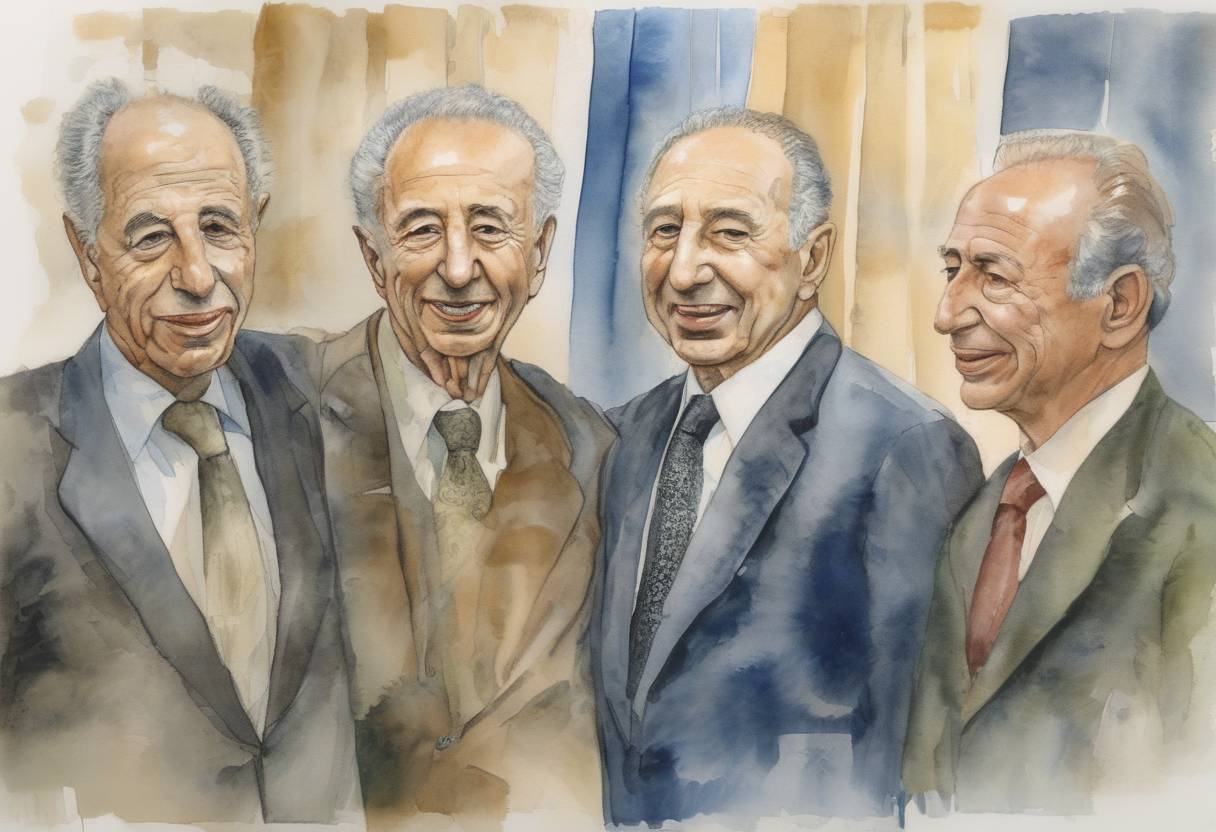
On December 10, 1994, Yasser Arafat, Shimon Peres, and Yitzhak Rabin were jointly awarded the Nobel Peace Prize for their significant efforts in advancing peace in the Middle East, particularly through their roles in the Oslo Accords.
The Oslo Accords were a series of agreements between Israel and the Palestine Liberation Organization (PLO) that marked the first time the two parties officially recognized each other. The accords were aimed at achieving a peace treaty based on United Nations Security Council Resolutions 242 and 338, and at fulfilling the “right of the Palestinian people to self-determination.”
Yasser Arafat: As the Chairman of the PLO, Arafat played a crucial role in representing the Palestinian people in negotiations. His leadership was pivotal in the PLO’s shift towards seeking a peaceful resolution to the Israeli-Palestinian conflict.
Shimon Peres: Serving as Israel’s Foreign Minister at the time, Peres was instrumental in the secret negotiations that led to the Oslo Accords. His diplomatic efforts were key in bridging the gaps between the two sides.
Yitzhak Rabin: The Prime Minister of Israel, Rabin took significant political risks by engaging in the peace process. His willingness to negotiate with the PLO marked a major shift in Israeli policy and was crucial for the progress of the peace talks.
The Oslo Accords, signed in 1993, were groundbreaking as they established a framework for future relations between Israel and the Palestinians. The accords included mutual recognition between Israel and the PLO and laid the groundwork for Palestinian self-governance in parts of the West Bank and Gaza Strip.
The awarding of the Nobel Peace Prize to Arafat, Peres, and Rabin was a recognition of their courageous efforts to move beyond decades of conflict and towards a peaceful resolution. The Oslo Accords represented a significant step towards peace, although the path remained fraught with challenges.
Despite the initial optimism, the peace process faced numerous obstacles in the years following the accords. The assassination of Yitzhak Rabin in 1995 by an Israeli extremist was a significant setback. Subsequent negotiations have struggled to achieve a lasting peace, and the Israeli-Palestinian conflict remains unresolved.
The 1994 Nobel Peace Prize highlighted the importance of dialogue and compromise in resolving long-standing conflicts. While the Oslo Accords did not lead to a final peace agreement, they remain a pivotal moment in the history of the Middle East peace process, demonstrating the potential for diplomacy to bring about change.
Source: en.wikipedia.org