The Battle of Thermopylae: Conclusion on August 11, 480 BCE
480 · Thermopylae, Greece
The Battle of Thermopylae concludes with a Persian victory over the Greek city-states, led by King Leonidas of Sparta.
October 12, 0539
Cyrus the Great of Persia captured Babylon, marking the end of the Neo-Babylonian Empire and the beginning of the Achaemenid Empire's dominance in the region.
Babylon, Neo-Babylonian Empire (modern-day Iraq) | Achaemenid Empire
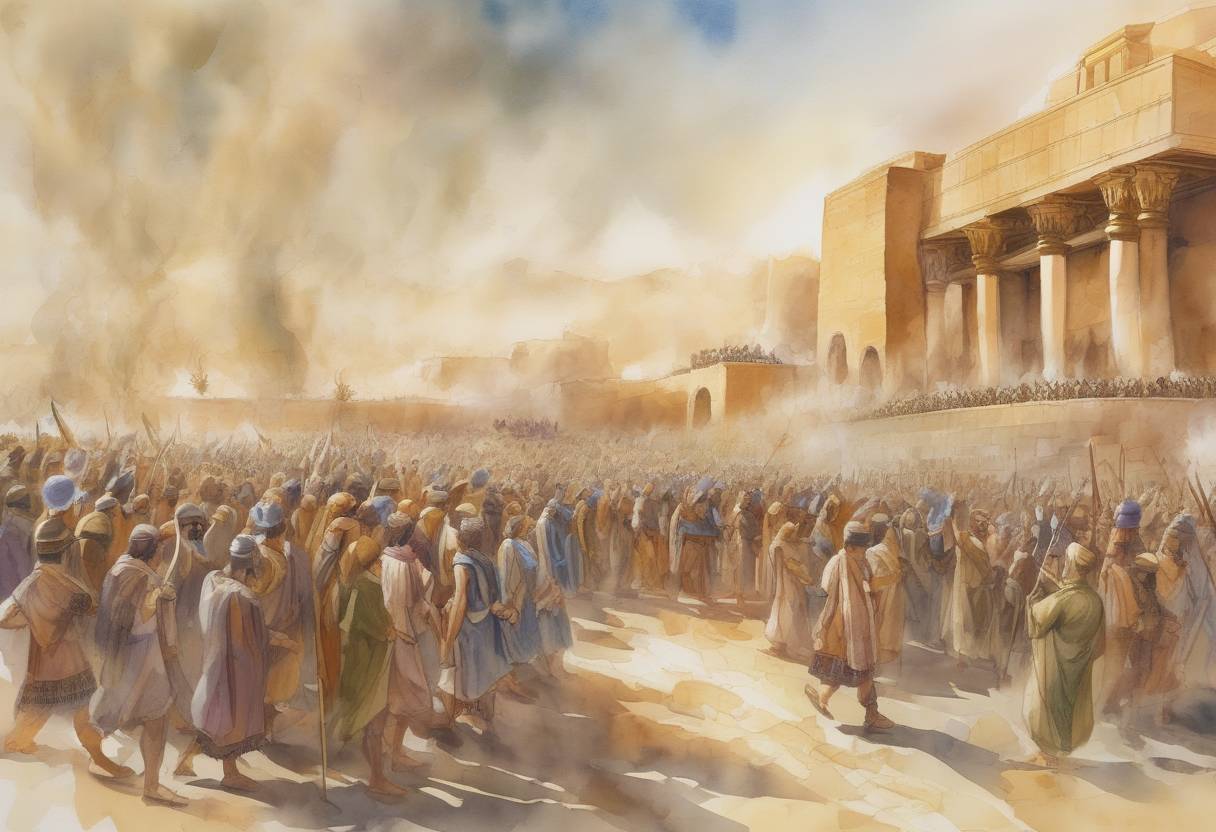
On October 12, 539 BCE, Cyrus the Great, the founder of the Achaemenid Empire, captured Babylon, marking a pivotal moment in ancient history. This event not only signaled the end of the Neo-Babylonian Empire but also established the Achaemenid Empire as a dominant power in the region.
The Neo-Babylonian Empire, under the rule of Nabonidus, was experiencing internal strife and dissatisfaction among its populace. Nabonidus, who had alienated the powerful priesthood and neglected the traditional religious practices, was an unpopular ruler. This discontent set the stage for Cyrus’s conquest.
Cyrus the Great, known for his strategic acumen and diplomatic skills, had already expanded his empire significantly, uniting the Medes and Persians and conquering Lydia. His approach to Babylon was marked by careful planning and the promise of liberation to the city’s inhabitants.
The capture of Babylon was achieved with minimal conflict, a testament to Cyrus’s strategy and the internal weaknesses of the Babylonian state. According to historical accounts, including the Cyrus Cylinder and the Nabonidus Chronicle, Cyrus’s forces diverted the Euphrates River, allowing his troops to enter the city through the riverbed. This maneuver caught the Babylonians by surprise, and the city fell without significant resistance.
Cyrus’s entry into Babylon was marked by a policy of tolerance and respect for local customs and religions. He presented himself as a liberator rather than a conqueror, restoring temples and allowing exiled peoples, such as the Jews, to return to their homelands. This approach earned him the loyalty and support of his new subjects.
The fall of Babylon had far-reaching consequences:
End of the Neo-Babylonian Empire: The capture of Babylon effectively ended the Neo-Babylonian Empire, which had been a significant power in Mesopotamia since the fall of the Assyrian Empire.
Expansion of the Achaemenid Empire: With Babylon under his control, Cyrus expanded the Achaemenid Empire, creating one of the largest empires in history, stretching from the Indus Valley to the Aegean Sea.
Cultural and Administrative Policies: Cyrus’s policies of tolerance and cultural respect set a precedent for future Achaemenid rulers. His administration was marked by a sophisticated bureaucracy and infrastructure, which facilitated communication and governance across vast distances.
Historical Legacy: Cyrus the Great is remembered as a model ruler in antiquity, praised for his leadership and humanitarian policies. His legacy influenced subsequent empires and remains a subject of admiration in historical narratives.
The capture of Babylon by Cyrus the Great was not just a military conquest but a transformative event that reshaped the political and cultural landscape of the ancient Near East, laying the foundations for the Achaemenid Empire’s enduring influence.
Source: en.wikipedia.org