The Great Chicago Fire: October 8, 1871
1871 · Chicago, United States
The Great Chicago Fire begins, lasting until October 10, 1871, and resulting in the destruction of a large portion of the city of Chicago, Illinois.
March 4, 1837
Chicago was incorporated as a city.
Chicago, United States | City of Chicago
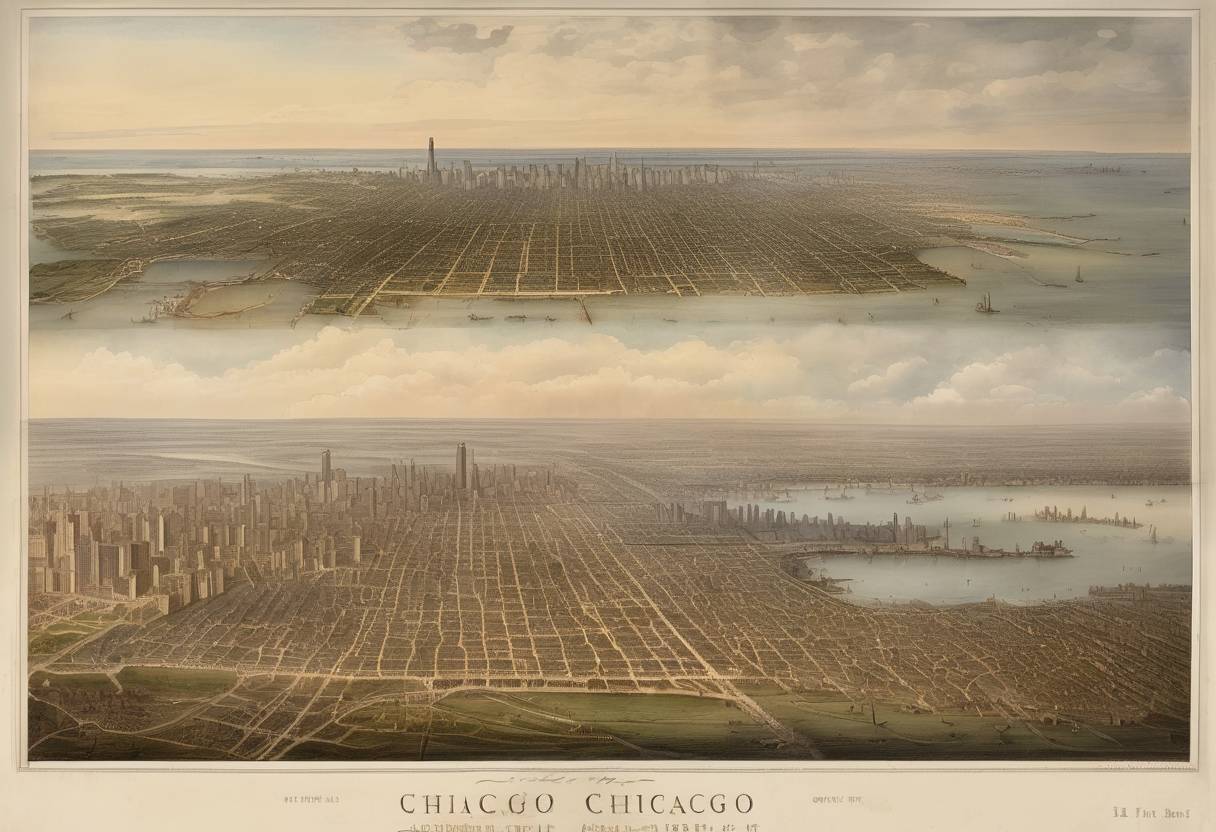
On March 4, 1837, Chicago was officially incorporated as a city, marking a significant milestone in its development and setting the stage for its transformation into one of the major urban centers in the United States.
Early Settlement: The area that would become Chicago was originally inhabited by Native American tribes, including the Potawatomi. European exploration began in the late 17th century, with French explorers like Louis Jolliet and Jacques Marquette passing through the region.
Strategic Location: Chicago’s location at the southwestern tip of Lake Michigan made it a strategic point for trade and transportation. The construction of the Illinois and Michigan Canal, which began in the 1830s, further enhanced its importance by connecting the Great Lakes to the Mississippi River.
Growth as a Town: Before its incorporation as a city, Chicago was established as a town in 1833. At that time, it had a population of around 350 residents. The town’s growth was fueled by its role as a transportation hub and its burgeoning trade in goods such as grain and livestock.
Population Boom: By 1837, Chicago’s population had grown to approximately 4,000 residents, necessitating a more structured form of governance and infrastructure to support its expanding community.
City Charter: The incorporation of Chicago as a city was formalized through a charter granted by the state of Illinois. This charter provided the legal framework for municipal governance, including the establishment of a city council and the election of a mayor.
First Mayor: William B. Ogden was elected as Chicago’s first mayor. Ogden played a crucial role in the city’s early development, advocating for infrastructure improvements and fostering economic growth.
Rapid Expansion: Following its incorporation, Chicago experienced rapid growth, driven by its strategic location and the expansion of railroads. By the mid-19th century, it had become a major transportation and industrial hub.
Economic and Cultural Impact: Chicago’s incorporation laid the foundation for its emergence as a center of commerce, culture, and innovation. It attracted a diverse population, contributing to its rich cultural tapestry.
Challenges and Resilience: The city faced numerous challenges, including the Great Chicago Fire of 1871, which devastated large parts of the city. However, Chicago’s resilience and ability to rebuild quickly underscored its importance and vitality.
In summary, the incorporation of Chicago as a city on March 4, 1837, was a pivotal event in its history, setting the stage for its evolution into a dynamic and influential metropolis. Its strategic location, coupled with visionary leadership and a spirit of resilience, propelled Chicago to become a key player on the national and international stage.
Source: en.wikipedia.org