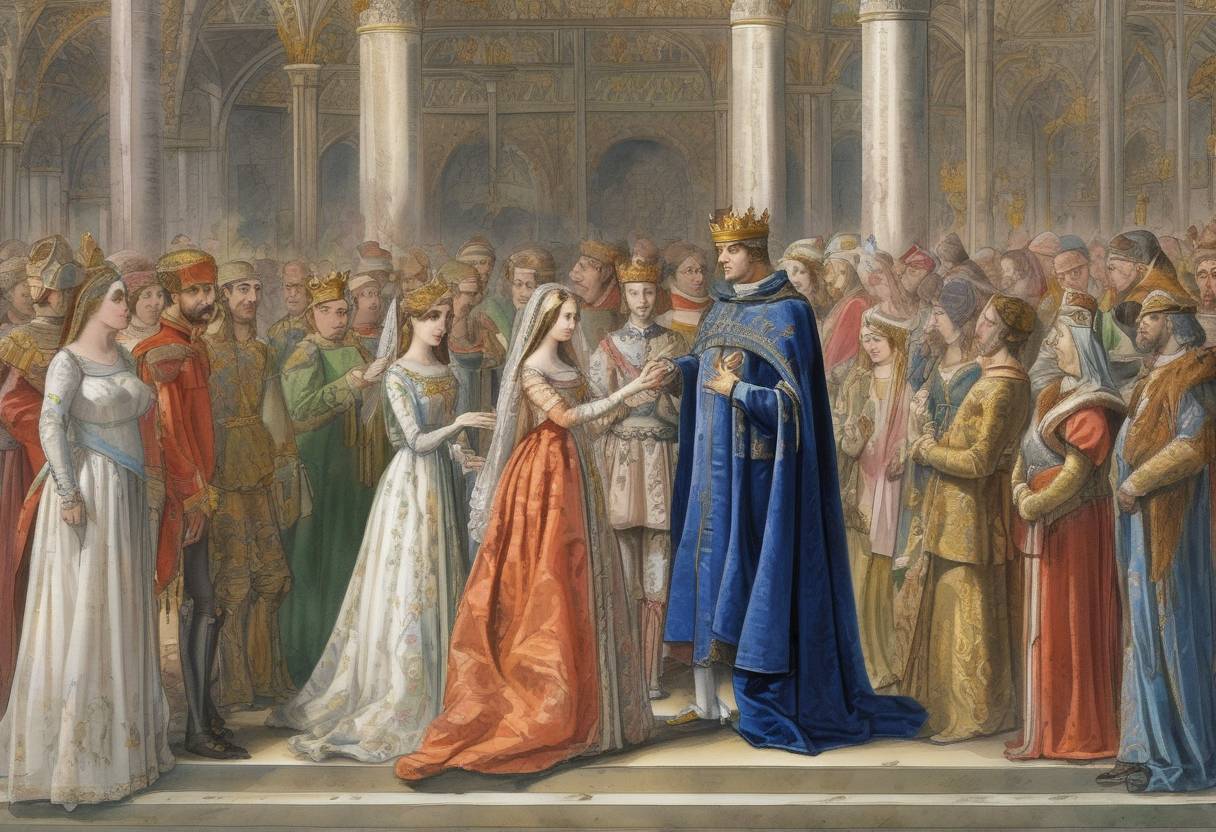
Louis VII of France Marries Adela of Champagne
On November 13, 1160, King Louis VII of France married Adela of Champagne, a union that significantly bolstered his political alliances during a period of intense dynastic and territorial competition in medieval Europe.
Context and Background
Louis VII, born in 1120, ascended to the French throne in 1137. His reign was marked by efforts to consolidate royal power and navigate the complex web of feudal allegiances. His first marriage to Eleanor of Aquitaine in 1137 brought the vast and wealthy Duchy of Aquitaine under the French crown. However, the marriage was annulled in 1152, leading Eleanor to marry Henry II of England, which shifted the balance of power and created a formidable Anglo-Angevin empire that threatened French interests.
The Marriage to Adela of Champagne
Adela of Champagne was the daughter of Theobald II, Count of Champagne, a powerful noble with extensive lands and influence in northeastern France. The marriage to Adela was strategically advantageous for Louis VII, as it helped to secure the loyalty of the influential Champagne region and counterbalance the power of the Angevin Empire.
Key Details of the Marriage:
- Date: November 13, 1160
- Location: The marriage likely took place in Paris, the heart of the Capetian realm.
- Political Implications: By marrying Adela, Louis VII strengthened ties with the House of Blois-Champagne, a significant counterweight to the Angevin holdings in France.
Aftermath and Consequences
The marriage to Adela produced several children, including Philip II Augustus, who would later become one of France’s most successful medieval monarchs. Philip’s reign saw the expansion of royal authority and the eventual diminishment of Angevin power in France.
Broader Historical Significance:
- Strengthening the Capetian Dynasty: The marriage reinforced the Capetian dynasty’s position within the complex feudal hierarchy of France.
- Diplomatic Balance: It helped maintain a balance of power in France, providing a counter to the Angevin threat.
- Legacy: The union laid the groundwork for future Capetian successes, particularly under Philip II Augustus, who would go on to reclaim much of the territory lost to the Angevins.
In summary, the marriage of Louis VII and Adela of Champagne was a pivotal moment in the political landscape of 12th-century France, reflecting the intricate interplay of marriage, diplomacy, and power in medieval European politics.