The Selection of the Hinomaru as the Flag for Japanese Merchant Ships
1854 · Yokohama, Japan
The Hinomaru, a red circle on a white field, was first chosen as the national flag of Japan for merchant ships under a decree from the Tokugawa shogunate.
March 12, 1600
The Sakoku Edict was put in effect under Tokugawa Ieyasu, restricting foreign trade in Japan.
Japan, Japan | Tokugawa Shogunate
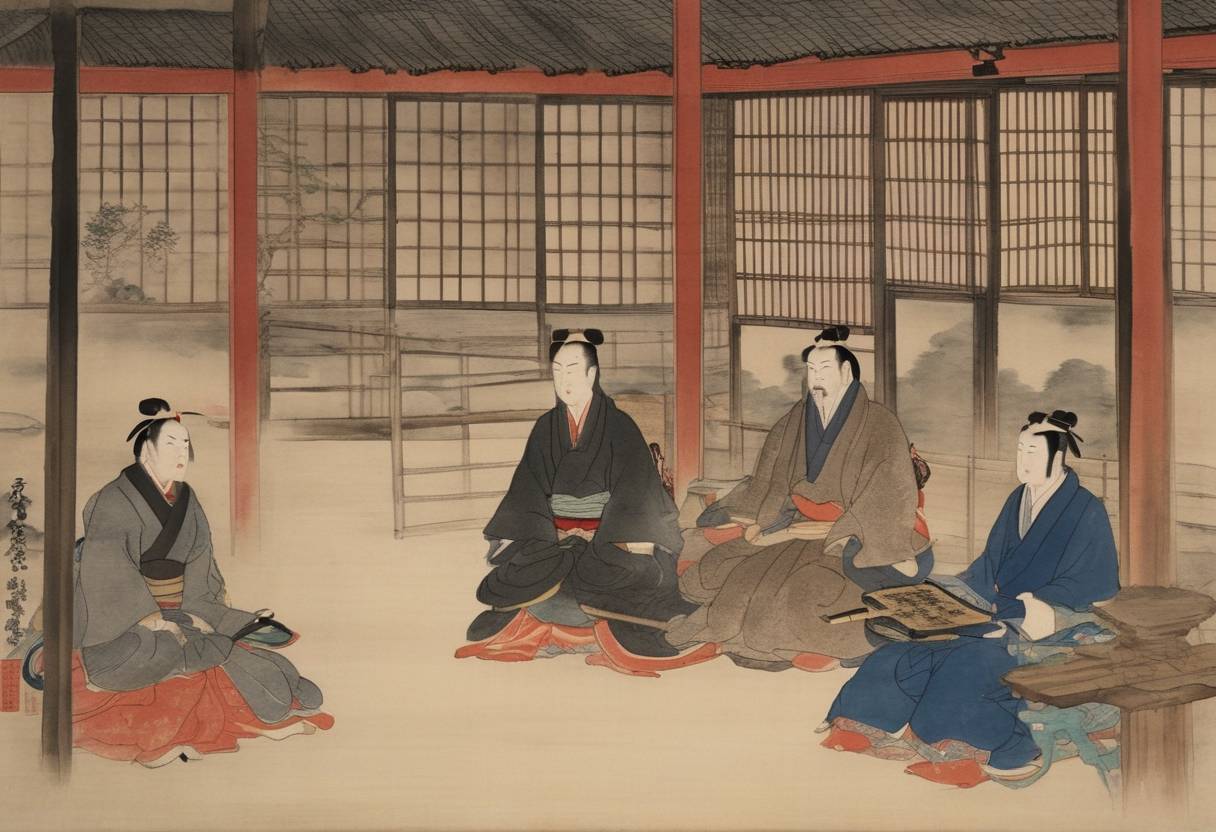
The Sakoku Edict, also known as the policy of national seclusion, was not enacted on March 12, 1600, nor was it initiated by Tokugawa Ieyasu. Instead, the official policy was established in the 1630s, under the shogunate of Tokugawa Iemitsu, Ieyasu’s grandson.
The Tokugawa shogunate governed Japan from 1603 to 1868, beginning with Tokugawa Ieyasu. He secured his position as shogun after the decisive Battle of Sekigahara in 1600, which paved the way for the Tokugawa family’s long rule. Throughout his rule, Ieyasu worked on consolidating power and stabilizing Japan after decades of feudal wars.
The Sakoku Edict was a series of edicts and policies implemented between 1633 and 1639 under Tokugawa Iemitsu. These edicts aimed to minimize foreign influence and control commerce, especially after the increasing presence of Christian missionaries and European traders was seen as a threat to the shogunate’s authority.
Key components of the Sakoku policy included:
Closure of Japan’s Borders: Japanese citizens were forbidden from leaving the country, and most Europeans were banned from entering. A limited number of foreign contacts were permitted under strict controls, primarily conducted at the port of Nagasaki.
Control Over Trade: Only Dutch and Chinese merchants were allowed limited trading rights, minimizing Western influence. The Dutch were restricted to the small island of Dejima in Nagasaki Harbor.
While not an absolute end to external contact, Sakoku effectively isolated Japan for over two centuries, allowing the Tokugawa regime to maintain stability without outside interference. This policy curtailed the spread of Christianity and limited the influence of Western nations, allowing Japanese culture, political structure, and social systems to develop relatively uninfluenced by external forces.
During this period, however, Japan experienced significant internal growth, cultural development, and relative peace, known as the Edo period. It wasn’t until Commodore Matthew Perry’s arrival in 1853 that Japan’s isolationist policy began to unravel, leading to the country’s rapid modernization in the Meiji Era.
The Sakoku Edict is a prominent example of Japan’s cautious approach to foreign influence during the Tokugawa period. It laid the foundation for an era of self-imposed isolation, dramatically shaping the nation’s social, economic, and cultural landscape until the mid-19th century.
Source: www.history.com