Guo Wei and the Founding of the Later Zhou Dynasty
951 · Kaifeng, China
Guo Wei, a military general, declared himself emperor, marking the beginning of the Later Zhou dynasty in China.
August 19, 0947
The Liang dynasty in China formally concludes with the abdication of its last emperor, Zhu Youzhen, leading to the consolidation of the Later Zhou dynasty.
Kaifeng, China | Later Zhou dynasty
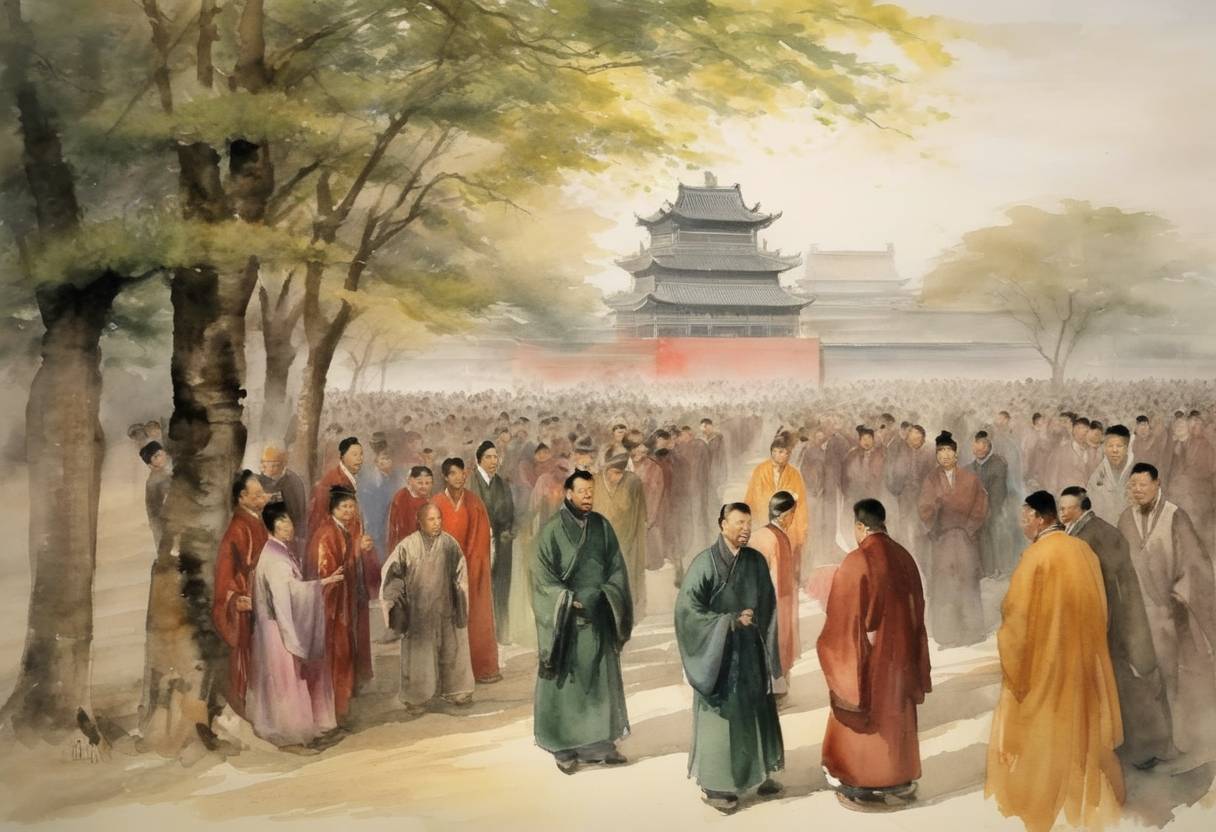
The historical period known as the Five Dynasties and Ten Kingdoms (907–960 AD) was marked by political fragmentation following the collapse of the Tang Dynasty. During this time, power frequently shifted among short-lived dynasties, particularly in northern China.
On August 19, 947, Zhu Youzhen, the last emperor of the Later Liang dynasty, formally abdicated, marking the end of his reign and the consolidation of power under the Later Zhou dynasty. Zhu Youzhen ascended to the throne in 913 and was the son of Zhu Quanzhong, the founder of the Later Liang. His abdication paved the way for Guo Wei to establish the Later Zhou, starting a new chapter in this tumultuous period.
The Later Zhou dynasty, under its founder Guo Wei, sought to consolidate power and bring stability to the region. While it did not ultimately unify China, it marked a transitional phase that would eventually lead to more consolidated governance. The eventual challenges and successes of the Later Zhou added another layer to the complex historical narrative of this period.
The repeated cycles of dynastic rise and fall during the Five Dynasties and Ten Kingdoms period underscore the persistent challenges of unifying vast territories and diverse populations under a central government in medieval China. This era of fragmentation and conflict laid the groundwork for future endeavors in Chinese state-building, setting precedents that influenced the subsequent Song dynasty.
Source: en.wikipedia.org