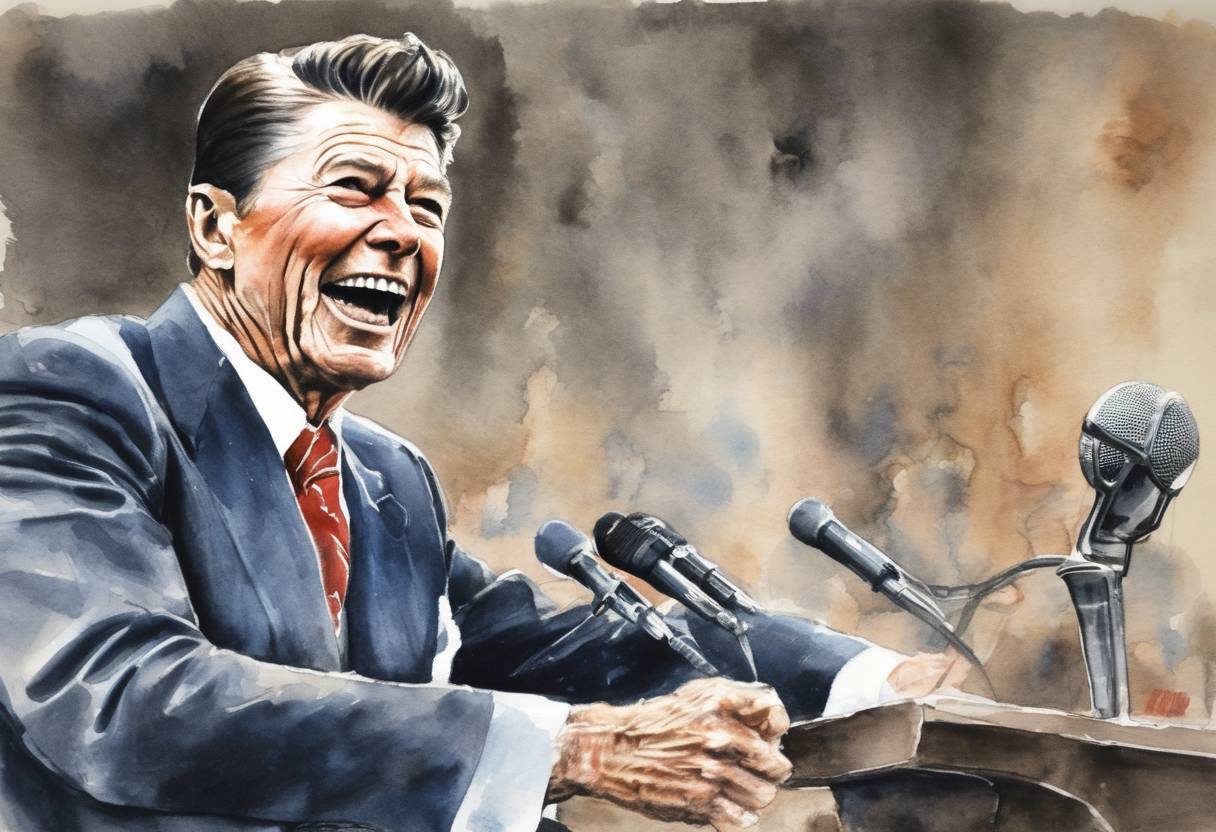
Ronald Reagan’s “We Begin Bombing in Five Minutes” Incident
On August 11, 1984, a seemingly innocuous moment during a sound check turned into a minor international incident involving U.S. President Ronald Reagan. While preparing for his weekly radio address, Reagan made an off-the-cuff joke that was inadvertently broadcast to the press and caused a stir both domestically and internationally.
Context
The Cold War was still a significant global tension point in 1984, with the United States and the Soviet Union locked in a prolonged geopolitical and ideological struggle. Reagan, known for his staunch anti-communist stance, had previously referred to the Soviet Union as an “evil empire,” which had already heightened tensions.
The Incident
During the sound check, Reagan quipped:
“My fellow Americans, I’m pleased to tell you today that I’ve signed legislation that will outlaw Russia forever. We begin bombing in five minutes.”
This comment was meant as a joke, intended only for the technicians in the room. However, it was picked up by live microphones and inadvertently transmitted to journalists who were monitoring the feed.
Domestic Reaction: In the United States, the joke was met with a mix of amusement and criticism. Some viewed it as a harmless jest, consistent with Reagan’s known sense of humor. Others, however, criticized it as irresponsible, given the high stakes of nuclear diplomacy.
International Reaction: The Soviet Union and other countries did not find the joke amusing. Given the tense nature of U.S.-Soviet relations, the comment was perceived as provocative. The Soviet government lodged a formal complaint, and the incident was widely reported in international media, exacerbating existing tensions.
Aftermath
Diplomatic Efforts: The Reagan administration quickly moved to downplay the incident, emphasizing that it was a joke and not a reflection of actual policy. Diplomatic channels were used to reassure the Soviet Union and other concerned nations.
Public Perception: The incident highlighted the importance of careful communication, especially in the context of international relations. It served as a reminder of the potential consequences of offhand remarks by world leaders.
Historical Significance: While the incident did not lead to any immediate diplomatic crises, it underscored the fragile nature of Cold War diplomacy and the critical role of communication in maintaining peace. It also contributed to the public’s understanding of Reagan’s personality and leadership style.
In retrospect, the “We begin bombing in five minutes” joke is often cited as an example of the potential pitfalls of humor in high-stakes political environments. It remains a notable moment in the history of U.S.-Soviet relations during the Cold War.