Capture of Port Arthur: November 21, 1894
1894 · Port Arthur, China
Port Arthur massacre: Armed forces of Japan captured the Chinese city of Port Arthur (now Lüshun), marking a significant victory during the First Sino-Japanese War.
January 28, 1938
The Japanese army used chemical weapons against the Chinese near Chinghsien during the Second Sino-Japanese War, marking one of several instances of chemical warfare during this conflict.
Chinghsien, China | Imperial Japanese Army
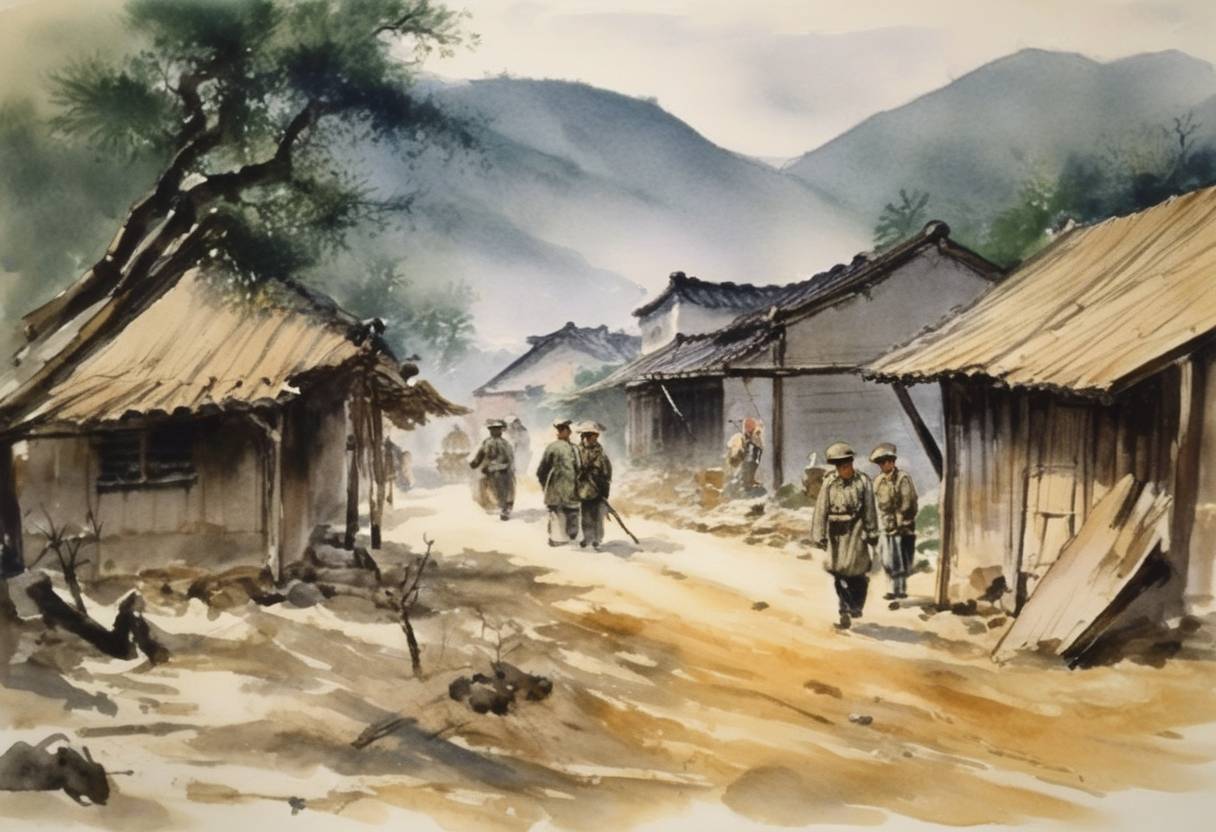
On January 28, 1938, during the Second Sino-Japanese War, the Japanese army employed chemical weapons against Chinese forces near Chinghsien, located in the Zhejiang Province of China. This incident was part of a larger pattern of chemical warfare tactics used by Japan throughout the conflict, which had begun in July 1937.
The Second Sino-Japanese War was a large-scale conflict between the Republic of China and the Empire of Japan, ultimately merging into the broader conflict of World War II. Hostilities had escalated after the Marco Polo Bridge Incident in July 1937, which led to Japan’s aggressive territorial expansion within China.
Japan’s employment of chemical weapons aimed at overcoming Chinese resistance, leveraging Japan’s military technological advantages to offset challenges posed by protracted ground warfare. Chemical weapons such as mustard gas and phosgene were used to break through defensive lines and instill fear and chaos among Chinese troops.
The assault near Chinghsien represented a critical moment in Japan’s campaign in Zhejiang, regarded as a strategic location due to its proximity to key supply lines and its defensive positions. The Japanese military’s use of chemical agents was intended to incapacitate Chinese forces swiftly and decisively.
The use of chemical weapons during the Second Sino-Japanese War had significant humanitarian consequences, contributing to civilian casualties and drawing international condemnation. Although attempts were made by the League of Nations to address Japan’s aggression and the use of banned weaponry, effective intervention was hindered by the lack of enforceable mechanisms and rising global tensions that foreshadowed World War II.
Japan’s actions during the war, including the use of chemical weapons, have been the subject of historical scrutiny, informing post-war discussions on international law regarding the use of chemical and biological weapons. The legacy of these events underscores the devastating impact of chemical warfare and the ongoing challenges of enforcing international humanitarian standards.
Source: nationalinterest.org