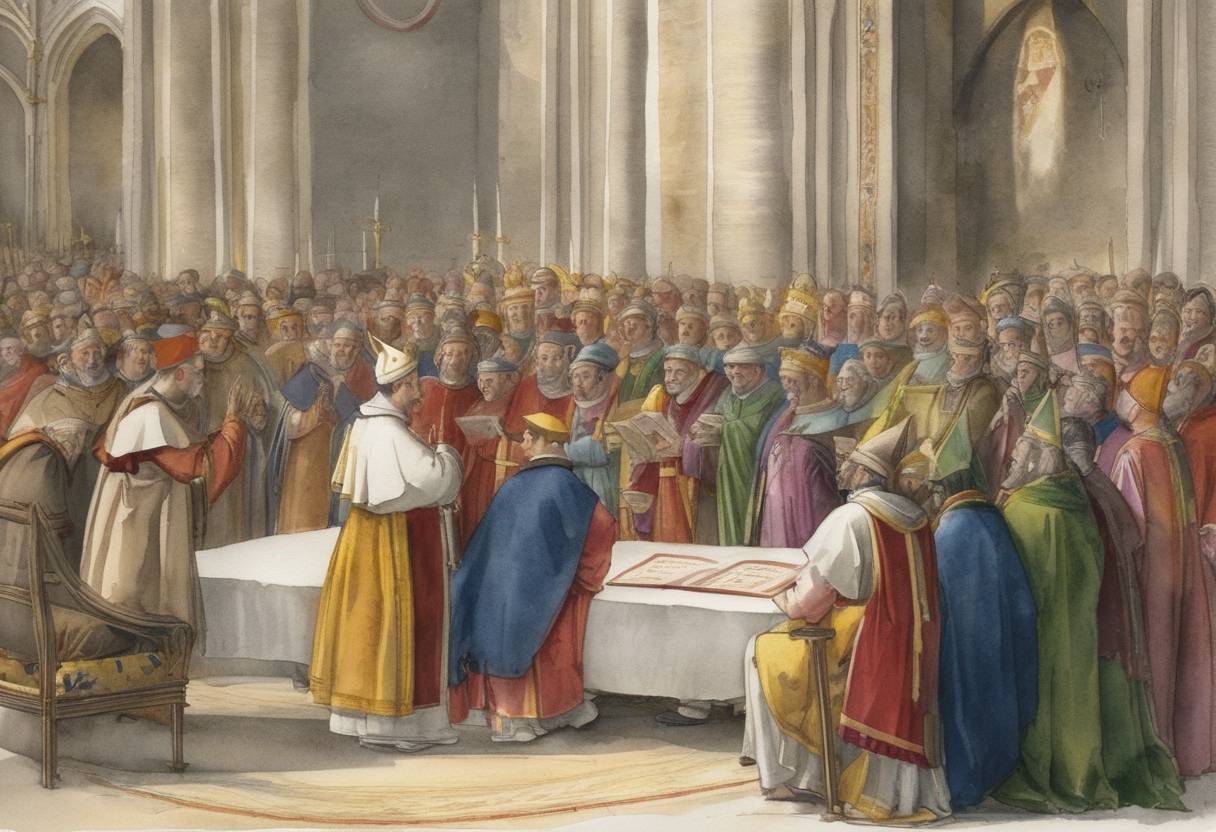
Issuance of the Papal Bull Unigenitus by Pope Clement VI
On January 27, 1343, Pope Clement VI issued the papal bull Unigenitus, a significant ecclesiastical document that sought to elucidate the Church’s teaching on indulgences. The context for this action lay in the tumultuous theological and political atmosphere of the 14th century, during which the authority and practices of the Catholic Church were subject to increasing scrutiny and debate.
Context and Background
During the 14th century, the Church’s practice of indulgences—remissions of the temporal punishment due for sins—was central to its teachings and spiritual life. However, the specifics of how indulgences functioned and their theological justification were often subjects of controversy and misunderstanding. As criticism of ecclesiastical practices grew, fueled by varying interpretations and abuses, it became crucial for the papacy to offer clarification.
Pope Clement VI, who became pope in 1342, addressed these issues early in his pontificate. His decision to issue Unigenitus was part of a broader effort to reform and clearly define Church teachings, ensuring consistent practice among clergy and believers.
Content of Unigenitus
Unigenitus detailed the theological basis for indulgences, asserting their validity through the Church’s authority and the merits accumulated by Christ and the saints. One of the central affirmations was that the pope, as the successor of Saint Peter, held the “keys of the kingdom of heaven” and, thus, could grant indulgences by drawing upon a “treasury of merits.”
The bull aimed to solidify the papal prerogative in dispensing indulgences, countering emerging dissenting voices that questioned the legitimacy of such practices. By reinforcing the theological underpinning of indulgences, Unigenitus aimed to pacify debates and align the Church’s global practices with established doctrine.
Significance and Aftermath
The issuance of Unigenitus holds a significant place in the history of Christian theology. It predated, by several centuries, the more profound controversies concerning indulgences that would eventually play a role in sparking the Protestant Reformation in the early 16th century.
While Unigenitus did not quash all disputes over indulgences, it reflected the papacy’s commitment to doctrinal clarity and ecclesiastical unity during a period of religious and political complexity. It exemplified the Church’s ongoing efforts to ward off internal dissent and project unified theological positions in the face of critique—a challenge that would persist and evolve in the centuries to come.