Gustav Mahler's Symphony No. 8 Premiere
1910 · Munich, Germany
Gustav Mahler's Symphony No. 8, also known as the 'Symphony of a Thousand,' premiered in Munich.
January 15, 1867
Johannes Brahms' 'A German Requiem' premiered in Leipzig, marking a significant moment in the composer's career and in the Romantic music era.
Leipzig, Germany
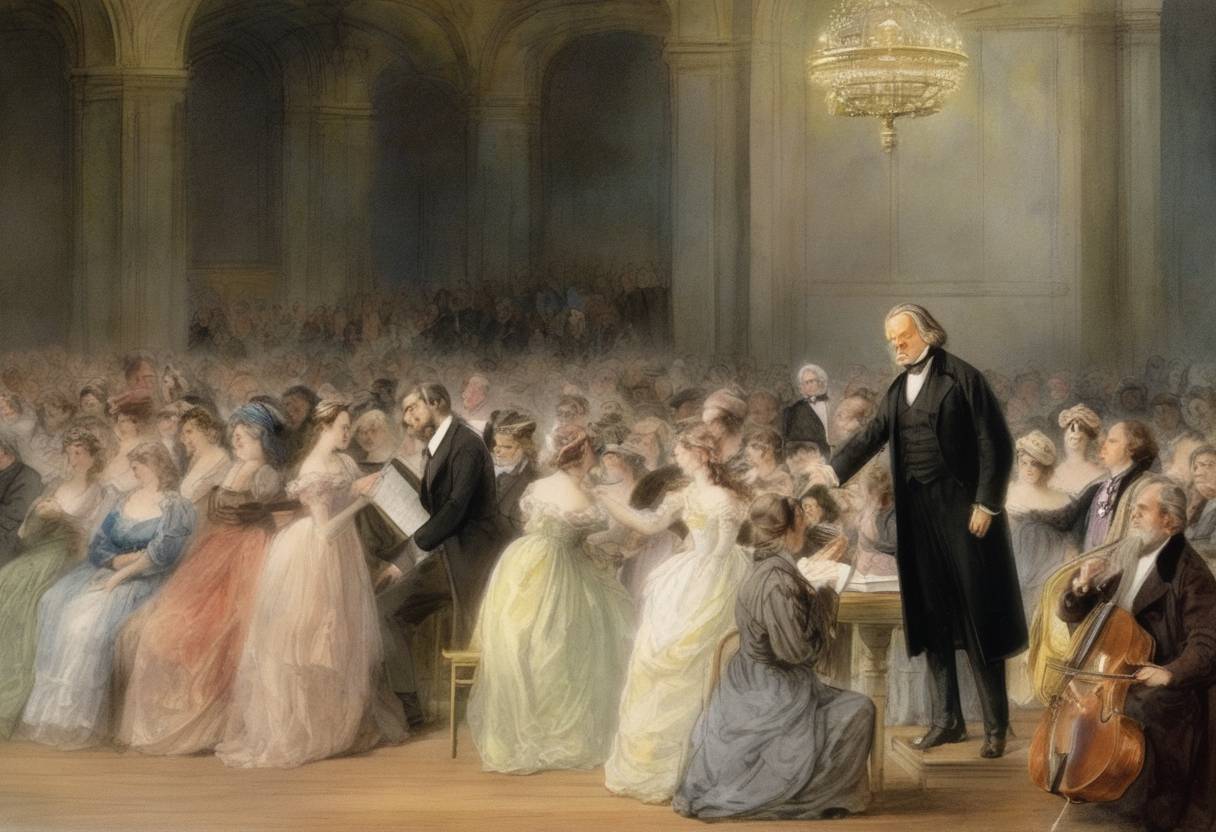
Date: January 15, 1867
Location: Leipzig, Germany
On January 15, 1867, Johannes Brahms’ monumental work, Ein deutsches Requiem (A German Requiem), was given its first significant performance in Leipzig, marking a pivotal moment in both Brahms’ career and the landscape of Romantic music in the 19th century. This performance was one of the early renditions of the Requiem, showcasing the first three movements. A full premiere would occur later, reflecting Brahms’ continuous dedication to refining his composition.
Johannes Brahms, a central figure in the Romantic era, was known for his ability to blend traditional forms with innovative harmonic progressions and lyrical elegance. By the 1860s, Brahms was establishing a reputation as one of the leading composers of the time, following in the footsteps of earlier Romantic composers such as Ludwig van Beethoven and Franz Schubert. His German Requiem was not a traditional mass for the dead, but rather a work intended to provide solace to the living, setting it apart from other requiems of the time.
Brahms began working on the Requiem after a series of personal tragedies, particularly the death of his mother in 1865. This profound loss deeply influenced the composition, which reflects his introspection on life, death, and the afterlife. The choice to set the text in German, as opposed to the traditional Latin, underscored Brahms’ intention to connect with the audience on a more personal level, emphasizing comfort over solemnity.
The Leipzig performance was met with mixed reactions, partly due to the unconventional nature of the work for its time. Brahms’ Requiem lacked some of the dramatic elements typical in traditional requiem masses, opting instead for a more reflective and humanistic approach. Despite initial reservations, the work gradually gained recognition for its profound emotional depth and musical innovation.
Following the Leipzig premiere, Brahms continued to revise and expand the Requiem. The final, seven-movement version was completed and fully premiered in Bremen on Good Friday, April 10, 1868. It eventually became one of Brahms’ most celebrated works, solidifying his status as a master composer and influencing future generations of musicians. The Requiem’s success also affirmed the emerging trend toward personal expression in choral music, contributing to the broader Romantic movement’s evolution.
Source: en.wikipedia.org