The Arrival of the First Settlers in Maryland - March 25, 1634
1634 · St. Mary's City, United States
The first settlers arrived in Maryland, led by Leonard Calvert, establishing the colony of Maryland.
March 29, 1638
Swedish settlers established the first European settlement in Delaware, New Sweden, marking the start of Swedish influence in the New World.
Wilmington, United States | New Sweden Company
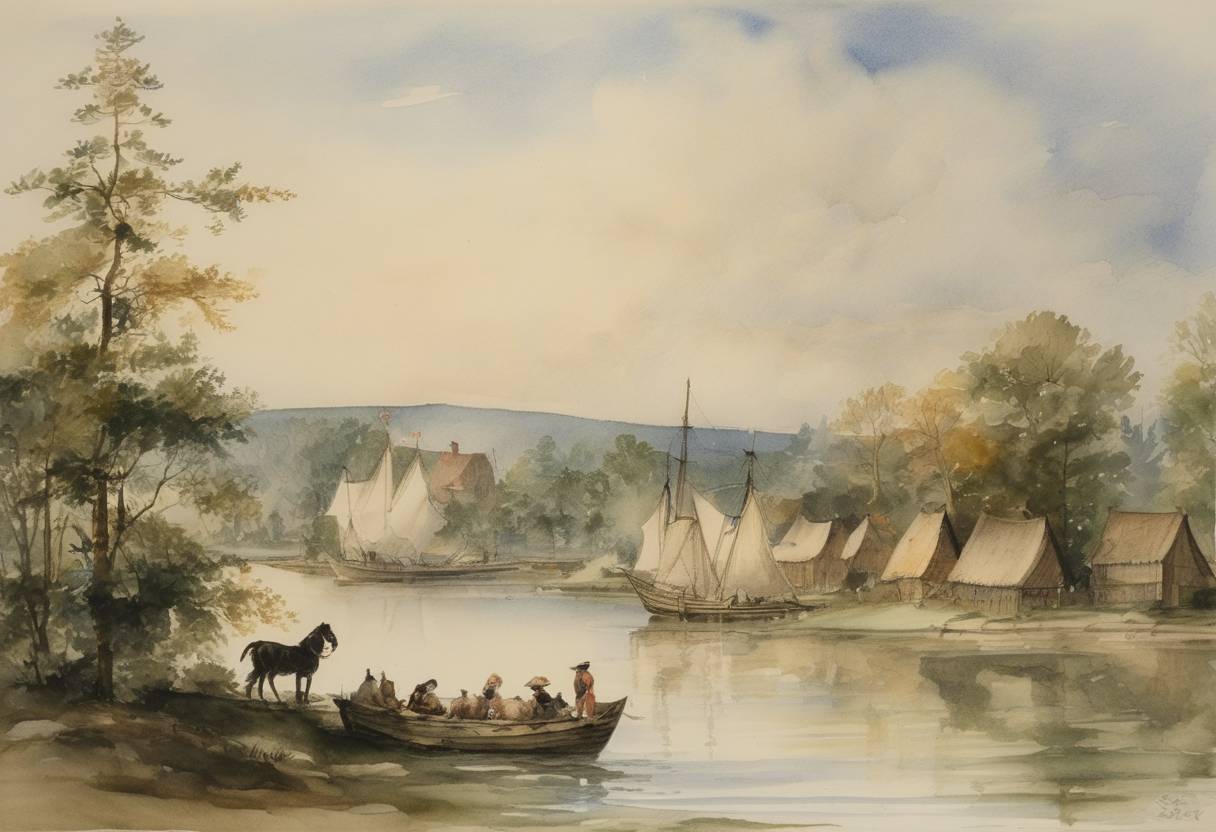
On March 29, 1638, Swedish settlers established the first permanent European settlement in what is now the state of Delaware, forming the colony of New Sweden. This marked the advent of Swedish and Finnish influence in North America, as settlers aimed to expand Swedish trading interests and establish a foothold in the lucrative New World.
The establishment of New Sweden was motivated by the broader European struggles for colonial dominance in the 17th century. Sweden, under the rule of King Gustavus Adolphus and later his daughter Queen Christina, sought to expand its influence beyond the Baltic region. Inspired by the economic successes of other European powers in the New World, the Swedes saw an opportunity to enter the Atlantic trade and benefit from the resources and opportunities found in North America.
The expedition set sail from Sweden in late 1637, aboard two ships: the Kalmar Nyckel and the Fogel Grip. The settlers were primarily Swedes and Finns, with a smaller number of Dutch and Germans, reflecting the diversity within the Swedish Empire at the time.
Upon reaching the Delaware River, the settlers purchased land from the Lenape Native Americans. They selected a site near present-day Wilmington, Delaware, and constructed Fort Christina, named after the reigning queen of Sweden at the time.
The colony of New Sweden expanded modestly over the years, attracting additional settlers. It relied on a combination of agriculture, trade with Native Americans, and commerce with European markets to sustain itself. Despite its small size, New Sweden played a crucial role in the early European colonization of the mid-Atlantic region.
Though it was a small and relatively isolated colony, New Sweden had a lasting cultural impact, particularly due to the architecture, agricultural practices, and the introduction of the log cabin to America. However, the colony’s independence was short-lived; in 1655, New Sweden was absorbed by the neighboring Dutch colony of New Netherland, effectively ending Swedish rule in the region.
Despite its brief operation, New Sweden is notable for its contribution to the tapestry of European settlements in North America and its influence on the regional development of what would become the United States.
Source: en.wikipedia.org