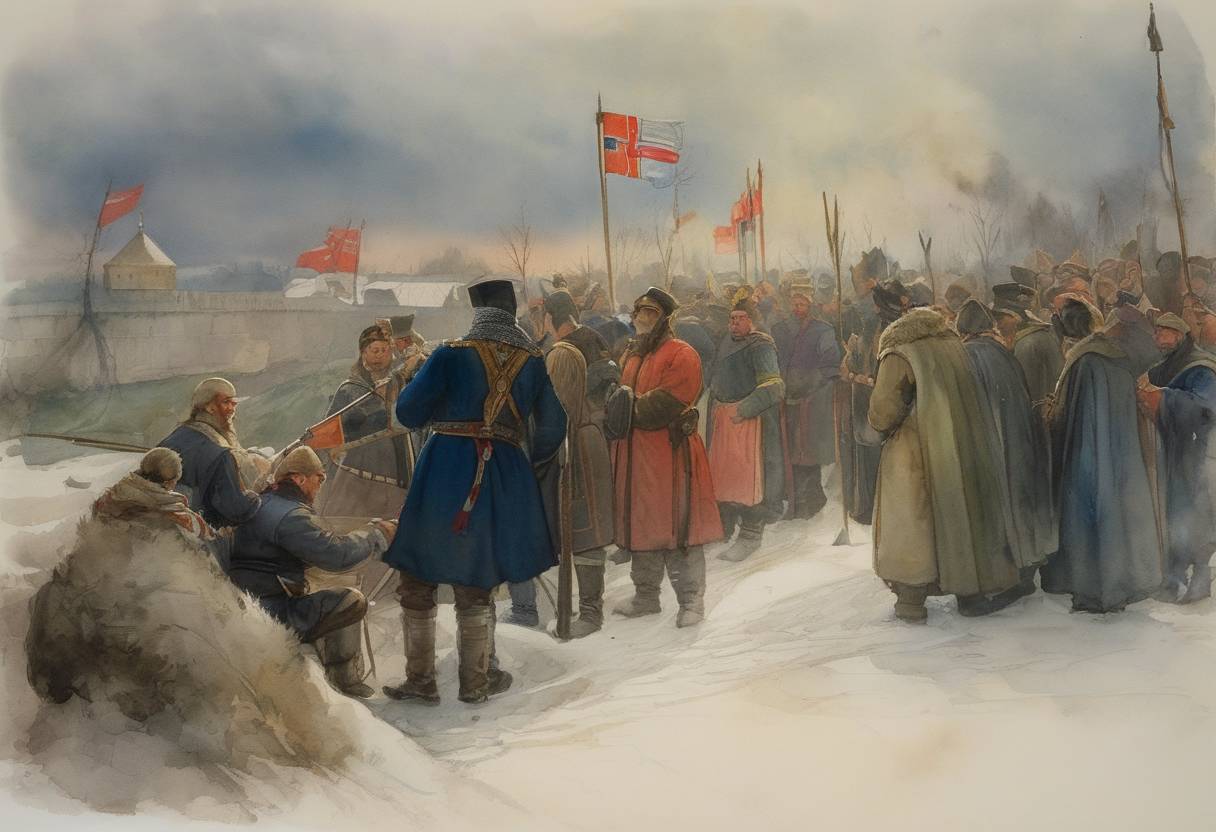
Treaty of Novgorod - June 3, 1326
The Treaty of Novgorod, signed on June 3, 1326, was a significant diplomatic agreement between the Kingdom of Norway and the Republic of Novgorod. This treaty aimed to peacefully resolve territorial disputes in the northern regions of present-day Scandinavia and Russia, particularly concerning the control and use of the northern territories adjacent to the Kola Peninsula.
Context and Background
During the early 14th century, both Norway and Novgorod were influential powers in Northern Europe. Their territories bordered each other in the northwest, leading to frequent conflicts over land and resource control—especially in the sparsely populated regions where valuable fur and fishing resources were abundant.
Key Terms of the Treaty
Boundary Establishment: The treaty delineated a clear boundary between the Norwegians and the Novgorodians, primarily in the area stretching from the White Sea to the Varangerfjord. This boundary helped reduce conflicts and ensured peaceful coexistence.
Autonomy and Control: Certain regions, particularly those inhabited by indigenous Sámi people, were granted semi-autonomy while acknowledging overlordship by both Norway and Novgorod. This was an early recognition of the complex ethnic and political dynamics in the region.
Trade and Communication: The treaty set terms for trade and communication across the new borders, allowing each side to benefit economically. It facilitated mutual trade rights and established protocols for handling disputes over natural resources.
Significance and Aftermath
Peaceful Coexistence: The treaty is a notable instance of diplomatic resolution in medieval Europe, showcasing the ability to resolve territorial disputes without extensive military conflict.
Longevity of Peace: Following the agreement, a prolonged period of peace and strengthened relations between Norway and Novgorod ensued, crucial for regional stability.
Impact on Sámi People: Although the treaty partially recognized Sámi autonomy, the pressure from expanding Norwegian and Novgorodian interests gradually affected their traditional ways of living.
The Treaty of Novgorod remained in effect, maintaining regional peace and setting a precedent for subsequent boundary negotiations in Northern Europe, until shifting political dynamics in the region again reshaped the borders in the following centuries.