The End of the Great Depression in the United States: December 4, 1943
1943 · Washington, D.C., United States
The Great Depression officially ends in the United States as the economy recovers due to World War II production demands.
June 19, 1931
After a banking crisis triggers fears of a financial collapse, a moratorium on reparations is declared by US President Herbert Hoover, temporarily suspending debt payments from World War I.
Washington, D.C., USA | US Government
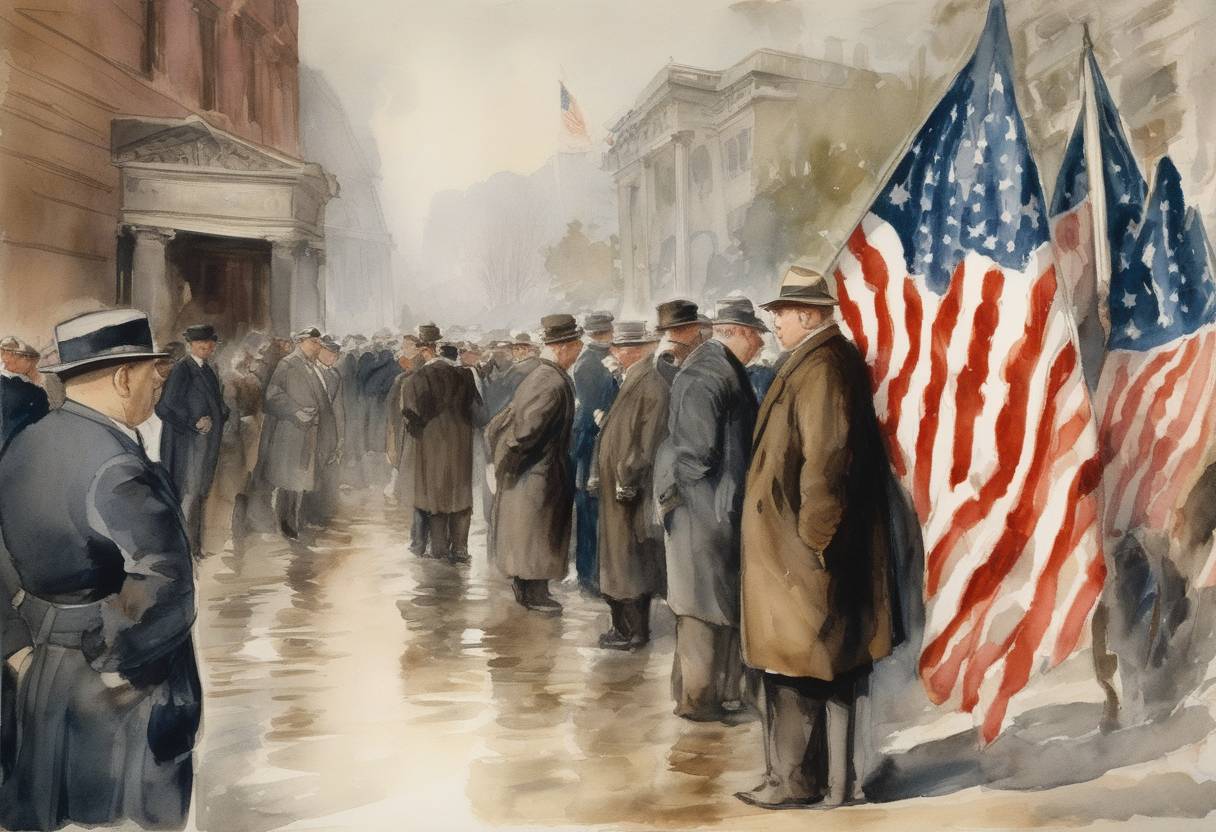
On June 19, 1931, in response to a growing financial crisis and the fear of a global economic collapse, U.S. President Herbert Hoover proposed a significant moratorium on reparations stemming from World War I. The move was intended to halt debt payments from and to the Allied and Central Powers for a period of one year. This decision aimed to provide a temporary reprieve to the struggling European economies, which were suffering from a liquidity crisis exacerbated by the Great Depression.
The roots of this financial turbulence lay in the reparations imposed on Germany by the Treaty of Versailles at the conclusion of World War I. The reparations were a heavy financial burden that destabilized the German economy, leading to hyperinflation in the 1920s. As Germany’s economic situation became dire, difficulties in making payments affected creditor nations, particularly France and Britain, exacerbating financial woes globally.
The onset of the Great Depression in 1929 further intensified economic hardships worldwide. Banking panics and failures across Europe, particularly in Germany and Austria, threatened the stability of the international financial system. As pressure mounted, debtor nations struggled to meet reparations payments, and creditor nations faced potential losses from this financial strain.
President Hoover’s initiative, known as the Hoover Moratorium, called for all intergovernmental debt payments, including reparations and war debts owed to the United States, to be suspended for one year. Hoover’s proposal underscored his belief that a respite from the financial obligations was necessary to stabilize the global economy and prevent further financial catastrophe.
The moratorium required the agreement of all involved creditor nations, and despite initial resistance, it eventually received widespread, though not universal, support. The diplomatic effort was marked by negotiations and debates among major nations on how to handle the complex web of financial interdependencies.
The moratorium was an unprecedented action in international finance and represented a shift towards more cooperative economic policies during a time of crisis. It temporarily eased the financial pressures in Europe, allowing countries some breathing room to address their economic and banking issues.
Nevertheless, the suspension of payments highlighted the fragility of the international economic system and the ongoing challenges arising from World War I’s financial legacy. While the Hoover Moratorium was intended as a temporary measure, it did not resolve the underlying issues of debt repayment or economic instability.
The moratorium’s expiration in 1932 led to further efforts by the international community to renegotiate terms, ultimately contributing to the Lausanne Conference of 1932, where European countries agreed to a reduced reparation plan. However, the global economic situation continued to deteriorate, paving the way for more profound geopolitical changes leading up to World War II.
The Hoover Moratorium stands as a critical moment in the interwar period, reflecting the complexities of international economic diplomacy and the interconnectedness of nations in times of global crisis.