Capture of Phnom Penh by Khmer Rouge - April 17, 1975
1975 · Phnom Penh, Cambodia
The Khmer Rouge forces capture Phnom Penh, Cambodia, effectively gaining control of the country and leading to the establishment of the Democratic Kampuchea regime.
April 15, 1998
Pol Pot, the notorious leader of the Khmer Rouge regime responsible for the Cambodian genocide, died.
Anlong Veng, Cambodia | Khmer Rouge
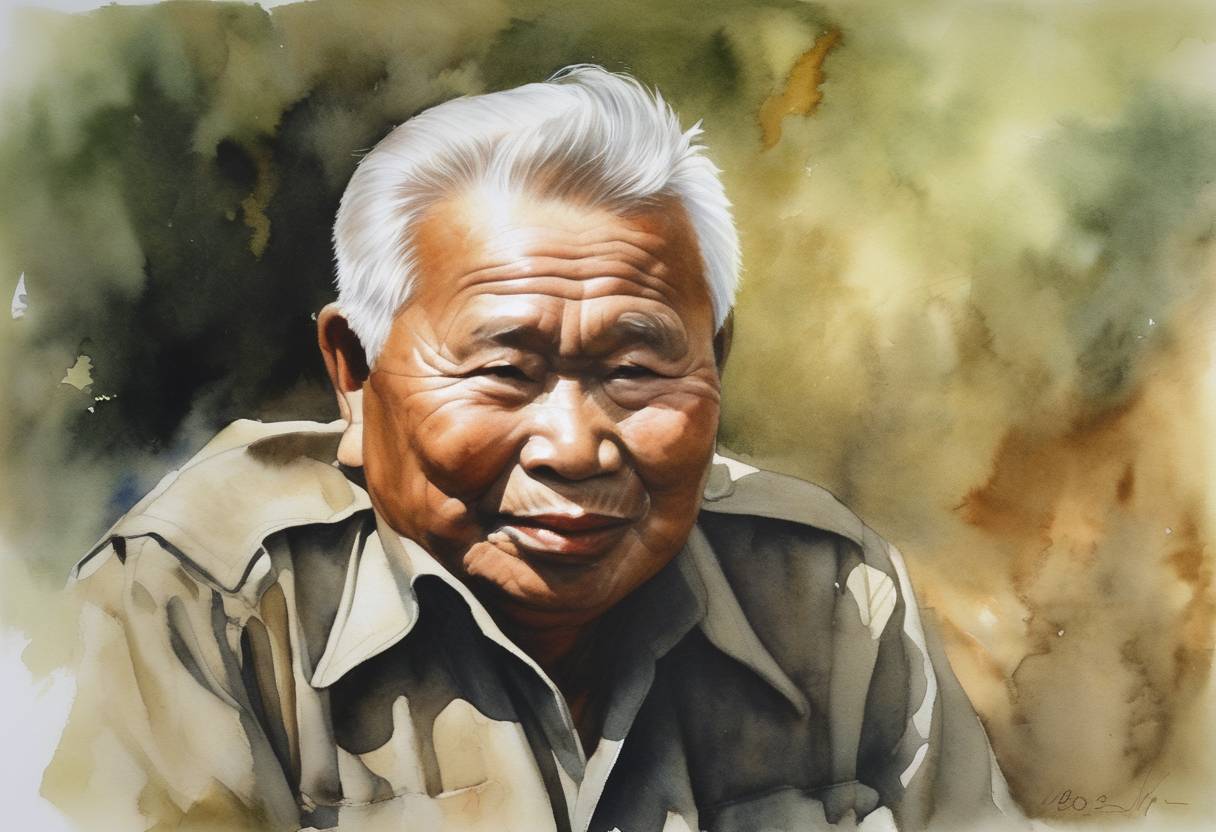
Pol Pot, born Saloth Sar, was the leader of the Khmer Rouge regime, responsible for the Cambodian genocide from 1975 to 1979. He passed away on April 15, 1998, in the jungles of Cambodia near the Thailand border.
Pol Pot led the Khmer Rouge to power and subsequently became the Prime Minister of Democratic Kampuchea. His regime was notorious for its brutal efforts to transform Cambodia into a socialist agrarian society, which led to the deaths of an estimated 1.7 million people due to forced labor, starvation, disease, and executions.
After being ousted from power by invading Vietnamese forces in 1979, Pol Pot and the remnants of the Khmer Rouge retreated to the remote regions of Cambodia. Despite losing political power, the Khmer Rouge continued to wield influence in parts of Cambodia and remained involved in a prolonged guerrilla war.
By the late 1990s, the Khmer Rouge had been significantly weakened by internal divisions and defections. In 1997, Pol Pot was arrested by his own former comrades and placed under house arrest by Ta Mok, a one-time ally who had turned against him.
On April 15, 1998, Pol Pot died in his sleep at the age of 72. There were initial claims that he had died of natural causes—specifically heart failure. However, there were suspicions of suicide or foul play, exacerbated by the cremation of his body shortly after his death, which prevented an autopsy.
Pol Pot’s death marked the symbolic end of the Khmer Rouge as a political force. In the years following his death, many former Khmer Rouge leaders were brought to trial for crimes against humanity, marking a continued struggle for justice and reconciliation in Cambodia.
His death deprived many survivors and victims’ families of the opportunity to see him stand trial and for full accountability to be rendered for the atrocities committed under his rule. The continued efforts of the Extraordinary Chambers in the Courts of Cambodia (ECCC), established in 2006, represented ongoing attempts to redress the crimes of the Khmer Rouge era.
Pol Pot remains a figure of profound notoriety, with his regime emblematic of the brutal extremes of totalitarian rule and ideological extremism in the 20th century.
Source: www.history.com