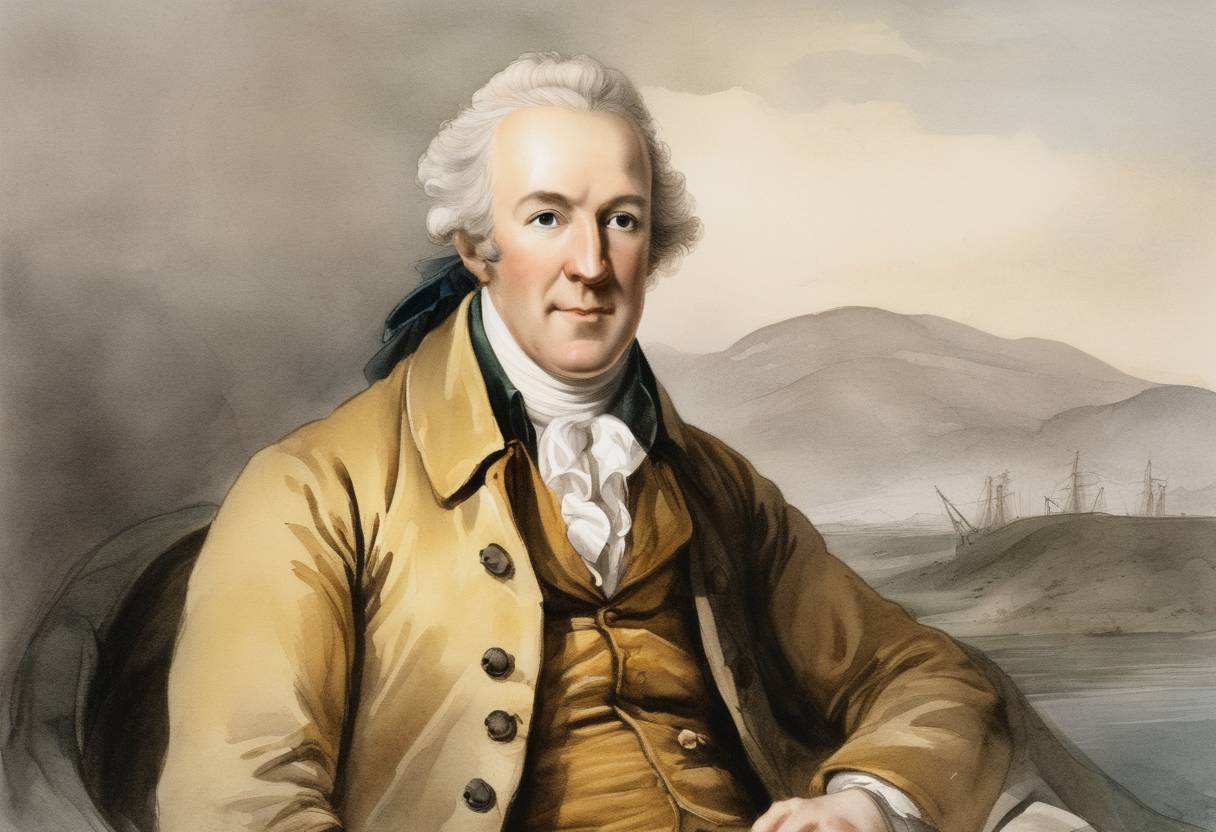
James Watt’s Birth and Contributions
James Watt was born on January 19, 1736, in Greenock, Renfrewshire, Scotland. He is renowned for his significant improvements to the steam engine, which played a crucial role in the advancement of the Industrial Revolution.
Early Life and Education
James Watt was the son of Agnes Muirhead and James Watt, a shipwright, ship owner, and contractor. Despite frequent bouts of illness, Watt displayed a keen aptitude for mathematics and engineering from a young age. He initially pursued instrument-making and worked with a local mathematics-instrument maker in Glasgow before moving to London in 1755 to enhance his skills.
Innovations in Steam Power
Watt’s most notable contribution to engineering was the enhancement of the Newcomen steam engine. His critical innovation was the separate condenser, which he developed in 1765, significantly increasing the engine’s efficiency. This modification reduced the waste of steam and fuel, making steam engines more viable for large-scale industrial applications.
He partnered with Matthew Boulton in 1775, forming the engineering firm Boulton & Watt. The company became instrumental in equipping numerous manufacturing sites across Britain, contributing to the widespread adoption of steam power.
Historical Impact
James Watt’s improvements to the steam engine catalyzed developments in various sectors, including mining, milling, and transportation, paving the way for the later expansion of railways and factories. His work laid foundational stones in the field of mechanical engineering, with the watt—a unit of power—named in his honor.
Legacy
Watt’s legacy extends beyond his inventions; he is remembered as a key figure who sparked fundamental changes in industrial practices and society at large during the 18th and 19th centuries. His dedication to innovation and improvement set a precedent in the engineering world and fueled the ongoing technological advancements of the Industrial Revolution and beyond.