Anti-Jewish Pogroms in Seville, Spain - June 4, 1391
1391 · Seville, Spain
Anti-Jewish pogroms began in Seville, Spain, spreading throughout Spanish cities, marking one of the worst anti-Jewish attacks in medieval Spain.
June 6, 1391
The anti-Jewish pogroms known as the Massacre of 1391 begin in Seville, spreading across Spain.
Seville, Crown of Castile (today part of Spain)
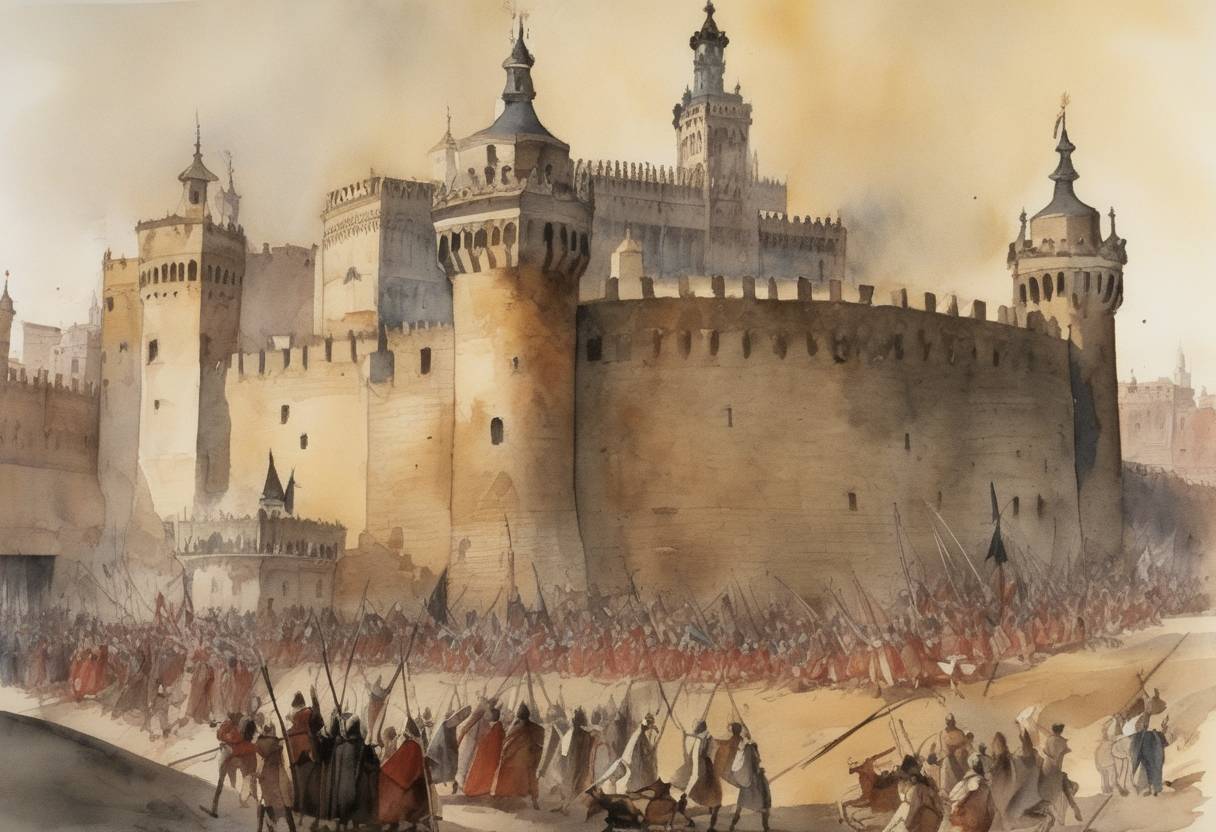
On June 6, 1391, a catastrophic wave of anti-Jewish violence began in Seville, Spain, which would later spread to other parts of the Iberian Peninsula. This tragic event marked the beginning of the Massacre of 1391, a series of pogroms against Jewish communities in Castile and Aragon.
The 14th century in Spain was a period marked by social upheaval, economic hardship, and religious tension. The Black Death, which had swept through Europe in the mid-century, left economic and social scars and heralded increased scapegoating of Jewish populations. During this time, Jews held relatively privileged positions in trade, finance, and intellect, which occasionally stoked jealousy and resentment among the Christian populace.
Christian leaders, including influential clerics, propagated a climate of hostility against Jewish communities, which created fertile ground for violence.
The pogrom on June 6, 1391, began with an incited mob led by the archdeacon of Écija, Ferrand Martinez. His inflammatory sermons called for the execution of Jews and the destruction of their properties, capitalizing on existing antisemitic sentiments among the Christian population of Seville.
The violence escalated when crowds attacked the Jewish quarter, known as the Judería, looting homes and properties, and murdering many Jewish residents. Those who survived faced forced conversion to Christianity to save their lives. This event marked a significant rupture in the Jewish community’s presence and influence in Seville.
Following the outbreak in Seville, similar pogroms spread rapidly throughout Spain, affecting cities such as Córdoba, Toledo, Valencia, and Barcelona. By the end of the year, it is estimated that several thousand Jews were killed, thousands were forced to convert to Christianity, and entire Jewish communities were uprooted.
These pogroms had profound and lasting effects. They significantly weakened the cultural and economic life of Jewish communities in the Iberian Peninsula. Additionally, this wave of violence set the stage for the increasing pressure on Jewish populations, which culminated in the Alhambra Decree of 1492, ordering the expulsion of Jews from Spain.
The Massacre of 1391 highlighted the volatile relationship between different religious communities during the Middle Ages in Spain. It underscored the vulnerability of minority communities amid socio-political and economic turmoil and laid a foundation for the policies of forced conversion and expulsion that would follow in the subsequent centuries.
The events of June 6, 1391, remain a poignant reminder of the devastating effects of religious intolerance and prejudice and serve as an important chapter in the history of anti-Jewish violence in Europe.