Ivan IV Crowned as the First Tsar of Russia
1547 · Moscow, Russia
Ivan IV, known as Ivan the Terrible, was crowned as the first Tsar of Russia, marking the beginning of the Tsardom of Russia.
April 23, 1896
The Khodynka Tragedy papacy, involving the death of a number of people due to a stampede during celebrations for the coronation of Tsar Nicholas II.
Moscow, Russia | Russian Monarchy
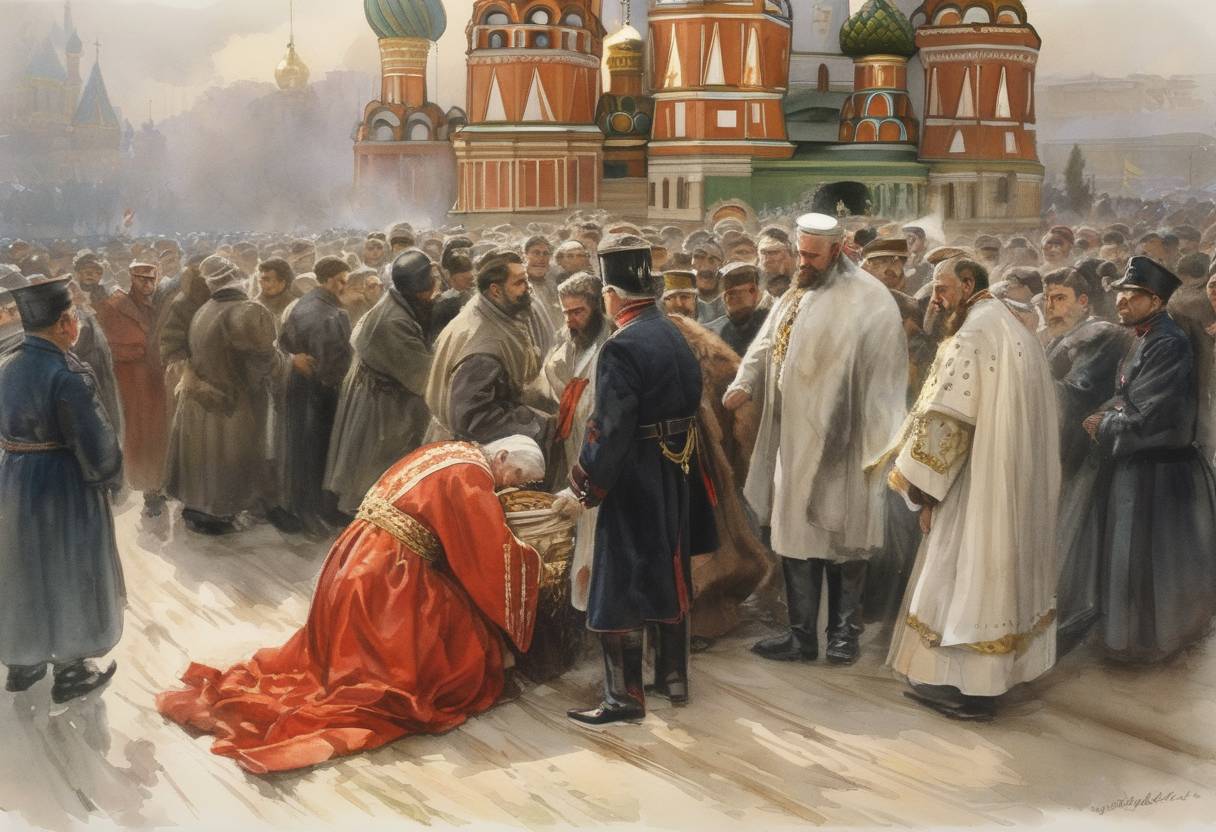
The Khodynka Tragedy occurred on May 18, 1896, during the celebrations for the coronation of Tsar Nicholas II in Moscow, Russia. It became one of the most infamous events of his reign due to the tragic loss of life and the circumstances surrounding the event.
Tsar Nicholas II was crowned as the Emperor of Russia on May 26, 1896, and as part of the coronation celebrations, a large festival was organized at Khodynka Field in Moscow. This event was meant to be a gesture of goodwill from the new Tsar to his people and included free food, drink, and various entertainment attractions. A special gift package was also promised to attendees, containing food and souvenirs, which greatly increased the public’s interest in the celebration.
On the morning of May 18, with an estimated half a million people gathered at Khodynka Field, rumors spread that the supplies were insufficient for everyone present. This led to a sudden rush towards the distribution points to secure the much-coveted gifts. The vast crowd quickly became unruly, and chaos ensued. The field, which had several trenches and holes left over from military exercises, contributed to the danger, as many people were caught and trampled in the stampede.
By the end of the day, approximately 1,389 people were reported dead, with at least another 1,300 suffering injuries. It was one of the deadliest peacetime crowd disasters of the 19th century.
Despite the scale of the disaster, the celebrations continued as planned, which attracted widespread criticism. Tsar Nicholas II and his wife, Empress Alexandra, attended a ball at the French embassy the evening after the tragedy. This decision was seen by many as a display of indifference or a serious diplomatic misstep, damaging Nicholas’ image and contributing to the perception of him as disconnected from the populace.
Following the tragedy, despite public criticism and personal guilt, Nicholas II made some efforts to compensate the victims’ families, but the event foreshadowed the challenges and the public disillusionment that would characterize much of his reign. The Khodynka Tragedy is often cited as an early indication of the disconnect between the Russian monarchy and the people, a sentiment that would continue to grow toward the Russian Revolution in 1917.
Source: www.britannica.com