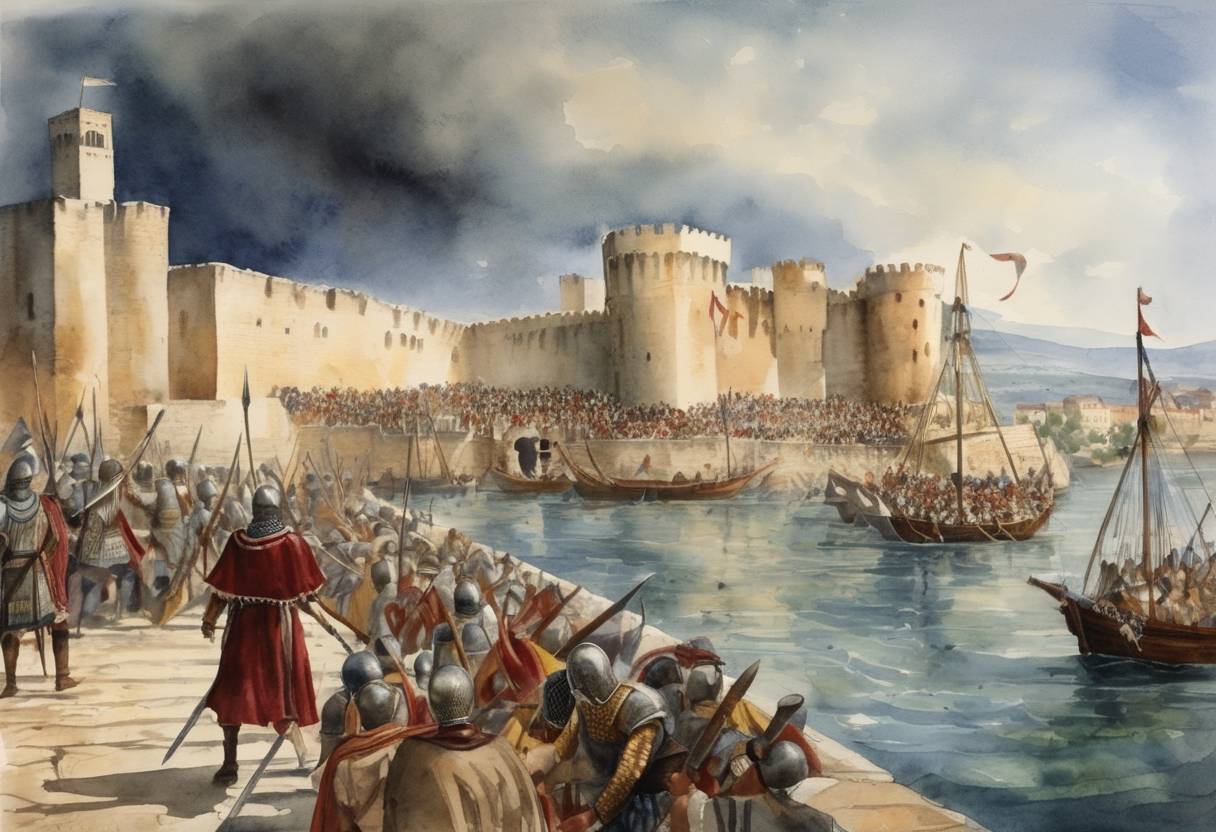
Siege of Zara: November 10, 1202
Context
The Fourth Crusade, initially intended to reclaim Jerusalem from Muslim control, was diverted from its original path due to complex political and financial issues. The crusaders, primarily composed of French nobles, found themselves in significant debt to the Republic of Venice, which had agreed to provide transportation for the campaign. Unable to pay the agreed sum, the crusaders were offered an alternative: divert to capture the city of Zara (now Zadar, Croatia) on behalf of Venice.
Background
Financial Struggles: The crusaders amassed a large fleet but lacked sufficient funds to fully satisfy their transportation contract with Venice. The city’s doge, Enrico Dandolo, proposed that if the crusaders helped capture Zara, a rebellious Venetian vassal city on the Dalmatian coast, their debts would be forgiven.
Moral Controversy: Zara was a Catholic city, and attacking it was controversial. Despite some objections, particularly from the papacy, the majority of crusaders agreed to the plan under the pressure of their monetary obligations.
Siege of Zara
On November 10, 1202, the Fourth Crusade’s forces arrived at Zara’s walls, marking the beginning of a pivotal siege. The army comprised a diverse group of soldiers seeking their fortunes in the Holy Land but found themselves embroiled in inter-Christian conflicts.
Siege Tactics: The crusaders, alongside Venetian forces, launched an assault utilizing siege engines and naval power. The attackers overwhelmed the city’s defenses with a combination of direct attacks and psychological warfare, exploiting the city’s lack of expected reinforcements and support.
Outcome: Zara fell after several days of fighting, marking a significant yet troubling success for the Fourth Crusade. The city was pillaged, and its inhabitants suffered dire consequences as the crusading knights installed a new government loyal to their cause.
Aftermath and Significance
Papacy’s Response: Pope Innocent III had explicitly forbidden any attack on a Christian city, and upon learning of Zara’s capture, he excommunicated the entire army and its Venetian allies. However, the necessity to continue the crusade and the practicality of having a large excommunicated force soon led to negotiations. Most of the crusaders’ excommunications were lifted, though the Venezians remained under papal interdiction.
Prelude to Constantinople: The capture of Zara set a precedent for the Fourth Crusade’s divergence from its original mission. It foreshadowed the infamous sack of Constantinople in 1204, where the crusaders once again turned against fellow Christians for political and financial gains.
Historical Implications: The siege was a stark example of how internal European politics and economic pressures could override the initial religious intentions of the Crusader movements, leading to significant shifts in power and influence within the medieval Christian world.