Last Execution for Witchcraft in Germany
1775 · Kempten, Germany
Last execution for witchcraft in Germany takes place in Kempten.
February 21, 1543
Jörg Ratgeb, a painter and leader in the German Peasants' War, was executed. His artworks and role in the rebellion were significant in the context of the German Reformation.
Pforzheim, Germany | Holy Roman Empire
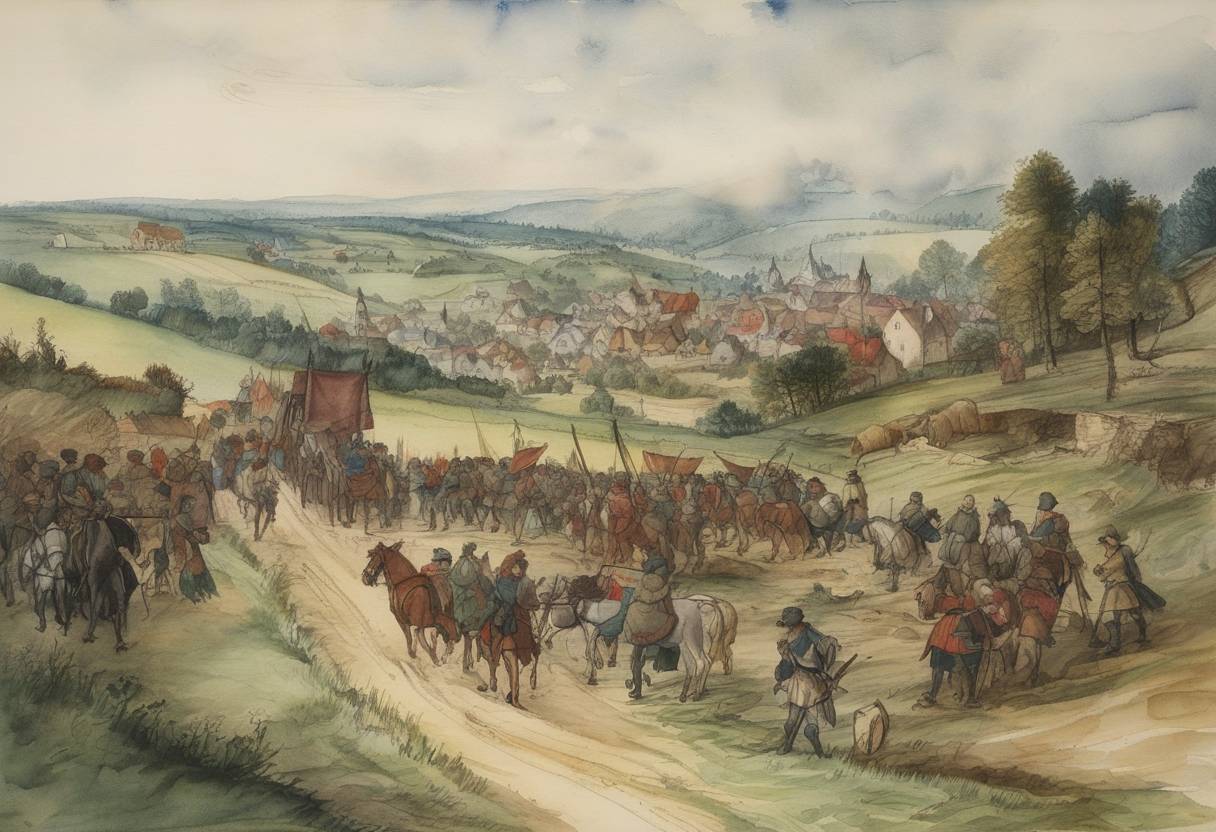
Jörg Ratgeb (circa 1480 – 1526) was a prominent German painter and a radical figure associated with the German Peasants’ War (1524–1525), a significant uprising during the broader context of the German Reformation. Known for his commitment to the social and economic grievances of the peasantry, Ratgeb’s life and works reflect the tumultuous period of early 16th-century Germany.
Ratgeb’s artistic legacy is primarily tied to his religious frescoes and altarpieces, characterized by emotional intensity and complex iconography. Among his renowned works is the Herrenberg Altarpiece, completed in 1521, which showcases his theological insights and vibrant artistic style. His art often included intense depictions of biblical scenes, infused with the struggles and human experiences reflective of his time.
The Peasants’ War was a widespread popular revolt that challenged the socio-political structure of the Holy Roman Empire. Ratgeb became involved due to a combination of economic distress and the spread of Reformation ideas advocating ecclesiastical and social reform. His participation was partly driven by personal ties and commitments, leading him to join the insurgents actively.
Captured during the rebellion’s suppression, Ratgeb was eventually executed on February 21, 1526, for his role in the uprising. Although only having one recorded execution date, it is important to note that the confusion over dates often arises due to the difference in Julian and Gregorian calendars rather than differences in local time zones.
Ratgeb’s execution marked the brutal crackdown on dissent during this era. His death underscored the risks undertaken by individuals standing against prevailing powers and reflected the harsh realities faced by leaders of the peasant cause.
Despite his execution, Ratgeb’s art and revolutionary spirit continued to inspire future generations. His works serve as both aesthetic achievements and historical documents providing insight into the challenging socio-political dynamics of early Reformation Germany. His life and art remain significant in the narrative of the period, illustrating the intersections of religious reformation, social upheaval, and artistic expression.
Source: www.britannica.com