The Second Battle of Copenhagen: February 5, 1807
1807 · Copenhagen, Denmark
A British naval force began bombarding Copenhagen, leading to the Second Battle of Copenhagen.
May 17, 1814
The Demerara River in Guyana sees the arrival of the HMS Bellerophon and its crew, marking an important logistical moment in the British West Indies campaign.
Demerara River, Guyana | Royal Navy
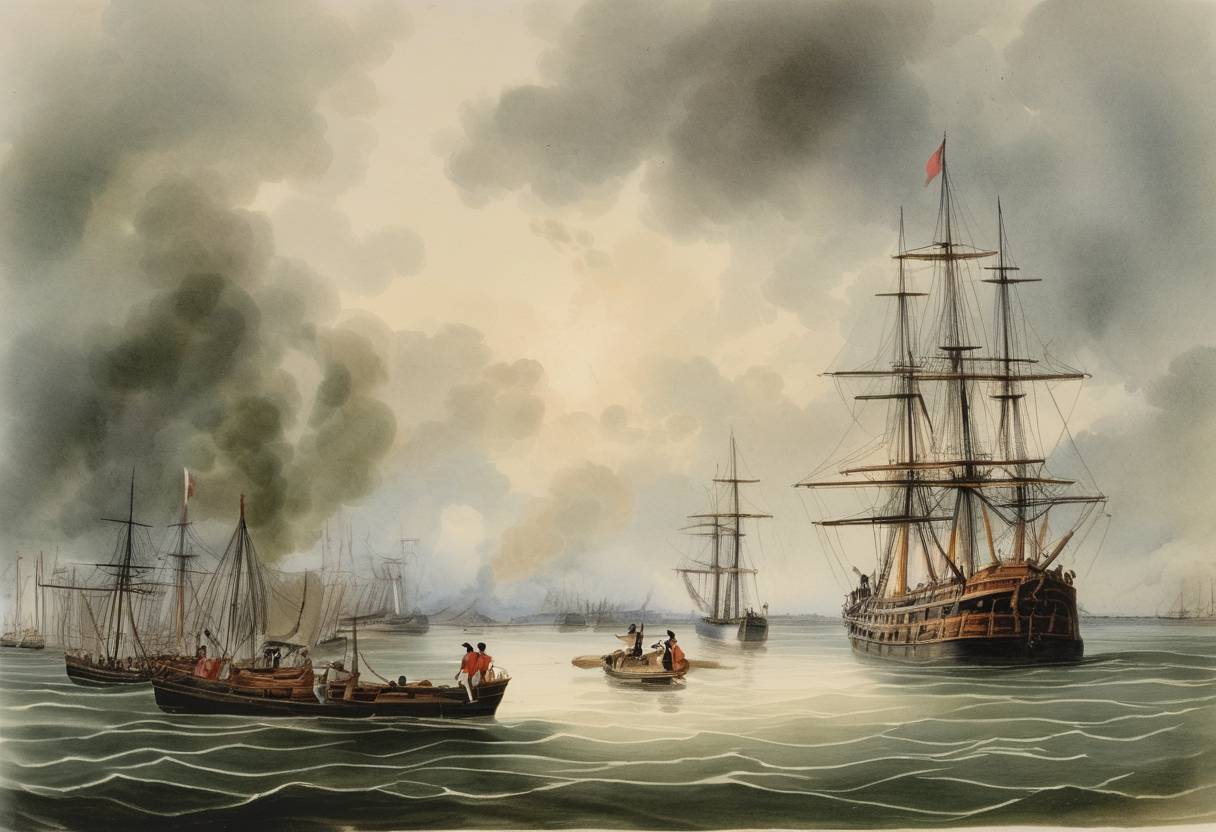
On May 17, 1814, the HMS Bellerophon, a 74-gun third-rate ship of the line of the Royal Navy, arrived at the Demerara River in what is now Guyana. This event occurred during the final stages of the Napoleonic Wars, which saw various campaigns across Europe and the colonies, including the British West Indies campaign.
During the early 19th century, the Caribbean colonies were of strategic importance to European powers, especially Britain, which sought to maintain and expand its influence in the region. The Napoleonic Wars, primarily fought between the French Empire and opposing coalitions led by Britain, prompted widespread naval engagements. The British effectively used their superior naval capabilities to block French efforts and secure trade routes in the Caribbean.
The HMS Bellerophon played a vital logistical role in the British naval presence in the Caribbean. Named after the Greek hero Bellerophon, the ship had been actively engaged in several critical battles, including the Battle of Trafalgar in 1805. Its arrival at the Demerara River underscored the ongoing British strategy to assert control over former French territories and safeguard trade channels in the region.
While the campaign in the West Indies was nearing its end with the cessation of the Napoleonic Wars, the presence of British naval power, as manifested by the HMS Bellerophon, marked a period of dominance that would contribute to Britain’s colonial and economic reach. The signing of the Treaty of Paris in 1814 formalized peace, allowing Britain to further consolidate its holdings in the Caribbean.
HMS Bellerophon’s arrival at the Demerara River not only reinforced British military presence but also symbolized the transition towards peacetime efforts to stabilize and integrate Caribbean economies into the British Empire’s vast trade networks.
Source: www.naval-history.net