Charles de Gaulle Becomes Prime Minister of France - June 1, 1958
1958 · Paris, France
Charles de Gaulle became the Prime Minister of France.
November 11, 1944
The popular leader of the Free French Forces, Charles de Gaulle, was designated President of the Provisional Government of the French Republic.
Paris, France | Provisional Government of the French Republic
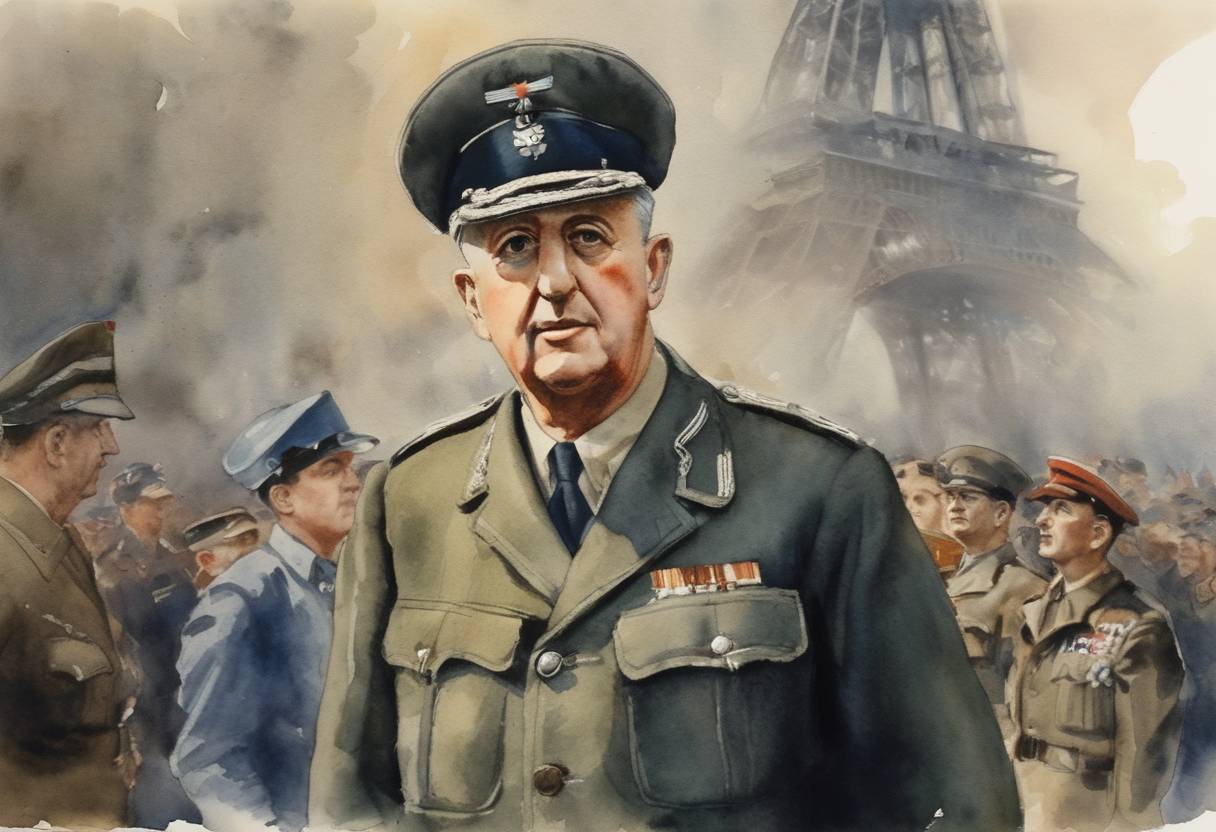
On November 11, 1944, Charles de Gaulle was designated President of the Provisional Government of the French Republic. This significant event marked a crucial step in the re-establishment of French governance following the liberation from Nazi occupation during World War II.
Free French Forces: Under de Gaulle’s leadership, the Free French Forces opposed the Axis powers after the fall of France in 1940. De Gaulle, who had fled to London, urged resistance against the collaborationist Vichy regime and worked to unite various French resistance groups.
Liberation of France: By mid-1944, the Allied forces, with significant contributions from the Free French, had liberated much of France. The need for an interim government to lead the nation out of wartime devastation and promote stability was evident.
This date was symbolically significant as it also marked the Armistice Day commemorations, remembering the end of World War I. De Gaulle, already a prominent figure due to his wartime efforts, was the natural choice to lead the provisional government, reflecting both his leadership acumen and the legitimacy he had garnered internationally.
Political Reorganization: As President of the Provisional Government, de Gaulle was responsible for steering France through reconstruction, establishing democratic institutions, and preparing for free elections.
National Unity: De Gaulle worked to unify various political factions, emphasizing the importance of national unity for future stability.
Stability and Direction: Under de Gaulle’s leadership, key steps were taken towards the re-establishment of civilian rule, culminating in elections in 1946 that led to the Fourth Republic.
Legacy: De Gaulle’s role as a statesman would later influence his return to power during the crisis of 1958, when he would found the Fifth Republic, fundamentally shaping modern French political structures.
The designation of Charles de Gaulle as President of the Provisional Government on November 11, 1944, was a turning point that laid the foundation for France’s post-war recovery and its trajectory as a republic replenished with democratic principles.
Source: www.britannica.com