May 8, 1788

The Parlement of Paris is suspended after refusing to register revised May Edicts which aimed at reorganizing the judicial system in France.


Paris, France | Parlement of Paris
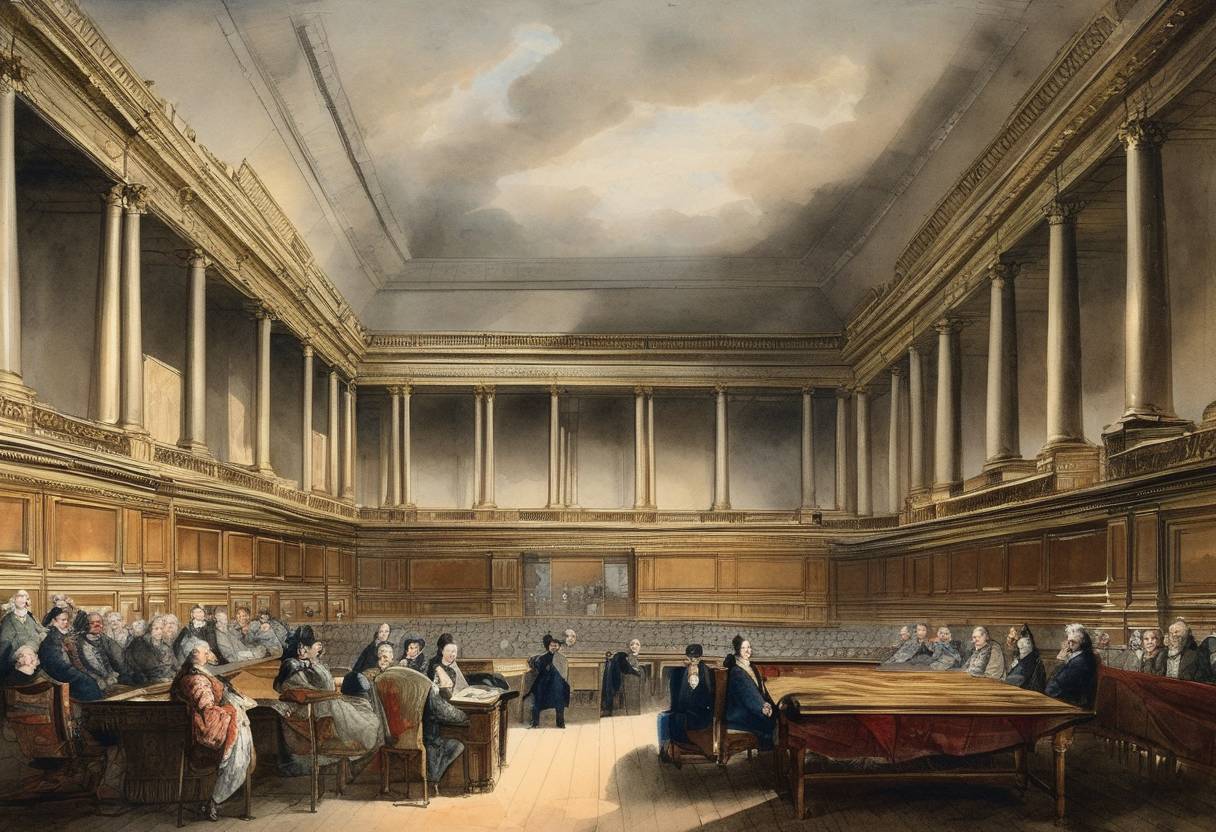
Watercolor painting based depiction of The Parlement of Paris is suspended after refusing to register revised May Edicts which aimed at reorganizing the judicial system in France. (1788)

Suspension of the Parlement of Paris - May 8, 1788

On May 8, 1788, the Parlement of Paris was formally suspended by the French monarchy under King Louis XVI following its refusal to register the revised May Edicts. These edicts were a series of reforms proposed by the king’s chief minister, Étienne Charles de Loménie de Brienne, aimed at overhauling France’s judicial system. This decision is a significant event in the prelude to the French Revolution, as it highlighted the growing tensions between the monarchy and the traditional judicial bodies.

Context and Background

The late 18th century was a period of financial crisis in France, driven by costly involvement in international wars and extravagant royal expenditure. This crisis prompted the government to consider various fiscal reforms. The May Edicts were part of these attempted reforms and proposed significant changes:

  • Reduction of the Parlement’s Power: The edicts sought to reduce the influence and authority of the parlements, the traditional judicial and legislative bodies of France, which had the power to register, or refuse, royal decrees.
  • Creation of New Judicial Bodies: Establishment of new courts for swift and efficient administration of justice, bypassing the parlements.
  • Streamlining the Legal System: Intended to make the judicial system more efficient and centralized under royal control.

Events of May 8, 1788

The resistance to the May Edicts by the Parlement of Paris was grounded in their traditional role as defenders of French liberties against arbitrary royal power. Their refusal to register the edicts was perceived as a direct challenge to the king’s authority. In response:

  • Suspension of the Parlement: King Louis XVI ordered the suspension of the Parlement of Paris on May 8, 1788, effectively silencing one of the most influential voices in opposition to royal policies.
  • Implementation of Reforms: The king aimed to implement the reforms unilaterally, disregarding the traditional requirement for registration by the parlements.

Aftermath and Significance

  • Public Unrest: The suspension of the Parlement led to increased public unrest and contributed to a surge in political agitation against the monarchy. It intensified the perception of royal despotism among the populace.
  • Prelude to Revolution: The incident is crucial in the buildup to the French Revolution. It exemplified the monarchy’s inflexibility and inability to address the financial and administrative crises, leading to greater calls for reform that would eventually culminate in revolutionary action.
  • Revocation and Summoning of the Estates-General: The failure of these reforms, assisted by their unpopular reception, eventually led King Louis XVI to revoke the edicts and call for the convening of the Estates-General in 1789, an assembly that had not met since 1614, marking a pivotal turn towards revolution.

This period marked one of the critical junctures in the history of France that would ultimately lead to the collapse of the Ancien Régime and the rise of the Revolutionary era.