1888 · New York City, United States
The Great Blizzard of 1888 began along the eastern United States, eventually becoming one of the most severe recorded blizzards in U.S. history.
February 19, 1884
More than sixty tornadoes strike across the Southern United States, causing widespread damage and loss of life.
Southern United States, United States | National Weather Service
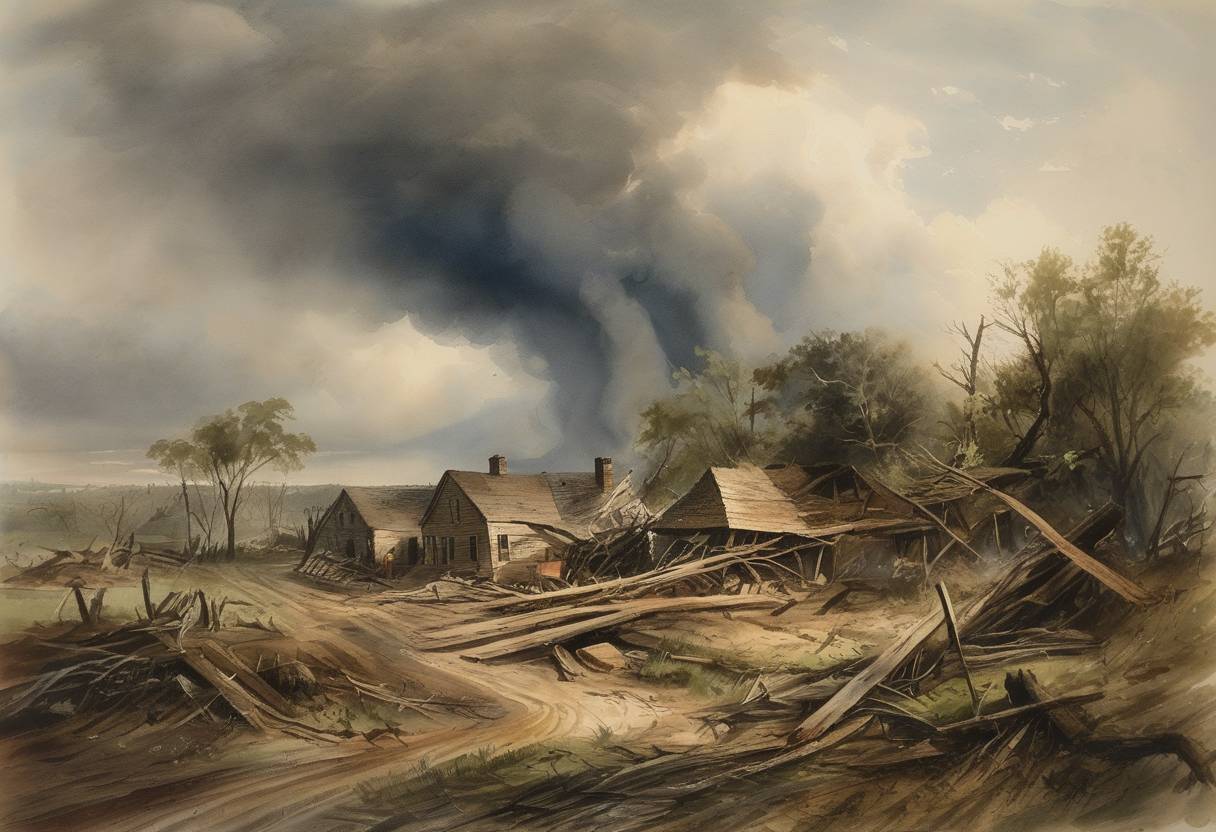
On February 19, 1884, a devastating weather phenomenon known as “The Enigma Outbreak” swept across the Southern United States. This outbreak was one of the largest and most intense tornado outbreaks of the 19th century. Over 60 tornadoes spawned in a single day, wreaking havoc from Mississippi to Virginia.
The outbreak occurred during a period of meteorological instability in late winter. It was characterized by a potent combination of atmospheric conditions that are typical precursors to tornado activity: warm, moist air from the Gulf of Mexico colliding with cooler, drier air coming from the west. This clash formed a powerful weather system capable of spawning numerous tornadoes.
The areas most affected by the tornado outbreak included but were not limited to:
Communities in both rural and urban settings experienced the destructive impact of this severe weather event.
The tornadoes caused extensive damage across a broad geographical area. The destruction included:
Tragically, the outbreak resulted in significant loss of life. Over 170 individuals were reported killed and an estimated 1,000 people were injured. These figures were approximate, as record-keeping during that period was less precise than today.
The Enigma Outbreak emphasized the lethal potential of tornadoes, which prompted further study into severe weather conditions and forecasting. It remains a somber reminder of the destructive power of nature and served as an impetus for the evolving field of meteorology, which aimed to predict and mitigate future disasters.
Despite its devastation, as the Enigma Outbreak occurred in an era before modern meteorological technologies, its enormity and the widespread destruction it caused were not fully understood until much later analyses. The event is well-documented in U.S. storm history as a pivotal moment in recognizing the need for improved weather observation and reporting techniques.
Source: www.weather.gov