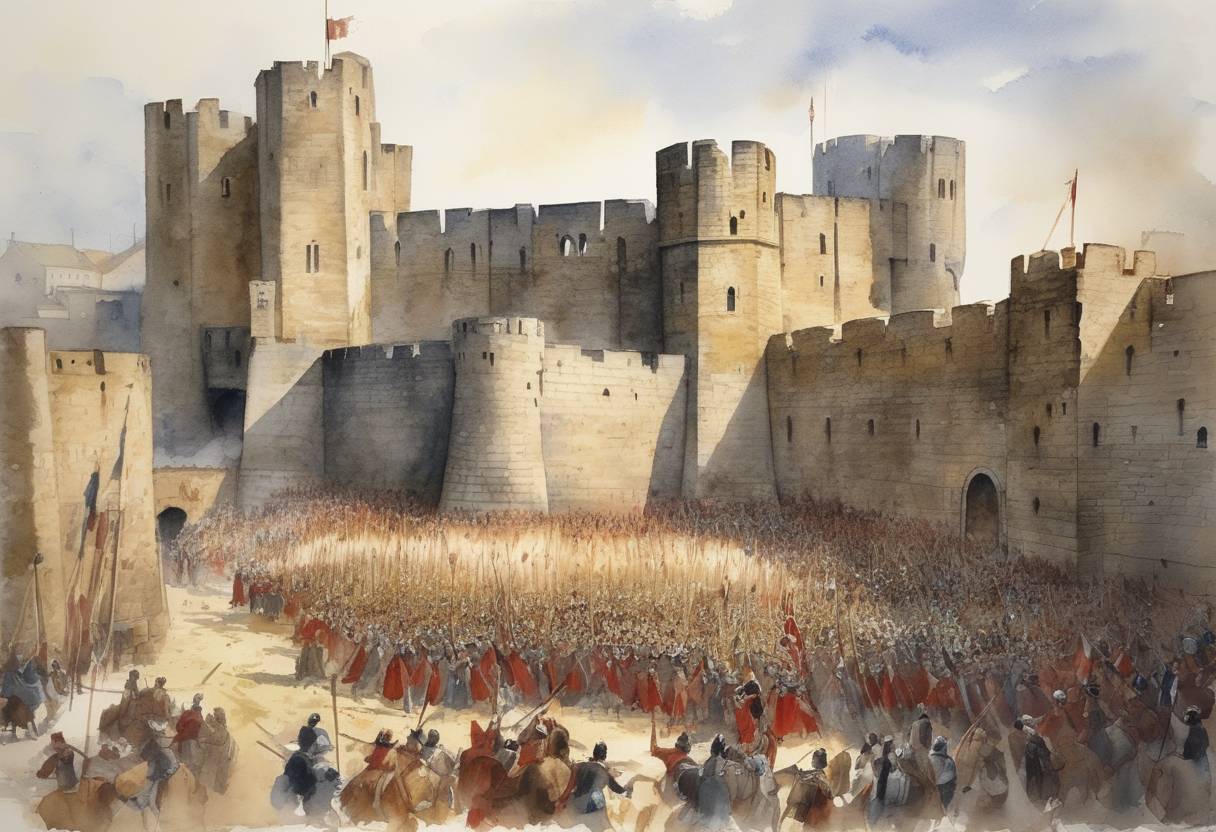
Massacre of Jews at Clifford’s Tower, York - March 19, 1190
On March 19, 1190, a tragic event unfolded at Clifford’s Tower in York, England, where the Jewish community of the city sought refuge and ultimately faced a massacre. This incident was part of a series of violent anti-Semitic outbreaks that occurred across England during the late 12th century.
Context and Preceding Events
The massacre occurred against the backdrop of the Third Crusade (1189–1192), a period marked by heightened religious fervor and tensions between religious communities. The Jewish community in England, established since the Norman Conquest of 1066, faced increasing hostility during the reign of King Richard I. The king’s coronation in September 1189 ignited a wave of anti-Jewish riots, partially stirred by crusaders heading to the Holy Land.
In York, anti-Semitic sentiments contributed to growing unrest. Earlier in 1190, attacks against Jews erupted in various parts of England, fueled by religious zeal and stories about alleged Jewish culpabilities. As rioters moved towards York, the threat of violence loomed large over its Jewish residents.
Events of March 19, 1190
As the situation in York deteriorated, around 150 Jews sought sanctuary in Clifford’s Tower, a royal fortress, hoping for protection from the marauding mob. However, a siege ensued, with the tower being surrounded by townspeople, crusaders, and local nobles. Amidst this hostile environment, options for the beseiged Jews narrowed.
Under the leadership of Rabbi Yom-Tov of Joigny, the refugees faced a dire choice. Some chose to take their own lives and those of their families, a tragic decision made in fear of forced conversion or murder. Others opted to set fire to the tower to prevent capture. Those who surrendered were slaughtered by the mob or forced into conversion.
Aftermath and Historical Impact
The massacre at Clifford’s Tower was a grim episode in the history of English Jewry, exemplifying the perilous conditions faced by Jewish communities during this era. In the following years, the memory of these events lingered, symbolizing the intensification of anti-Semitic violence during the Crusades. Many Jews who survived faced lifelong marginalization and financial extortion.
The tragedy at York was a precursor to further anti-Jewish decrees in England, culminating in the expulsion of Jews in 1290 under King Edward I. Clifford’s Tower remained a significant historical site, representing both a dark chapter in medieval England and a poignant reminder of the profound consequences of religious intolerance and persecution.