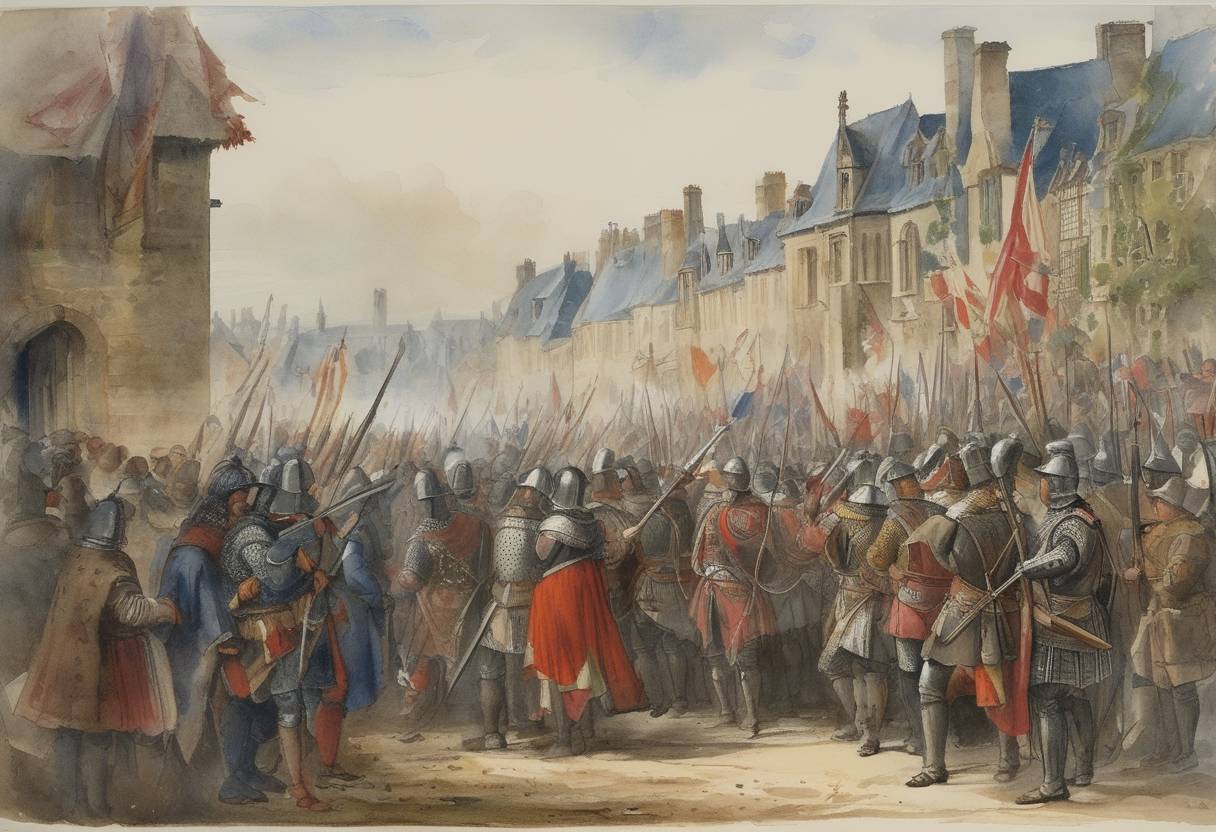
The Treaty of Brétigny: Ratification on October 24, 1360
The Treaty of Brétigny, ratified on October 24, 1360, marked a significant turning point in the protracted conflict between England and France known as the Hundred Years’ War. This complex series of hostilities, which had endured from 1337, saw a momentary cessation of military activities as a result of diplomatic negotiations formalized through this treaty.
Context and Background
The Hundred Years’ War began primarily as a dynastic struggle, rooted in claims by the English monarchy to the French crown, exacerbated by territorial disputes. By the mid-14th century, the war had seen significant English victories, notably at the Battle of Crécy (1346) and the Battle of Poitiers (1356), where King John II of France was captured. These defeats, compounded by internal strife and economic turmoil within France, pressured the French into negotiating peace.
Key Provisions of the Treaty
Territorial Concessions: The treaty required France to concede extensive territories to England, granting full sovereignty over regions such as Aquitaine, Calais, and other areas of Gascony and Poitou.
Ransom of King John II: The treaty outlined the ransom terms for John II’s release, fixing the amount at three million écus. Until the ransom was fully paid, hostages from the French nobility would be held by the English.
Renunciation of Claims: In exchange for the territorial gains, King Edward III of England renounced his claim to the French throne, ostensibly dismantling a primary cause of the war.
The Treaty of Brétigny ushered in a relatively peaceful period between the two nations, lasting until 1369. During this time, both kingdoms focused on reconstructing and stabilizing internally after years of debilitating warfare. However, the peace was fragile; resentment in France over territorial losses and the heavy ransom demanded for their king created a volatile atmosphere.
Long-Term Impact
The Treaty of Brétigny ultimately failed to deliver a lasting peace:
Resurgence of Hostilities: The English presence in the ceded territories and disputes over treaty interpretations led to renewed war merely nine years later in 1369.
Shift in Power Dynamics: The short-term peace allowed England to consolidate power in its territories, setting the stage for future conflicts over dominance in France.
The ratification of the treaty in 1360 represents a critical juncture in the Hundred Years’ War. Though it provided a temporary respite from conflict, its shortcomings in addressing the deeper dynastic and territorial issues set the stage for the continuation of the war, which would persist until the Treaty of Picquigny in 1475.