Treaty of Brétigny: Context and Significance
1363 · Brétigny, France
The Treaty of Brétigny was agreed upon between England and France, temporarily halting the Hundred Years' War.
July 1, 1200
King John of England and King Philip II of France sign the Treaty of Le Goulet, which recognized John's possession of Normandy, Anjou, Maine, and Brittany, whereas Philip II retained most of the disputed Vexin region.
Le Goulet, France | Kingdom of England, Kingdom of France
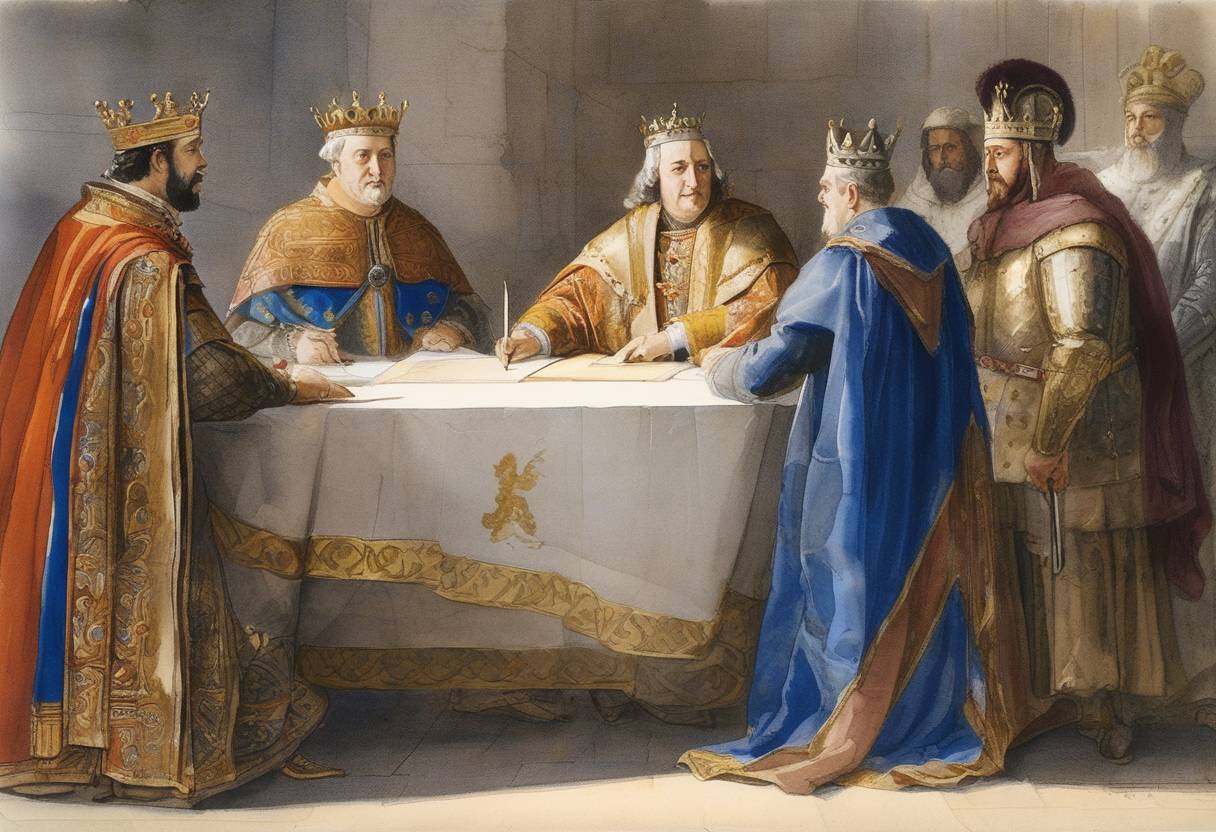
On May 22, 1200, King John of England and King Philip II of France signed the Treaty of Le Goulet, solidifying a temporary peace between their kingdoms. This agreement was pivotal in the medieval power dynamics of France and England.
The treaty came against a backdrop of intense rivalries following the tumultuous Angevin succession. After Richard the Lionheart’s death in 1199, his brother John ascended to the English throne amid competing claims from their nephew Arthur of Brittany, supported by Philip II. John sought to bolster his legitimacy and secure his continental possessions amidst these disputes.
The Treaty of Le Goulet temporarily established peace by legitimizing John’s holdings, yet it foreshadowed future conflicts. Despite securing temporary recognition, John’s relationship with his French vassals and Philip II remained fraught. Tensions would soon flare again, culminating in John’s loss of Normandy in 1204, marking a significant turning point in the history of Anglo-French relations.
The treaty exemplified the complex feudal allegiances and geopolitical strategies of medieval Europe’s monarchy, highlighting the transient and often contentious nature of diplomatic agreements during this period.
Source: en.wikipedia.org