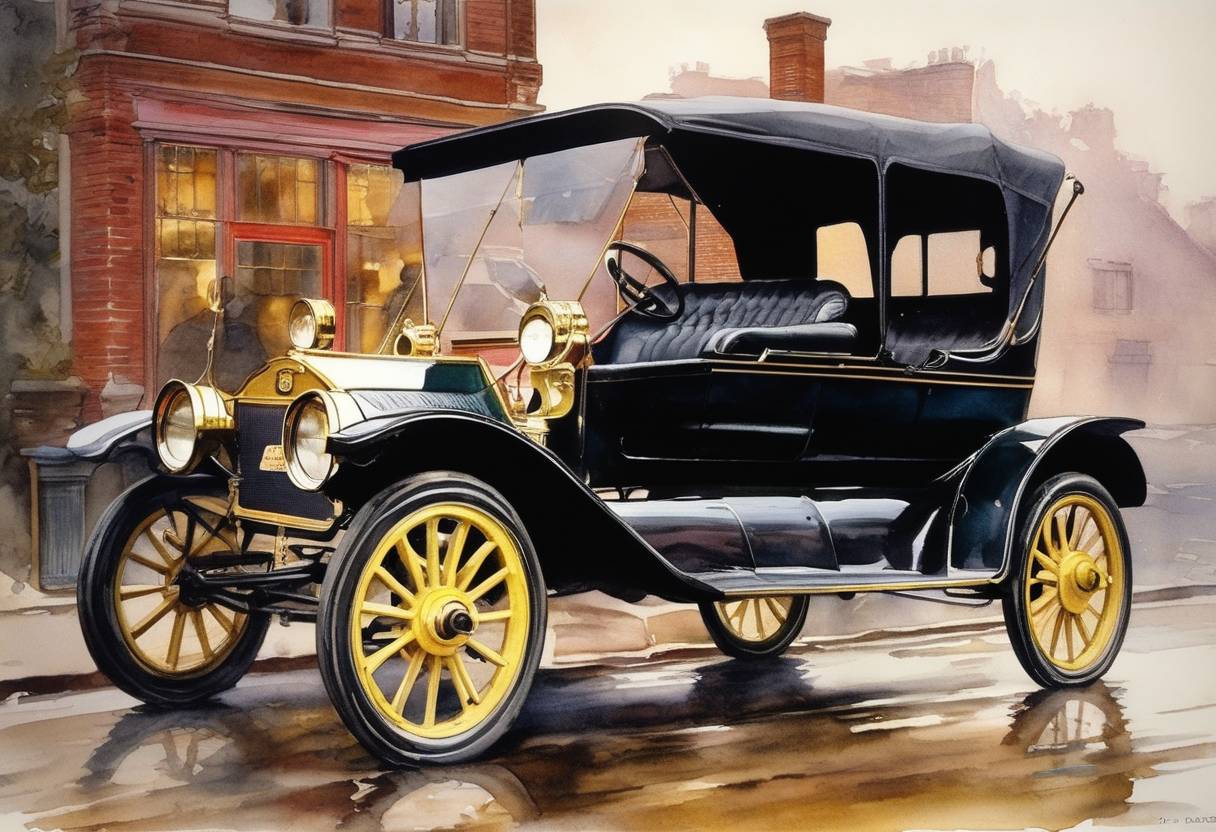
The Sale of the First Ford Model A: July 20, 1903
On July 20, 1903, the Ford Motor Company marked a significant milestone in the history of the automotive industry with the sale of its first car, the Model A. This event signified not only the beginning of Ford’s journey to becoming one of the largest automobile manufacturers in the world but also a fundamental shift in personal transportation.
Background
The Ford Motor Company was founded by Henry Ford and a group of investors on June 16, 1903, just over a month before this pivotal sale. With an initial investment of $28,000, they aimed to produce affordable and reliable vehicles for the masses. At this time, automobiles were largely a luxury of the wealthy, but Ford envisioned making cars accessible to a broader audience.
The Ford Model A
The Model A was Ford’s first commercial vehicle, designed as a simple, practical automobile. The two-seat car was powered by a flat-2 engine capable of producing 8 horsepower and could reach speeds of up to 28 mph (45 km/h). Priced at around $850, the Model A was more affordable than many other vehicles on the market, aligning with Henry Ford’s vision of democratizing car ownership.
The First Sale
The first Model A was sold to Dr. Ernest Pfennig, a dentist from Chicago, marking the start of Ford’s direct engagement with the consumer market. This sale was crucial for the newly formed company, as it not only signaled consumer interest but also helped stabilize Ford’s precarious financial situation. At the time, Ford had only a few hundred dollars left in their bank account, and this sale was instrumental in bolstering the company’s finances.
Aftermath and Historical Impact
Following this sale, Ford experienced a steady increase in demand for the Model A and subsequent models. The success of the Model A laid the foundation for Ford’s later innovations, including the development of assembly line production techniques, which dramatically reduced manufacturing costs and allowed for mass production. This revolutionized the automobile industry and played a crucial role in the broader industrialization of the early 20th century.
The 1903 sale of the Ford Model A is thus seen as a turning point, paving the way for the introduction of the more famous Model T in 1908, which further cemented Ford’s role as a pioneer in the automotive world.
Broader Significance
The Ford Model A sale underscored a shift towards mobility and independence facilitated by road vehicles, contributing significantly to both urban and rural life transformation. It also laid the groundwork for the eventual ubiquity of automobiles that would define 20th-century transportation and culture.