The Publication of The Communist Manifesto
1848 · London, United Kingdom
The Communist Manifesto, written by Karl Marx and Friedrich Engels, was published in London. It became one of the world's most influential political documents.
May 29, 1851
The first edition of the popular travel and hotel guide 'Bradshaw’s Guide' was published by George Bradshaw in England.
London, United Kingdom | W.J. Adams, Bradshaw's Guide
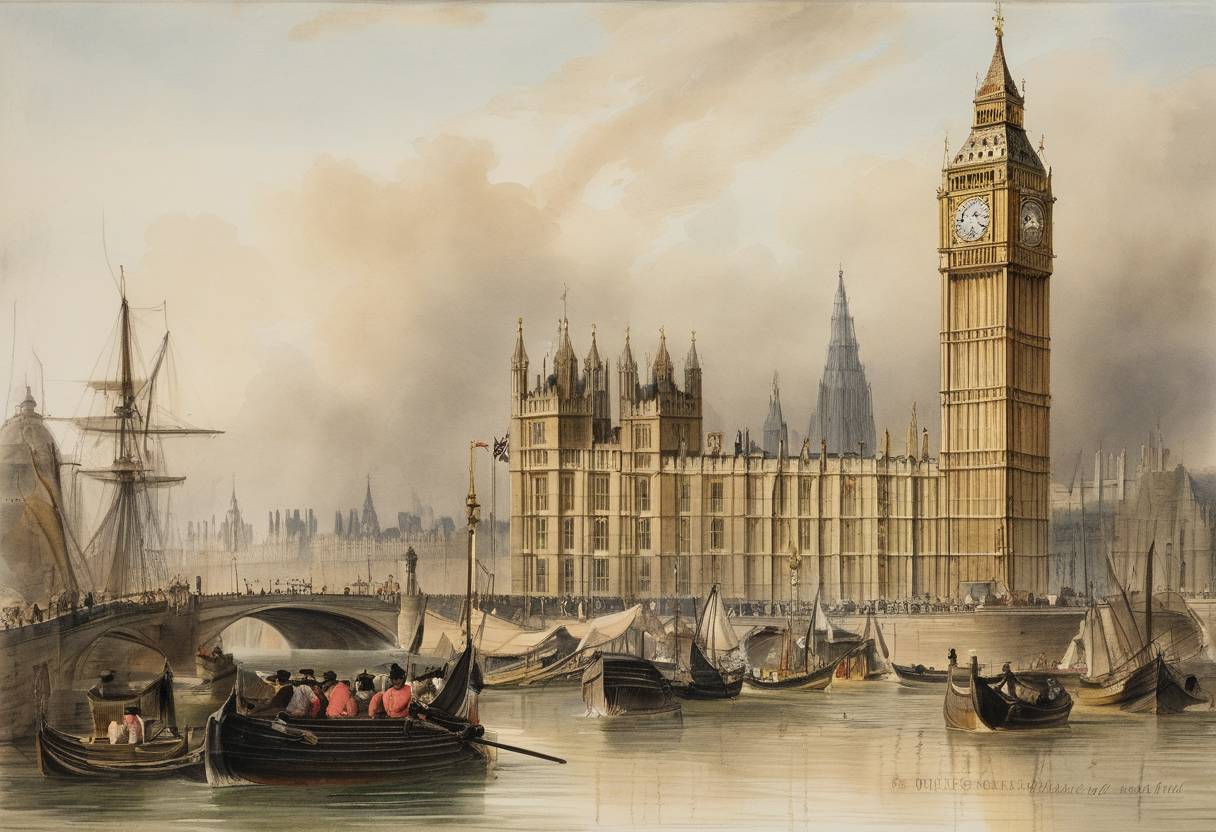
On May 29, 1851, George Bradshaw, a British cartographer and publisher, released the first edition of what would become one of the most renowned travel guides of the era, Bradshaw’s Guide. Officially titled Bradshaw’s Descriptive Railway Hand-Book of Great Britain and Ireland, this publication marked a significant advancement in travel literature during the burgeoning era of the railway.
By the mid-19th century, the railway network in Great Britain was rapidly expanding, revolutionizing both travel and communication. Prior to this transformation, journeys across the country were either slow or inconsistent due to the state of road conditions and disparate modes of transport available. With the advent of railways connecting cities and towns across extensive distances, there was an increasing demand for comprehensive guides to assist travelers.
George Bradshaw, initially known for his work in cartography and the creation of railway timetables, capitalized on this growing need by introducing a guide that combined details of railway schedules, travel routes, and descriptions of the destinations. His guide enabled travelers to plan their journeys with unprecedented ease and precision.
The 1851 edition of Bradshaw’s Guide served multiple purposes for a wide audience:
Detailed Railway Schedules: Included were precise timetables for the various railway lines across Great Britain and Ireland. This would assist travelers in planning and timing their journeys effectively.
Descriptive Accounts: The guide contained descriptions of towns and cities along the railway routes, offering insights into the cultural and historical aspects of each location. This proved invaluable for both leisure travelers and individuals traveling for business.
Practical Information: Beyond schedules and descriptions, the guide offered practical advice on hotels, landmarks, and local customs, helping travelers make informed decisions about their trips.
The success of the first edition led to regular updates and expansions, with Bradshaw’s guide becoming a staple for travelers throughout the British Isles. The concept of a comprehensive and accessible travel guide sparked similar publications and influenced the broader genre of travel literature.
Moreover, Bradshaw’s Guide attained cultural significance, being referenced frequently in contemporary literature and media, such as in the works of authors like Charles Dickens. The guide’s historical significance was later revived through popular media, including the television series Great British Railway Journeys which showcased journeys inspired by the original guides.
In conclusion, the publication of Bradshaw’s Guide not only reflected the transformative infrastructure of the railway era but also laid the foundation for modern travel guides, offering a template that combined logistical information with cultural context.
Source: www.britannica.com