Tunisia Gains Independence from France
1956 · Tunis, Tunisia
Tunisia gained independence from France, marking the end of French colonial rule and the beginning of a new era for the country.
May 12, 1881
Founding of Tunisia's city of Bizerte as a French protectorate following the Treaty of Bardo.
Bizerte, Tunisia | French Third Republic
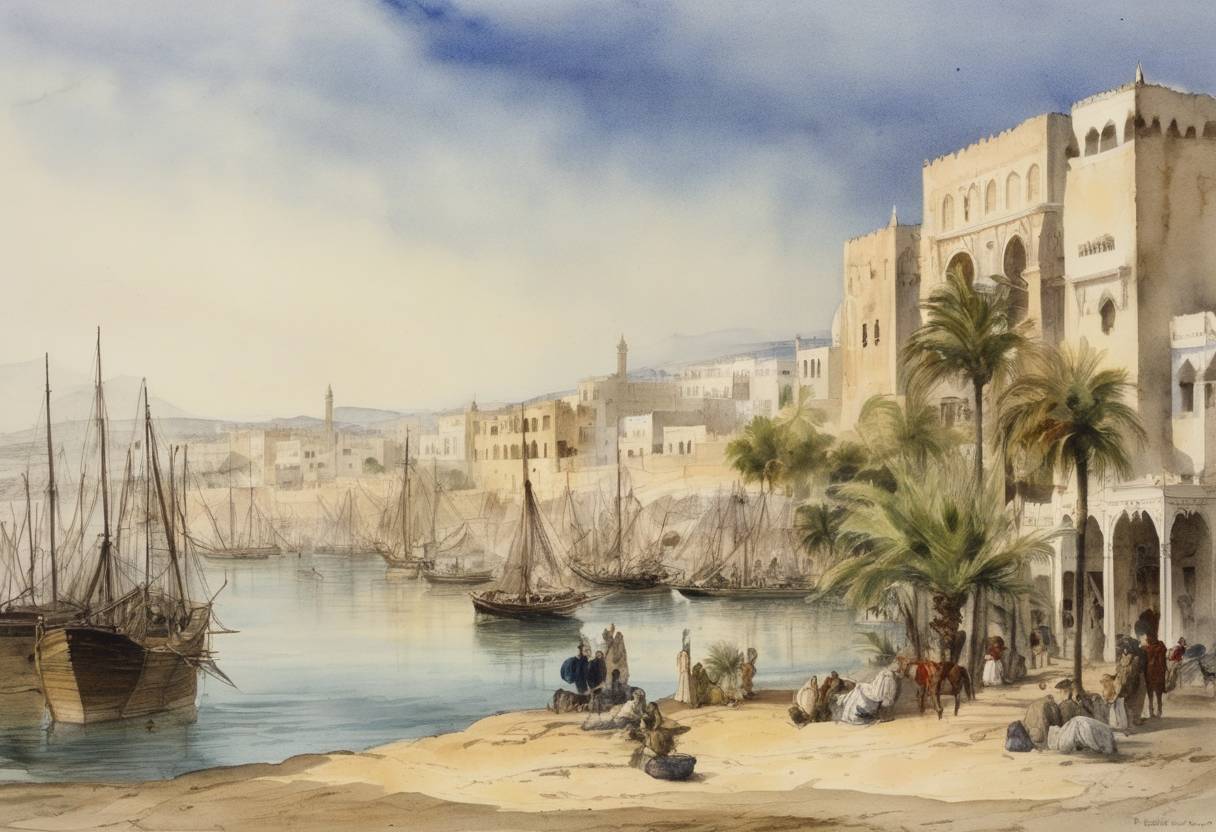
On May 12, 1881, the Treaty of Bardo, also known as the Treaty of Ksar Said, was signed between representatives of France and the Bey of Tunis. This treaty marked the establishment of a French protectorate over Tunisia, a critical event in the colonial history of North Africa. The treaty formalized French control, allowing the French government to oversee Tunisian political, military, and economic affairs, while ostensibly preserving the sovereignty of the Bey.
Bizerte, a strategically located city in northern Tunisia, played a significant role during this time. Although historically significant due to its natural harbor, the city’s importance was magnified under French control. France sought to bolster its naval presence in the Mediterranean, and Bizerte, with its excellent port facilities, became a focal point for military and trade activities.
Following the formalization of the protectorate, the French embarked on expanding and modernizing Bizerte. This included extensive infrastructure development, which fortified its position as one of the central military bases in the region.
The establishment of a protectorate in Bizerte and greater Tunisia is an example of the broader wave of European colonial expansion during the 19th century. For France, gaining control of Tunisian territory further strengthened its position in North Africa, alongside its already extensive interests in nearby Algeria. This move also contributed to tensions with Italy, which had vested interests in Tunisia spurred by the presence of a large Italian community.
The transformation of Bizerte under French military and administrative control laid the groundwork for its role as a key naval base in both World Wars, emphasizing the lasting military and strategic repercussions of the 1881 Treaty of Bardo.
Under French rule, Tunisia witnessed significant infrastructural and urban developments. While the French protectorate brought modernization, it also led to the exploitation and control of local resources and governance systems, generating resistance movements.
The legacy of colonial rule remained even after Tunisia’s eventual independence in 1956. The historical significance of the founding of Bizerte as a protectorate city is remembered as part of Tunisia’s journey through colonialism and towards self-determination.
Source: www.britannica.com