The Opening of the London Underground: January 10, 1863
1863 · London, England
The London Underground, the world's oldest underground railway, opens between Paddington and Farringdon.
February 16, 1838
The London & Greenwich Railway, the first railway in the world to be entirely elevated and fully lit, opens the first section between Spa Road and Deptford.
London, United Kingdom | London and Greenwich Railway
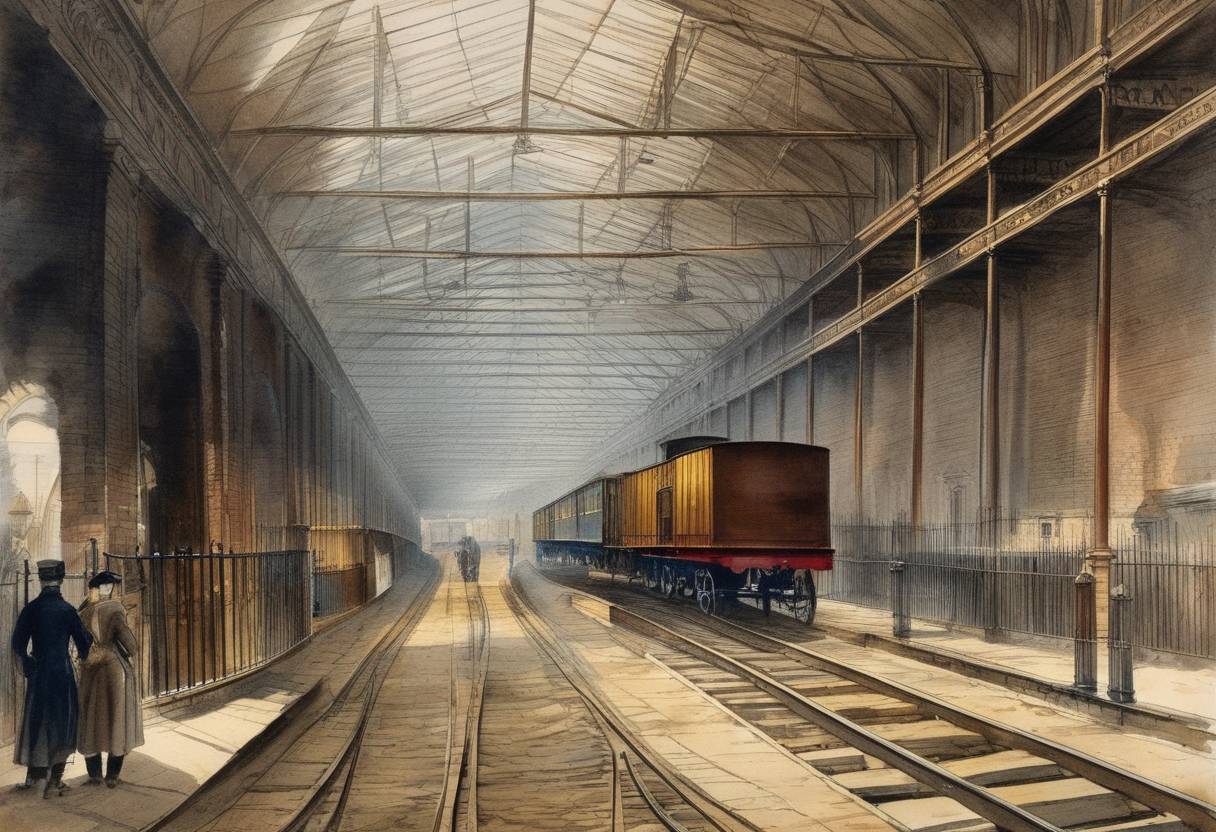
The opening of the London & Greenwich Railway (L&GR) on February 16, 1838, marked a significant milestone in railway history. This pioneering infrastructure project was notable for several groundbreaking achievements, including being the world’s first railway to be fully elevated and illuminated throughout its line. The initial section that opened on this day stretched from Spa Road in Bermondsey to Deptford, covering a distance of approximately 3.5 miles.
The L&GR faced numerous engineering challenges, especially given its location through densely populated urban areas. To minimize disruptions and land acquisition issues, the line was constructed on a series of brick viaducts—a first of its kind. This design choice involved the use of over 878 arches, allowing roads to pass beneath and contributing to its distinction as the longest elevated railway structure built at the time.
The bridges, tunnels, and the viaducts themselves were ambitious feats, demonstrating advanced engineering techniques. The elevated design not only facilitated urban transport but also helped highlight the potential for railways to integrate with city landscapes.
Two standout features of the L&GR were its use of gas lighting along the entire route and its pioneering elevated structure. Gas lighting enhanced passenger safety and comfort, especially for evening travel. This innovation was significant as it demonstrated an early dedication to passenger experience and safety in railway design.
The elevated tracks reduced interference with street-level traffic, setting a precedent for subsequent urban railway systems. By raising the track, the L&GR minimized the social and physical barriers between railways and urban life, offering a blueprint for efficient land use in burgeoning cities.
The section between Spa Road and Deptford quickly became an important commuter route into the growing metropolis. The railway offered a speedy and reliable alternative to road or canal, paving the way for future expansions and influencing the expansion of rail networks across London and other cities.
Moreover, this line helped solidify the role of railways in shaping the urban fabric, providing a reliable mode of transportation that enabled the daily influx of workers to the central city, thereby enhancing economic and social integration.
The opening of the L&GR was a harbinger of the transformative role railways would play in the 19th century and beyond. By overcoming geographic and logistical barriers through innovation, it illustrated the potential of railroads to revolutionize transportation, support industrial growth, and connect distant locales in ways previously unimagined.
The success of the L&GR informed future railway construction and urban planning efforts, highlighting important lessons in engineering, management, and design that would echo through successive railway ventures. As such, its historical significance extends beyond technical achievement, contributing to social and economic shifts of the period.
Source: www.gracesguide.co.uk