Foundation of the Republic of Ecuador: May 13, 1830
1830 · Quito, Ecuador
The Republic of Ecuador is founded, marking its independence from Gran Colombia.
August 10, 1809
Quito declared independence from Spanish rule, marking the first attempt to gain autonomy in Spanish America. Although the effort failed, it inspired subsequent movements for independence across the continent.
Quito, Ecuador | Junta Suprema de Quito
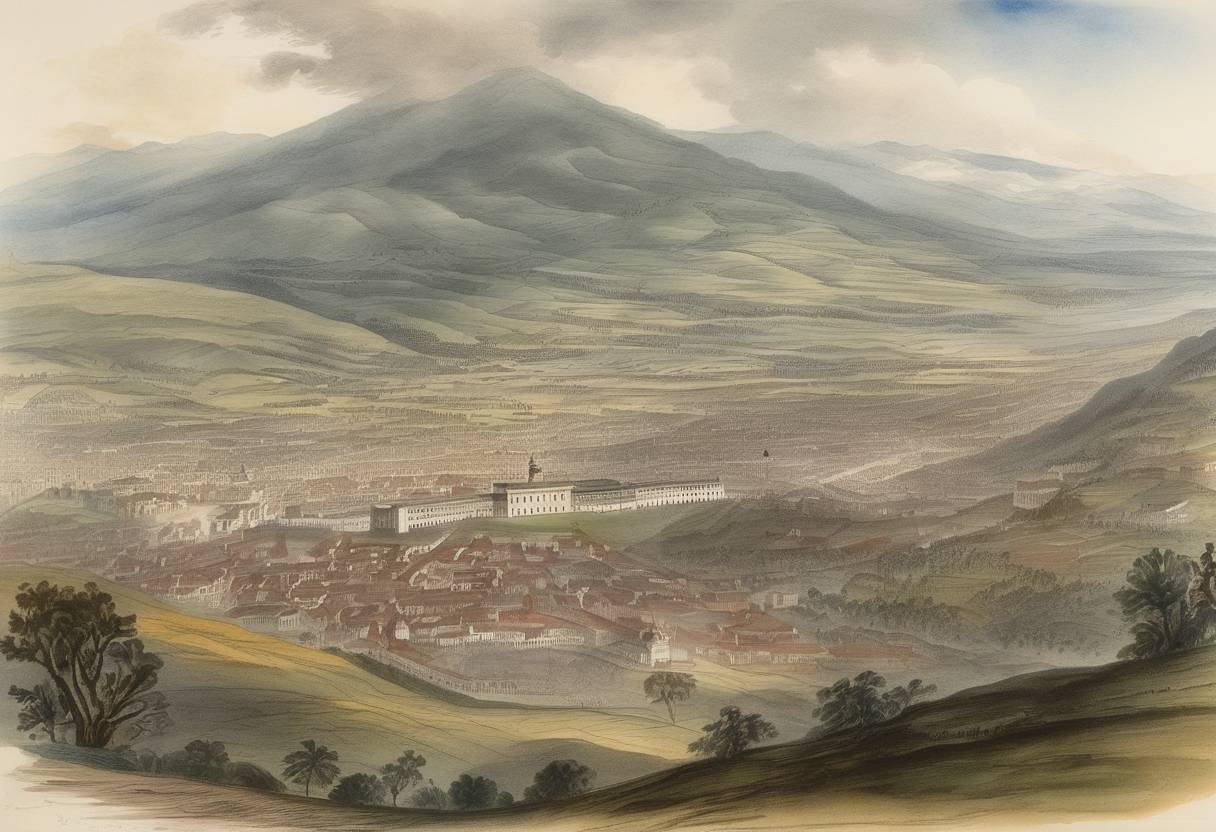
On August 10, 1809, Quito, a city in present-day Ecuador, made a historic bid for independence from Spanish rule. This event marked the first move towards autonomy in Spanish America, setting the stage for numerous independence movements across the continent.
The late 18th and early 19th centuries were periods of great unrest in the Spanish colonies of the Americas. Influences from the Enlightenment, the American Revolution (1776), and the French Revolution (1789) fueled desires for independence. In Spain, the Peninsular War (1807-1814) against Napoleonic forces weakened Spanish control and encouraged colonial regions to seek self-determination.
On August 10, 1809, an emergent revolutionary group, led by Creoles (locally-born people of Spanish descent), established a local governing junta in Quito. This junta aimed to govern independently of the Spanish crown, emphasizing loyalty to Ferdinand VII, the deposed Spanish king captured by Napoleon.
Despite its failure, Quito’s declaration of independence on August 10, 1809, ignited a spark of revolutionary sentiment throughout Spanish America. It demonstrated the vulnerability of Spanish colonial rule and inspired further movements for autonomy:
This seminal event remains commemorated in Ecuador as a pivotal moment in the fight for independence and is often referred to as “El Primer Grito de Independencia” (The First Cry of Independence).
Source: en.wikipedia.org