The Chinese Nationalist Government Moves to Taiwan: December 7, 1949
1949 · Taipei, Taiwan
The Chinese Nationalist government moves from mainland China to Taiwan.
February 28, 1947
The 228 Incident occurs in Taiwan when an anti-government uprising begins, resulting in a violent crackdown by the Kuomintang-led Republic of China government.
Taipei, Taiwan | Kuomintang
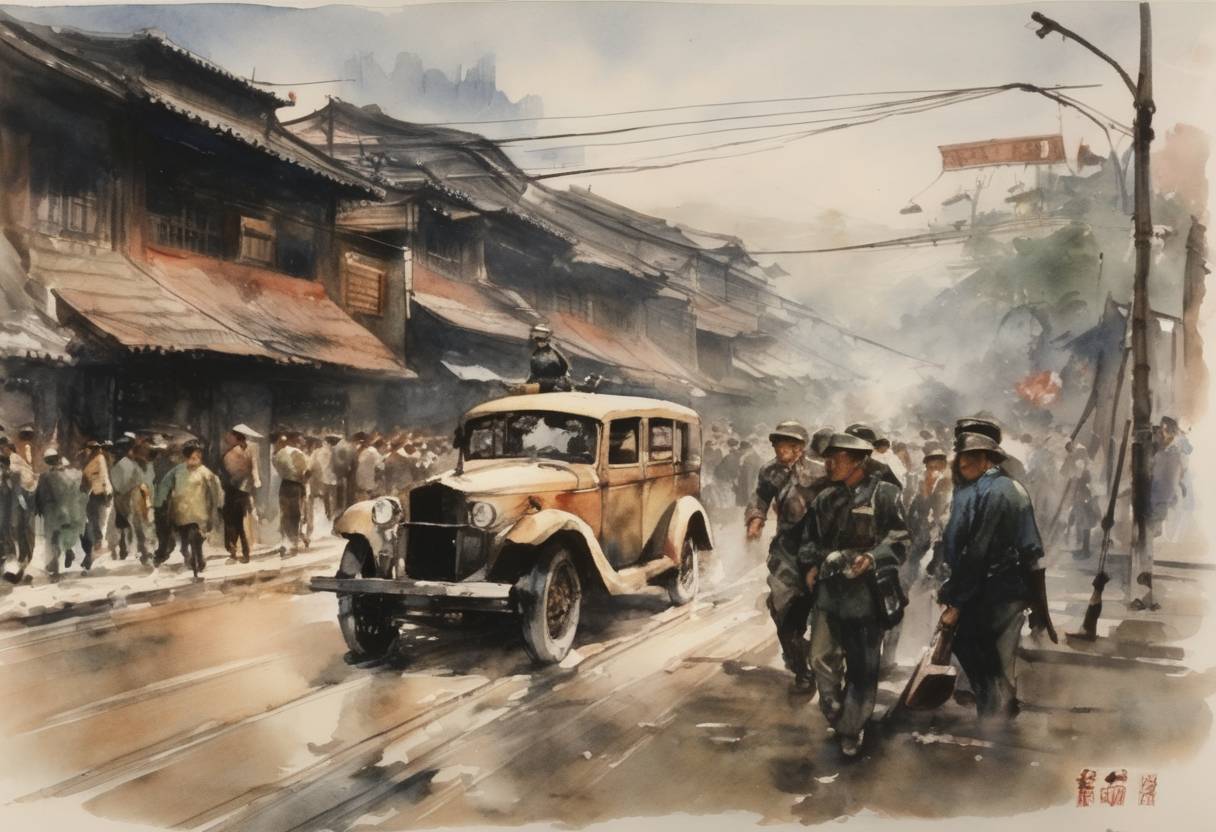
The 228 Incident, also known as the February 28 Incident, marks a crucial and tragic moment in Taiwanese history when an anti-government uprising began on February 28, 1947. This uprising resulted in a violent crackdown by the Kuomintang (KMT)-led Republic of China (ROC) government, with profound consequences for Taiwan’s political and social landscape.
Following the end of World War II in 1945, Taiwan, which had been under Japanese rule for five decades, was handed over to the Republic of China as stipulated by the Cairo Declaration. However, the Taiwanese people soon faced issues under their new rulers. The KMT government, under Generalissimo Chiang Kai-shek, was seen as corrupt and inefficient, which led to widespread discontent among the populace.
Economic mismanagement, including hyperinflation and unemployment, further exacerbated tensions. Additionally, the local population perceived the incoming mainland officials as exploiting resources and ignoring Taiwanese welfare, leading to ethnic and political friction.
The immediate spark for the uprising occurred on February 27, 1947, when agents of the Tobacco Monopoly Bureau confronted a widow accused of selling contraband cigarettes without a license in Taipei. A scuffle broke out, which escalated when a bystander was killed in the ensuing chaos.
The following day, February 28, outraged citizens gathered in protest, demanding justice. The incident galvanized public anger, leading to widespread demonstrations against the KMT’s authoritarian rule across Taiwan. The protests quickly turned into a full-blown anti-government movement, gaining momentum due to long-standing grievances.
In response, the ROC government declared martial law and sent troops to suppress the uprising. The crackdown was particularly brutal and involved mass arrests, executions, and a campaign of terror and repression that lasted several weeks. Estimates of the death toll range from 10,000 to 28,000, with many Taiwanese intellectuals, students, and ethnic leaders targeted in the aftermath.
The 228 Incident had significant long-term effects on Taiwan’s history. It deepened the rift between the mainland Chinese and the native Taiwanese and contributed to the imposition of decades-long martial law in Taiwan, starting in 1949. The incident remains a sensitive topic in Taiwan’s political discourse and is considered a crucial event in the Taiwanese independence movement.
In recent years, efforts have been made towards reconciliation and acknowledgment of this dark chapter in Taiwan’s history. February 28 is commemorated as Peace Memorial Day, a public holiday in Taiwan, during which ceremonies and activities are held to remember the victims and promote peace and reconciliation.
The events of February 28, 1947, continue to resonate in Taiwan, symbolizing the struggle for justice, democracy, and national identity. The 228 Incident stands as a powerful reminder of the importance of human rights and the costs of political repression.