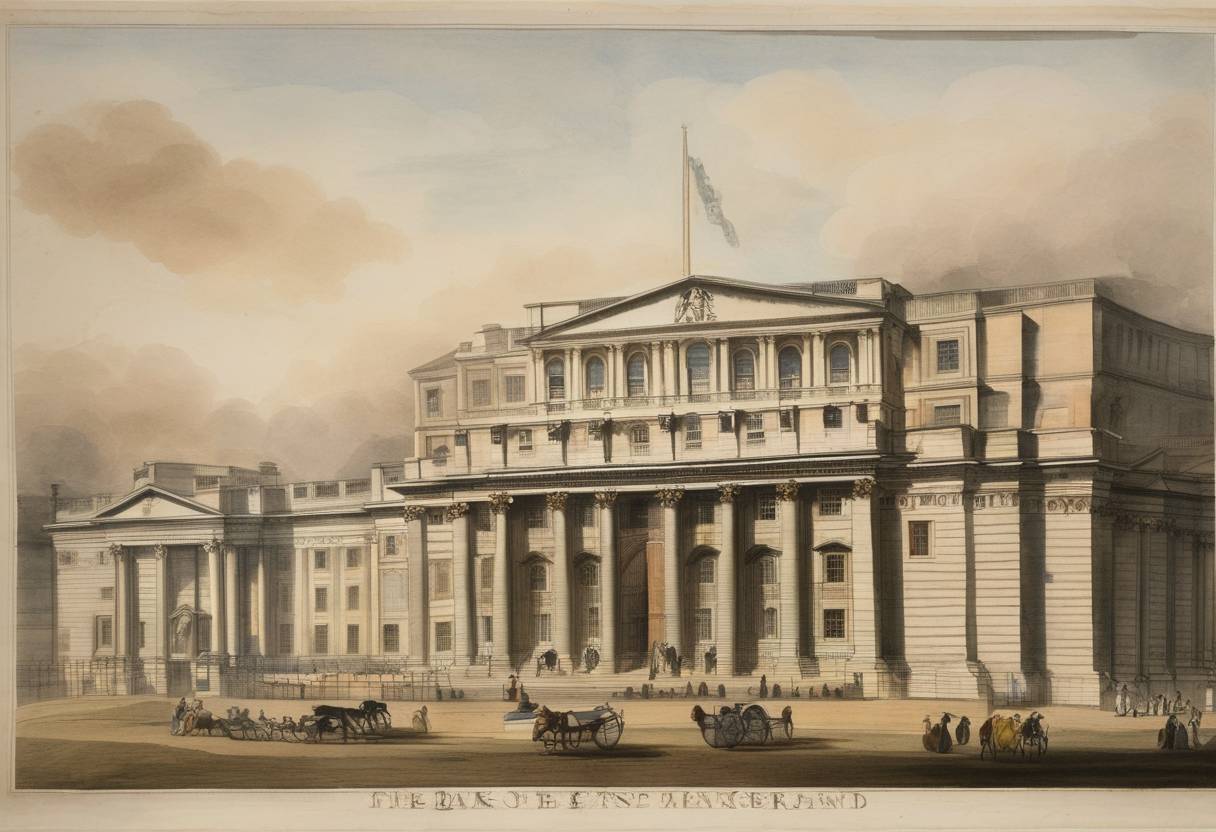
The Issuance of the First One Pound Note by the Bank of England on February 26, 1797
Context and Background
The issuance of the first one-pound note by the Bank of England on February 26, 1797, was a critical development in the history of British currency and the financial system. The late 18th century was a tumultuous period for Britain, characterized by financial challenges and geopolitical instability, primarily due to ongoing conflicts such as the Napoleonic Wars.
Economic Conditions Leading to Issuance
The Cash Crisis of 1797
- War-Induced Strain: Britain’s involvement in the war against Revolutionary France placed immense strain on its financial resources. The demand for money to fund military operations and sustain the economy was high.
- Gold Reserves: The national gold reserves began to dwindle, partly because of panic withdrawals driven by uncertainty, and partly due to payments made to finance the war effort.
The Decision to Suspend Gold Payments
- Faced with the depletion of gold reserves, the British government decided to suspend gold payments, leading to what became known as the “Restriction Period” (1797-1821), during which the Bank of England was not obliged to exchange banknotes for gold.
The Introduction of the One Pound Note
A New Era in British Currency
- Issuance: On February 26, 1797, the Bank of England issued the first one-pound note as a response to the shortage of gold coins.
- Design: Early notes were simple, with handwritten entries and no standardized design. They were printed on one side only and were signed by one of the bank’s cashiers.
Impact on the Financial System
- Increased Accessibility: The one-pound note made currency more accessible to the general public, who previously dealt mostly in coins.
- Boost to Confidence: While initially a response to financial necessity, the issuance of paper money helped stabilize the economy and instill greater confidence in the banking system.
Aftermath and Historical Significance
Lasting Implications
- Paper Currency Precedent: The introduction of lower denomination banknotes set a precedent for future issues and gradually encouraged trust and reliance on paper money.
- Economic Stability: Although the initial issuance was a temporary emergency measure, it led to long-term changes in the monetary system, including the progressive development of modern banknotes.
- End of the Restriction Period: While the suspension of gold payments eventually ended, the period highlighted the practicality and necessity of paper currency, leading to more refined monetary policies in the future.
Conclusion
The issuance of the first one-pound note by the Bank of England on February 26, 1797, marked a pivotal shift in British monetary practices. It underscored the evolving relationship between the state and the modern financial system and paved the way for future developments in the currency and banking sectors.