Germany Declares War on Russia: August 1, 1914
1914 · Berlin, Germany
Germany declared war on Russia, marking the beginning of World War I.
May 27, 1895
The Kiel Canal, a 98-kilometer waterway connecting the North Sea with the Baltic Sea, officially opened.
Kiel, Germany | German Empire
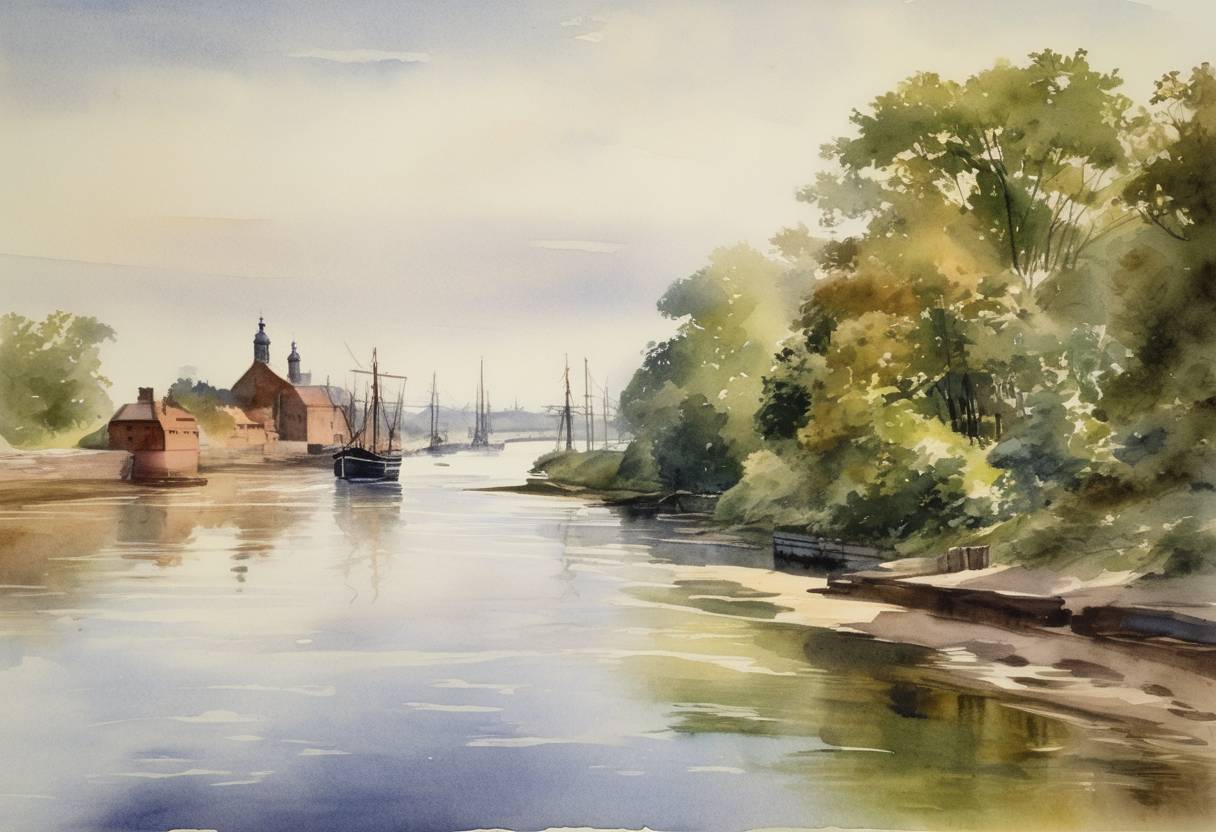
The Kiel Canal, an engineering marvel of its time, was officially opened on May 27, 1895. This 98-kilometer waterway links the North Sea with the Baltic Sea, significantly reducing the maritime travel distance for ships navigating between these bodies of water. Prior to its opening, vessels had to circumnavigate the Jutland Peninsula, a longer and more perilous journey.
The need for a navigable link between the North Sea and the Baltic Sea was recognized for both economic and military advantages. The project was initially conceived by Danish King Christian VII in the late 18th century, but it was not until the unification of Germany and the subsequent rise of Prussia as a major power in the late 19th century that the project received the necessary impetus.
Construction of the Kiel Canal began in 1887, under the direction of engineer Otto Baensch. It was a monumental task, involving the excavation of millions of cubic meters of soil and requiring considerable manpower and technological innovation. The canal project employed thousands of workers and drew on advanced engineering techniques to overcome geographical challenges.
The canal’s official opening was marked by a grand ceremony attended by Kaiser Wilhelm II, who emphasized the canal’s importance to the German navy and the nation’s commercial interests. The event underscored Germany’s aspirations for naval superiority and economic expansion. The Kaiser himself sailed through the canal, leading a fleet of German warships, signifying its strategic military significance.
The Kiel Canal quickly became one of the world’s busiest artificial waterways. It facilitated a swift passage for commercial and military vessels, enhancing Germany’s naval capabilities and bolstering trade efficiency. The canal’s opening had profound implications for international maritime logistics, influencing shipping routes and global trade patterns.
In the ensuing years, the canal was expanded and modernized to accommodate larger vessels, reflecting ongoing advancements in ship design and increasing maritime traffic. Throughout both World Wars, the Kiel Canal served as a critical military asset, underlining its enduring strategic importance.
Today, the Kiel Canal remains a vital maritime corridor, symbolizing both historical ambition and ongoing economic utility. Its creation marked a pivotal moment in engineering history, representing a transformative period in European maritime infrastructure.
Source: en.wikipedia.org